Grace Team UniversityStudy to shew thyself approved unto God2 Timothy 2:15
SCRIBE’S TREASURECHRISTIAN LIBRARYTHY WORD IS TRUTHKJV BIBLE WITH GREEKPRAISE YE THE LORDWORSHIP MUSIC
Study Materials

Faith of Our Fathers

“Faith of our fathers, living still, in spite of dungeon, fire and sword.” — Frederick W. Faber, 1849

Faith of our fathers, living still — the great cloud of witnesses who carried the gospel before us. Every witness here is shown with an attested word from his or her own lips or pen, the Scripture that captures that stand, and the story of what God did through them — with a portrait from the public record wherever one survives. Their words are honored as history; the Bible alone is our rule of faith.

Portraits are public-domain or Creative Commons works from Wikimedia Commons; the license and source of each are named beneath its card.

The Centerpiece Study of This Section

The Fifty Greatest Men and Women of God

Fifty full life studies — martyrs and mothers, translators and hymn writers, cobblers and parliamentarians, mill girls and scholars — from Polycarp in the arena to Jim Elliot on the Curaray. Greatness measured the Bible’s way: faithfulness to Christ, and fruit that remains.

Read the Fifty ›

The Apostles & the First Witnesses

Portrait of Simon Peter

Simon Peter

died c. AD 67

“Lord, to whom shall we go? thou hast the words of eternal life.”

His confession to the Lord — John 6:68
Acts 4:12 (KJV)“Neither is there salvation in any other: for there is none other name under heaven given among men, whereby we must be saved.”

A Galilean fisherman called from his nets, Peter became the chief spokesman of the apostles: he preached at Pentecost when three thousand souls were saved, carried the gospel to the Gentiles at the house of Cornelius, and wrote two epistles. Tradition holds that he was crucified upside down at Rome under Nero, counting himself unworthy to die as his Lord died.

Portrait: Saint_Peter-Sinai_(6th_Century).jpg — Unknown authorUnknown author
License: Public domain · via Wikimedia Commons
Portrait of Paul the Apostle

Paul the Apostle

c. AD 5 – c. 67

“For to me to live is Christ, and to die is gain.”

His own words — Philippians 1:21
Galatians 2:20 (KJV)“I am crucified with Christ: nevertheless I live; yet not I, but Christ liveth in me: and the life which I now live in the flesh I live by the faith of the Son of God, who loved me, and gave himself for me.”

Once Saul of Tarsus, a Pharisee who persecuted the church, Paul was struck down by the risen Christ on the Damascus road and made the apostle to the Gentiles. He planted churches across Asia and Europe on three missionary journeys, wrote thirteen epistles of the New Testament, and sealed his testimony with his blood at Rome.

Portrait: Fresco_of_Saint_Paul_at_Ephesus.jpg — Unknown authorUnknown author
License: Public domain · via Wikimedia Commons
Portrait of John the Apostle

John the Apostle

c. AD 6 – c. 100

“Beloved, let us love one another: for love is of God; and every one that loveth is born of God, and knoweth God.”

His own words — 1 John 4:7
Revelation 22:20 (KJV)“He which testifieth these things saith, Surely I come quickly. Amen. Even so, come, Lord Jesus.”

The disciple whom Jesus loved, John leaned on the Lord’s breast at the Last Supper, stood at the cross, and outlived all the other apostles. He wrote the fourth Gospel, three epistles, and — exiled on Patmos for the word of God — the Revelation of Jesus Christ.

Portrait: Rubens_apostel_johannes_grt.jpg — Peter Paul Rubens
License: Public domain · via Wikimedia Commons
Portrait of Stephen the Martyr

Stephen the Martyr

died c. AD 34

“Lord, lay not this sin to their charge.”

His dying prayer — Acts 7:60
Acts 7:56 (KJV)“And said, Behold, I see the heavens opened, and the Son of man standing on the right hand of God.”

The first deacon named in Acts, full of faith and of the Holy Ghost, Stephen preached Christ before the council with a face like an angel’s and gave the longest sermon recorded in the book of Acts. Stoned for his testimony, he died praying for his killers — and among those who watched stood a young Pharisee named Saul.

Portrait: Saint_Stephen_(Carlo_Crivelli).jpg — Carlo Crivelli
License: Public domain · via Wikimedia Commons

The Apostolic Fathers

Portrait of Ignatius of Antioch

Ignatius of Antioch

c. 50 – c. 107

“I am God’s wheat, to be ground by the teeth of wild beasts, that I may be found the pure bread of Christ.”

Letter to the Romans, written on his way to martyrdom
Revelation 2:10 (KJV)“Fear none of those things which thou shalt suffer: behold, the devil shall cast some of you into prison, that ye may be tried; and ye shall have tribulation ten days: be thou faithful unto death, and I will give thee a crown of life.”

Bishop of Antioch and, by early tradition, a hearer of the apostle John, Ignatius was arrested under Trajan and carried to Rome to be thrown to the beasts. On the journey he wrote seven letters to the churches — burning with love for Christ and begging the Roman Christians not to rescue him from the martyrdom he longed for.

Portrait: Hosios_Loukas_(south_west_chapel,_south_side)_-_Ignatios.jpg — AnonymousUnknown author
License: Public domain · via Wikimedia Commons
Portrait of Polycarp of Smyrna

Polycarp of Smyrna

c. 69 – 155

“Eighty and six years have I served Him, and He has done me no wrong. How then can I blaspheme my King who saved me?”

His answer to the Roman governor, recorded in The Martyrdom of Polycarp
Matthew 10:32 (KJV)“Whosoever therefore shall confess me before men, him will I confess also before my Father which is in heaven.”

Bishop of Smyrna and a disciple of the apostle John, Polycarp shepherded his flock into old age and taught Irenaeus in his youth. Arrested in his eighty-sixth year, he refused to curse Christ and was burned at the stake — the flames, witnesses said, arched around him like a sail, and he died praying.

Portrait: Polycarp_of_Smyrna2.jpg — PravoslavnyChristianin
License: CC0 · via Wikimedia Commons
Portrait of Justin Martyr

Justin Martyr

c. 100 – 165

“Whatever things were rightly said among all men are the property of us Christians.”

Second Apology, ch. 13
1 Peter 3:15 (KJV)“But sanctify the Lord God in your hearts: and be ready always to give an answer to every man that asketh you a reason of the hope that is in you with meekness and fear:”

A Samaritan-born philosopher who searched the schools of Greece for truth and found it in Christ, Justin opened a school at Rome and wrote reasoned defenses of the faith to the emperor himself. When ordered to sacrifice to the gods he refused, and was scourged and beheaded — a martyr whose very surname men kept.

Portrait: Saint_Justin_Martyr_by_Theophanes_the_Cretan.jpg — Theophanes the Cretan
License: Public domain · via Wikimedia Commons

The Early Church Fathers

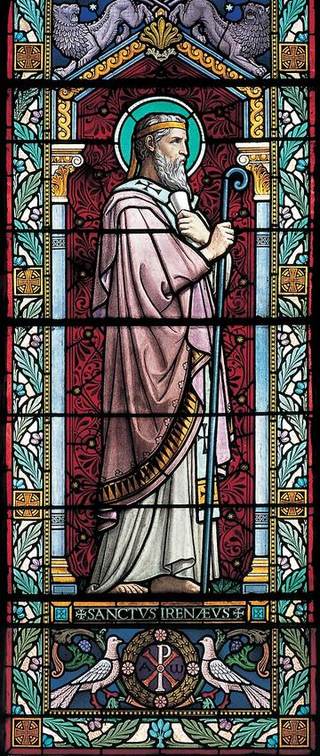
Portrait of Irenaeus of Lyons

Irenaeus of Lyons

c. 130 – c. 202

“The glory of God is a living man; and the life of man consists in beholding God.”

Against Heresies, Book IV
Jude 1:3 (KJV)“Beloved, when I gave all diligence to write unto you of the common salvation, it was needful for me to write unto you, and exhort you that ye should earnestly contend for the faith which was once delivered unto the saints.”

Taught in his youth by Polycarp, who had known the apostle John, Irenaeus became bishop of Lyons in Gaul. His great work Against Heresies answered the Gnostic sects point by point from Scripture and the apostles’ teaching, and stands as a bridge between the age of the apostles and the church that followed.

Portrait: Saint_irenee_saint_irenee.jpg — Lucien Bégule
License: Public domain · via Wikimedia Commons
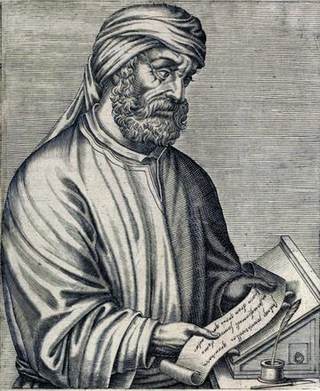
Portrait of Tertullian

Tertullian

c. 155 – c. 220

“We multiply whenever we are mown down by you; the blood of Christians is seed.”

Apologeticus, ch. 50 — addressed to the rulers of Rome
Revelation 12:11 (KJV)“And they overcame him by the blood of the Lamb, and by the word of their testimony; and they loved not their lives unto the death.”

A Carthaginian lawyer converted to Christ, Tertullian was the first great Christian writer in Latin: fierce, brilliant, and uncompromising. His Apology demanded justice for persecuted believers, and his pen gave the church words it still uses — including the very word “Trinity.”

Portrait: Tertullian2.png — André Thevet
License: Public domain · via Wikimedia Commons

Perpetua of Carthage

c. 182 – 203

“I am a Christian.”

Her own prison diary, in the Passion of Perpetua and Felicity
Philippians 1:21 (KJV)“For to me to live is Christ, and to die is gain.”

A well-born young mother of Carthage, nursing an infant son, arrested in 203 for confessing Christ. In prison she kept a diary — the earliest surviving writing by a Christian woman — recording her father’s pleas and her answer: ‘I am a Christian.’ She and her servant Felicitas died by beasts and the sword, joyful and with calm faces.
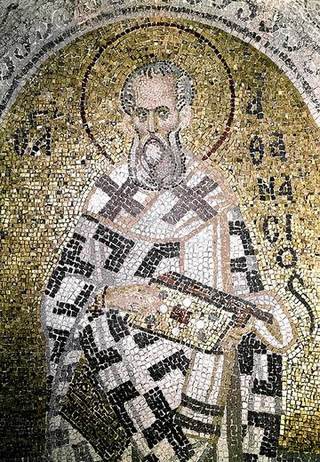
Portrait of Athanasius of Alexandria

Athanasius of Alexandria

c. 296 – 373

“For the Son of God became man, so that we men might become gods.”

On the Incarnation, ch. 54
John 1:14 (KJV)“And the Word was made flesh, and dwelt among us, (and we beheld his glory, the glory as of the only begotten of the Father,) full of grace and truth.”

Bishop of Alexandria for forty-five years, Athanasius stood almost alone against the Arian denial of Christ’s deity — “Athanasius against the world.” Exiled five times by emperors, he would not bend; his Easter Letter of 367 is also the first list of exactly the twenty-seven books of our New Testament.

Portrait: Fethiye_Camii,_parekklesion,_diakonikon,_mosaics,_Istanbul,_Turkey_-_South_wall,_St._Athanasius,_detail_of_upper_half_-_MSBZ004_BF_T_F_027_B_-_Dumbarton_Oaks.jpg — Byzantine Institute staff
License: CC0 · via Wikimedia Commons

Monica of Thagaste

c. 331 – 387

“Lay this body anywhere; let not the care of it trouble you at all. Only this I ask of you, that you remember me at the altar of the Lord, wherever you are.”

Her dying request, recorded by Augustine in his Confessions, Book IX
Luke 18:1 (KJV)“And he spake a parable unto them to this end, that men ought always to pray, and not to faint;”

She had no pulpit and wrote no book; she had a brilliant, wayward son, and she prayed Augustine into the kingdom over seventeen years. Married to a pagan husband of violent temper, whom her patience won to Christ before his death, she followed her son across the sea to Milan and lived to see him baptized in 387 — weeks before her death at Ostia.

Jerome

c. 347 – 420

“Ignorance of the Scriptures is ignorance of Christ.”

Prologue to his Commentary on Isaiah
Psalm 119:105 (KJV)“Thy word is a lamp unto my feet, and a light unto my path.”

Brilliant, industrious, and sharp-tongued to a fault, Jerome spent years in the Syrian desert learning Hebrew from Jewish teachers, convinced the church must drink from the Hebrew truth and not from translations of translations. Commissioned at Rome, he gave over twenty years to translating the whole Bible into Latin — the Vulgate, finished around 405.
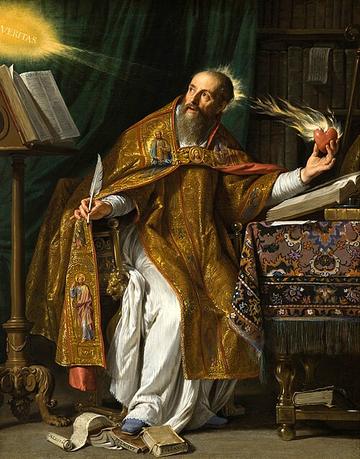
Portrait of Augustine of Hippo

Augustine of Hippo

354 – 430

“Thou hast made us for thyself, O Lord, and our heart is restless until it finds its rest in thee.”

Confessions, Book I
Matthew 11:28 (KJV)“Come unto me, all ye that labour and are heavy laden, and I will give you rest.”

After a youth of sin and wandering among false religions, Augustine was converted at Milan in 386 through the prayers of his mother Monica and the preaching of Ambrose, at the words “put ye on the Lord Jesus Christ.” As bishop of Hippo he wrote the Confessions and The City of God, and his preaching of grace shaped the church for a thousand years.

Portrait: Saint_Augustine_by_Philippe_de_Champaigne.jpg — Philippe de Champaigne
License: Public domain · via Wikimedia Commons
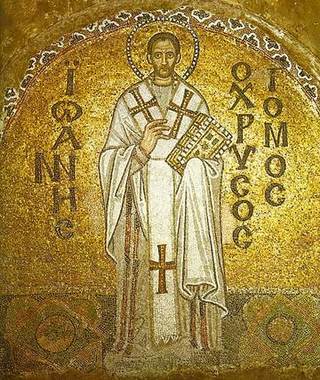
Portrait of John Chrysostom

John Chrysostom

c. 347 – 407

“Glory be to God for all things.”

His dying words, in exile, 407 — recorded by Theodoret
Romans 8:28 (KJV)“And we know that all things work together for good to them that love God, to them who are the called according to his purpose.”

The greatest preacher of the early church — his surname Chrysostom means “golden-mouthed.” As patriarch of Constantinople he preached straight from the text, fed the poor, and rebuked the sins of the court; the empress banished him, and he died on a forced march into exile, praising God with his last breath.

Portrait: Johnchrysostom.jpg
License: Public domain · via Wikimedia Commons

Patrick of Ireland

c. 385 – 461

“I am Patrick, a sinner, most unlearned of men”

His own Confession — his description of himself
Matthew 28:19 (KJV)“Go ye therefore, and teach all nations, baptizing them in the name of the Father, and of the Son, and of the Holy Ghost:”

Kidnapped from Roman Britain at sixteen and sold as a slave in Ireland, Patrick herded sheep for six years, praying a hundred times a day until his fathers’ faith became his own. He escaped — and then went back to evangelize his captors. The snakes and the shamrock are later tradition; his own Confession is the record, and it needs no decoration.

The Reformers

John Wycliffe

c. 1328 – 1384

“The Bible is for the government of the people, by the people, and for the people”

Attributed — long attributed to Wycliffe from the General Prologue to his Bible; the attribution is uncertain, and it is recorded here as attributed, not proven
John 17:17 (KJV)“Sanctify them through thy truth: thy word is truth.”

An Oxford scholar and priest who concluded, a century and a half before Luther, that a church departed from Scripture is healed only by giving the people the Bible itself. Under his inspiration and direction the whole Bible was rendered into English for the first time — copied out by hand and carried through England by his ‘poor priests,’ the Lollards.
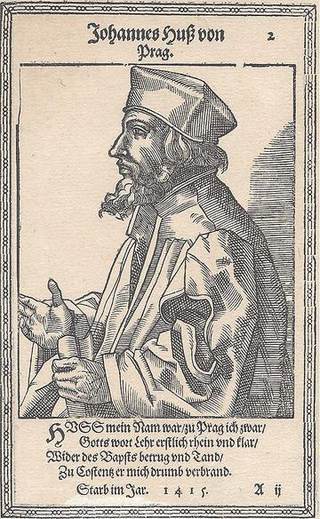
Portrait of John Hus

John Hus

c. 1372 – 1415

“Seek the truth, hear the truth, learn the truth, love the truth, speak the truth, hold the truth and defend the truth unto death.”

From his writings, c. 1413
John 8:32 (KJV)“And ye shall know the truth, and the truth shall make you free.”

A Bohemian priest and preacher at Prague’s Bethlehem Chapel, Hus preached in the language of the people and called the church back to Scripture, a century before Luther. Summoned to the Council of Constance under a promise of safe conduct, he was condemned anyway and burned at the stake, singing as the flames rose.

Portrait: Stimmer_Jan_Hus.jpg — Christoph Murer 1587
License: Public domain · via Wikimedia Commons
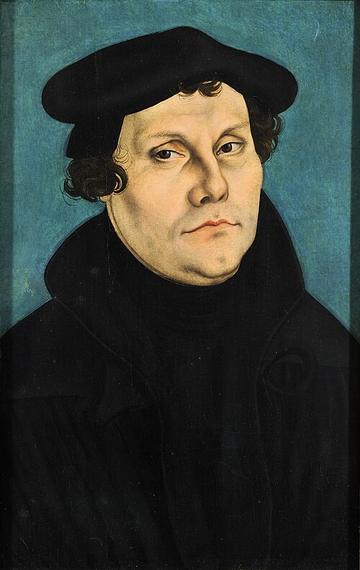
Portrait of Martin Luther

Martin Luther

1483 – 1546

“I must listen to the Gospel. It tells me, not what I must do, but what Jesus Christ, the Son of God, has done for me.”

Commentary on Galatians (1535)

“Here I stand; I can do no other. God help me. Amen.”

At the Diet of Worms, 1521, as his words were recorded

“A mighty fortress is our God, a bulwark never failing.”

His hymn on Psalm 46 (1529)

“We are beggars; this is true.”

His last written words, found on a slip of paper after his death (February 1546) — The Fifty Greatest study
Galatians 2:16 (KJV)“Knowing that a man is not justified by the works of the law, but by the faith of Jesus Christ, even we have believed in Jesus Christ, that we might be justified by the faith of Christ, and not by the works of the law: for by the works of the law shall no flesh be justified.”
Romans 1:17 (KJV)“For therein is the righteousness of God revealed from faith to faith: as it is written, The just shall live by faith.”
Psalms 46:1 (KJV)“God is our refuge and strength, a very present help in trouble.”

An Augustinian monk who spent years seeking peace with a holy God by confession, fasting, and penance — until Romans broke on him: the just shall live by faith, righteousness God’s gift and not man’s wage. His theses of 1517, his stand at Worms, his German New Testament from the Wartburg, his hymns and catechisms turned Europe upside down — and justification by faith alone still stands at the heart of the gospel.

Portrait: Lucas_Cranach_d.Ä._-_Martin_Luther,_1528_(Veste_Coburg).jpg — Lucas Cranach the Elder
License: Public domain · via Wikimedia Commons
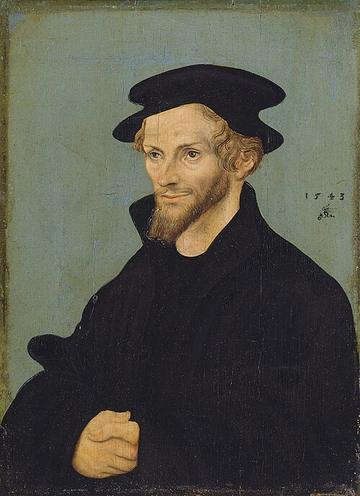
Portrait of Philip Melanchthon

Philip Melanchthon

1497 – 1560

“By confidence in the name of Christ, and not by confidence in our works, we are saved.”

The teaching of the Loci Communes and the Augsburg Confession
Romans 5:1 (KJV)“Therefore being justified by faith, we have peace with God through our Lord Jesus Christ:”

Luther’s dearest friend and the Reformation’s schoolmaster, Melanchthon was a Greek scholar at twenty-one and the gentle systematizer of the evangelical faith. He wrote the Augsburg Confession of 1530, the first great Protestant statement of belief, and taught a generation of preachers at Wittenberg.

Portrait: Portrait_of_Philipp_Melanchthon_(1497–1560),_by_Lucas_Cranach_the_Elder_-_Gemäldegalerie_Alte_Meister,_Kassel.jpg — Workshop of Lucas Cranach the Elder
License: Public domain · via Wikimedia Commons
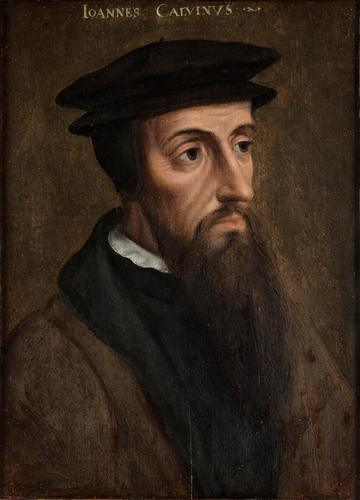
Portrait of John Calvin

John Calvin

1509 – 1564

“True and solid wisdom consists almost entirely of two parts: the knowledge of God and of ourselves.”

Institutes of the Christian Religion, Book I (1536–1559)
Romans 11:36 (KJV)“For of him, and through him, and to him, are all things: to whom be glory for ever. Amen.”

A French scholar driven into exile for the gospel, Calvin led the Reformation at Geneva, preaching through book after book of the Bible and training pastors who carried the faith across Europe. His Institutes and commentaries made him the most widely read teacher of the Protestant faith; GTU honors his place in church history while teaching salvation as the Bible presents it — God’s grace offered to all who will believe.

Portrait: John_Calvin_Museum_Catharijneconvent_RMCC_s84_cropped.png — Anonymous (France)Unknown author
License: Public domain · via Wikimedia Commons
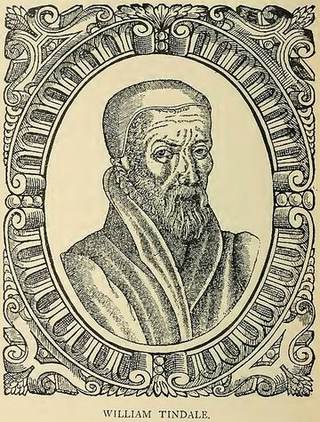
Portrait of William Tyndale

William Tyndale

c. 1494 – 1536

“I defy the Pope, and all his laws; and if God spare my life, ere many years I will cause the boy that driveth the plough to know more of the Scripture than thou dost.”

Recorded in Foxe’s Acts and Monuments (the Book of Martyrs)
Psalms 119:130 (KJV)“The entrance of thy words giveth light; it giveth understanding unto the simple.”

Tyndale gave England its first printed New Testament from the Greek, smuggled into the country in bales of cloth while he lived a hunted exile. Betrayed and strangled at the stake near Brussels, he prayed with his last breath, “Lord, open the King of England’s eyes” — and within years the English Bible was read in every parish by royal command. The King James translators drew much of their New Testament language from his.

Portrait: Beza's_Icones,_contemporary_portraits_of_reformers_of_religion_and_letters_-_William_Tindale_on_Page_58.jpg — McCrie, Charles Greig, 1836-1910 Bèze, Théodore de, 1519-1605
License: Public domain · via Wikimedia Commons
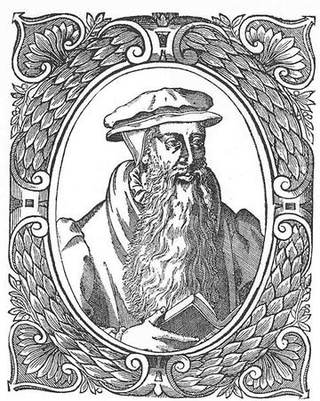
Portrait of John Knox

John Knox

c. 1514 – 1572

“Give me Scotland, or I die.”

His prayer for his nation, recorded by those who knew him
Acts 5:29 (KJV)“Then Peter and the other apostles answered and said, We ought to obey God rather than men.”

Once a galley slave for his preaching, Knox returned to Scotland with a voice like a trumpet and prayed as though the nation’s soul depended on it. He faced down Mary Queen of Scots without flinching and led the Scottish Reformation; at his grave the Regent said, “Here lies one who never feared the face of man.”

Portrait: Knoxbezaicones.jpg — Theodore Beza, Icones (1580)
License: Public domain · via Wikimedia Commons
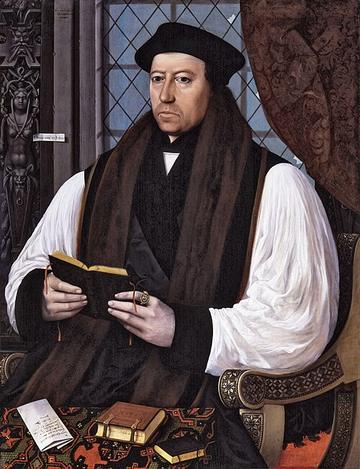
Portrait of Thomas Cranmer

Thomas Cranmer

1489 – 1556

“Forasmuch as my hand offended, writing contrary to my heart, my hand shall first be punished therefore.”

At his burning, Oxford, 1556 — recorded in Foxe’s Book of Martyrs
Matthew 10:28 (KJV)“And fear not them which kill the body, but are not able to kill the soul: but rather fear him which is able to destroy both soul and body in hell.”

Archbishop of Canterbury under Henry VIII and Edward VI, Cranmer put the English Bible in the churches and gave England its Book of Common Prayer. Under Mary he was pressed into signing recantations, then repented of them from the pulpit, was dragged to the stake, and held his right hand first into the fire — “this unworthy hand” — dying with his testimony restored.

Portrait: Thomas_Cranmer_by_Gerlach_Flicke.jpg — Gerlach Flicke
License: Public domain · via Wikimedia Commons

Preachers & Revivalists

Roger Williams

c. 1603 – 1683

“God requireth not an uniformity of religion to be enacted and enforced in any civil state.”

The Bloudy Tenent of Persecution (1644)
2 Corinthians 3:17 (KJV)“Now the Lord is that Spirit: and where the Spirit of the Lord is, there is liberty.”

A brilliant young Puritan minister banished from Massachusetts Bay for teaching that the civil magistrate’s sword reaches bodies and goods, never souls. In the wilderness he founded Providence on liberty of conscience, and in The Bloudy Tenent of Persecution (1644) made his age’s most searching case that forced worship is an abomination to God.
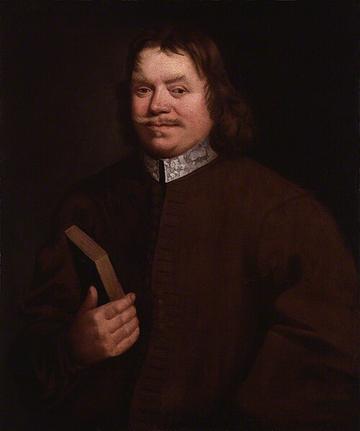
Portrait of John Bunyan

John Bunyan

1628 – 1688

“He that is down needs fear no fall; he that is low, no pride; he that is humble ever shall have God to be his guide.”

The Pilgrim’s Progress (1678)
Hebrews 12:1 (KJV)“Wherefore seeing we also are compassed about with so great a cloud of witnesses, let us lay aside every weight, and the sin which doth so easily beset us, and let us run with patience the race that is set before us,”

A tinker of Bedford converted from a swearing, ignorant life, Bunyan preached without a license and spent twelve years in jail rather than stop — using the time to write The Pilgrim’s Progress, the story of Christian’s journey to the Celestial City, which became the most widely read book in the world after the Bible itself.

Portrait: John_Bunyan_by_Thomas_Sadler_1684.jpg — Thomas Sadler
License: Public domain · via Wikimedia Commons
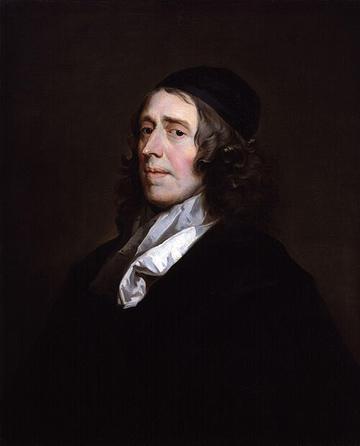
Portrait of John Owen

John Owen

1616 – 1683

“Be killing sin, or it will be killing you.”

The sum of his Of the Mortification of Sin in Believers (1656)
Romans 8:13 (KJV)“For if ye live after the flesh, ye shall die: but if ye through the Spirit do mortify the deeds of the body, ye shall live.”

The prince of the English Puritans, Owen was vice-chancellor of Oxford and chaplain to Cromwell, yet his lasting work is his searching writing on the Spirit, on communion with God, and on the daily war against indwelling sin. His rule stands: sin must be mortified daily, or it will do the mortifying.

Portrait: John_Owen_by_John_Greenhill.jpg — Attributed to John Greenhill
License: Public domain · via Wikimedia Commons
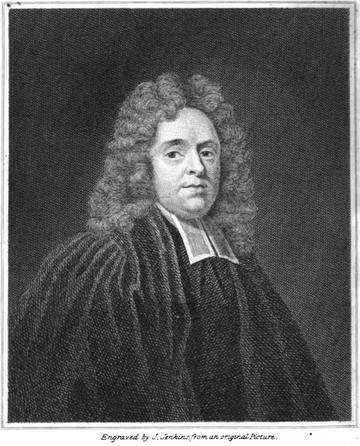
Portrait of Matthew Henry

Matthew Henry

1662 – 1714

“The woman was made of a rib out of the side of Adam; not made out of his head to rule over him, nor out of his feet to be trampled upon by him, but out of his side to be equal with him, under his arm to be protected, and near his heart to be loved.”

Commentary on the Whole Bible, on Genesis 2
Genesis 2:22 (KJV)“And the rib, which the LORD God had taken from man, made he a woman, and brought her unto the man.”

A Welsh nonconformist pastor whose name is now known wherever the Bible is studied in English: Matthew Henry’s commentary on the whole Bible — begun in 1704 and finished by his brethren from his notes — has fed pastors and families for three centuries with its rich, practical, Christ-honoring explanation of every verse.

Portrait: Matthew_Henry_Portrait_1707.png — J. Jenkins
License: Public domain · via Wikimedia Commons

Susanna Wesley

1669 – 1742

“Whatever weakens your reason, impairs the tenderness of your conscience, obscures your sense of God, takes off your relish for spiritual things… that thing is sin to you, however harmless it may seem in itself.”

Her letter to her son John, February 6, 1725
Proverbs 22:6 (KJV)“Train up a child in the way he should go: and when he is old, he will not depart from it.”

The mother of John and Charles discipled a generation from her Epworth kitchen: two hours daily for her own prayer and Scripture, a scheduled private hour with each child every week to talk of the things of God, and sermon-readings at her table that drew the parish when the pulpit failed. Methodism was cradled in her order.
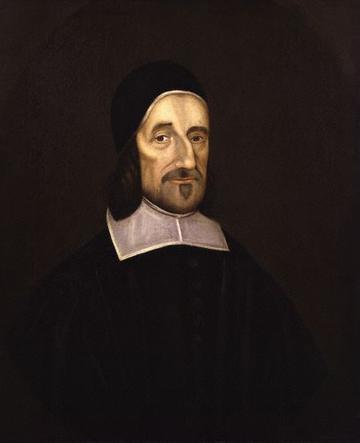
Portrait of Richard Baxter

Richard Baxter

1615 – 1691

“I preached as never sure to preach again, and as a dying man to dying men.”

His own rule of preaching, told in his Life
2 Corinthians 5:11 (KJV)“Knowing therefore the terror of the Lord, we persuade men; but we are made manifest unto God; and I trust also are made manifest in your consciences.”

Pastor of Kidderminster for nearly twenty years, Baxter so preached and visited from house to house that a town of rough weavers became a town of worshippers — the streets, he said, were filled with the sound of psalm-singing. His Reformed Pastor still searches ministers today, and The Saints’ Everlasting Rest turned generations heavenward.

Portrait: Richard_Baxter_Colour.jpg — After Robert White
License: Public domain · via Wikimedia Commons
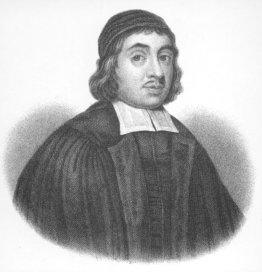
Portrait of Thomas Watson

Thomas Watson

c. 1620 – 1686

“Eternity to the godly is a day that hath no sunset; eternity to the wicked is a night that hath no sunrise.”

A Body of Divinity (1692)
2 Corinthians 4:18 (KJV)“While we look not at the things which are seen, but at the things which are not seen: for the things which are seen are temporal; but the things which are not seen are eternal.”

A London Puritan preacher of rare clarity and warmth, Watson was ejected in 1662 for refusing to conform, yet kept preaching wherever doors opened. His Body of Divinity and The Beatitudes are Puritan divinity at its most readable — doctrine you can feel.

Portrait: Thomas_Watson_(Puritan).jpg — After James Hopwood the Elder
License: Public domain · via Wikimedia Commons
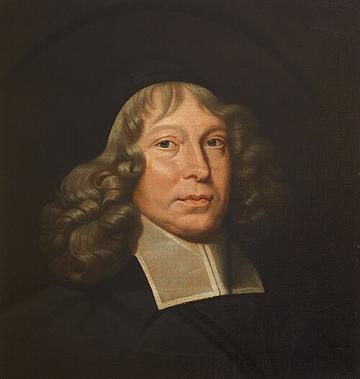
Portrait of Samuel Rutherford

Samuel Rutherford

c. 1600 – 1661

“When I am in the cellar of affliction, I look for the Lord’s choicest wines.”

Letters of Samuel Rutherford
Psalms 119:71 (KJV)“It is good for me that I have been afflicted; that I might learn thy statutes.”

A Scottish pastor banished to Aberdeen for his preaching, Rutherford wrote from exile the letters of comfort that have carried afflicted believers ever since — letters steeped in love to Christ as the altogether lovely One. He later sat in the Westminster Assembly and served as principal of St Mary’s College, St Andrews.

Portrait: Samuel_Rutherford_St._Andrews.jpg — Unidentified painter / Robert Walker
License: Public domain · via Wikimedia Commons
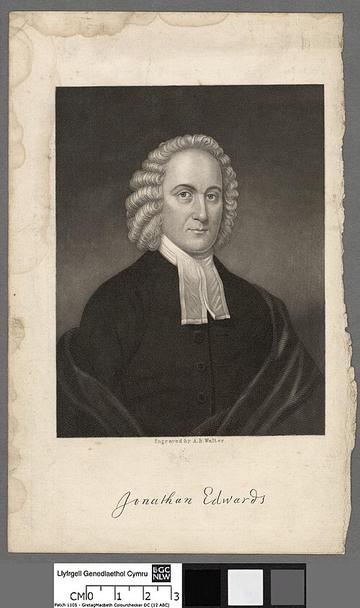
Portrait of Jonathan Edwards

Jonathan Edwards

1703 – 1758

“Resolved, that I will do whatsoever I think to be most to God’s glory… in the whole of my duration.”

His Resolutions, written as a young man (1722–23)
1 Corinthians 10:31 (KJV)“Whether therefore ye eat, or drink, or whatsoever ye do, do all to the glory of God.”

America’s greatest theologian, Edwards wrote out seventy resolutions as a youth and lived them. Pastor at Northampton in the Great Awakening, he preached “Sinners in the Hands of an Angry God” at Enfield in 1741 — reading quietly while hearers gripped their seats — and defended true revival with a mind of steel and a heart for God’s glory.

Portrait: Portrait of Jonathan Edwards (4674095).jpg — A. B. Walter
License: Public domain · via Wikimedia Commons
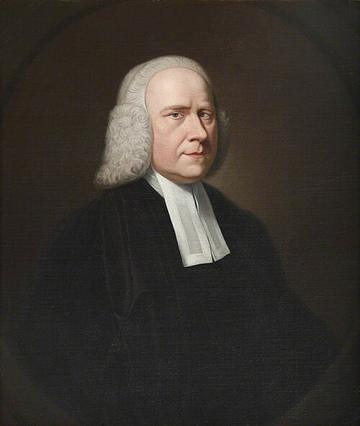
Portrait of George Whitefield

George Whitefield

1714 – 1770

“We are immortal until our work on earth is done.”

His settled confidence, spoken and lived across the Atlantic world
John 9:4 (KJV)“I must work the works of him that sent me, while it is day: the night cometh, when no man can work.”

Turned out of pulpits, Whitefield preached in the open fields to tens of thousands — colliers weeping white streaks down blackened cheeks — and crossed the Atlantic thirteen times to preach Christ in the colonies. His voice could reach thirty thousand without amplification; his orphan house in Georgia, his tireless journies, and his gospel of the new birth helped ignite the Great Awakening.

Portrait: Robert_Hunter_(c.1715-1720-c.1803)_(possibly)_-_Reverend_George_Whitefield_(1714–1770),_MA_-_72_-_Mansfield_College.jpg — Robert Hunter
License: Public domain · via Wikimedia Commons
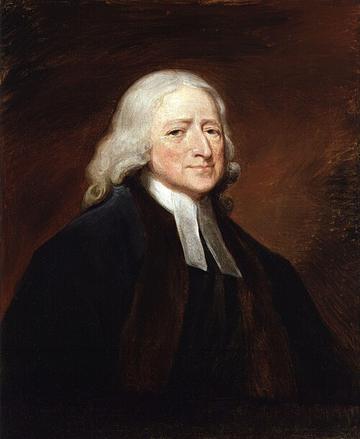
Portrait of John Wesley

John Wesley

1703 – 1791

“Give me one hundred preachers who fear nothing but sin and desire nothing but God, and I care not a straw whether they be clergymen or laymen; such alone will shake the gates of hell and set up the kingdom of heaven upon Earth.”

From his letters
Matthew 9:38 (KJV)“Pray ye therefore the Lord of the harvest, that he will send forth labourers into his harvest.”

Converted at Aldersgate in 1738 when his heart was “strangely warmed,” Wesley rode some 250,000 miles on horseback and preached over 40,000 sermons, organizing the Methodist societies class by class so new converts were shepherded, not scattered. He took the whole world as his parish and worked to the last week of his life.

Portrait: John_Wesley_by_George_Romney.jpg — After George Romney
License: Public domain · via Wikimedia Commons
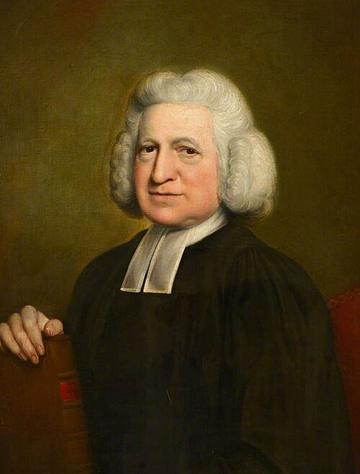
Portrait of Charles Wesley

Charles Wesley

1707 – 1788

“O for a thousand tongues to sing my great Redeemer’s praise, the glories of my God and King, the triumphs of His grace!”

His hymn (1739), written for the anniversary of his conversion
Psalms 104:33 (KJV)“I will sing unto the LORD as long as I live: I will sing praise to my God while I have my being.”

The sweet singer of the Methodist revival, Charles Wesley wrote some six thousand hymns — “Hark! the Herald Angels Sing,” “Love Divine, All Loves Excelling,” “Jesus, Lover of My Soul” — putting the whole gospel into verse the newest convert could carry away singing.

Portrait: Charles_Wesley.jpg — User Magnus Manske on en.wikipedia
License: Public domain · via Wikimedia Commons
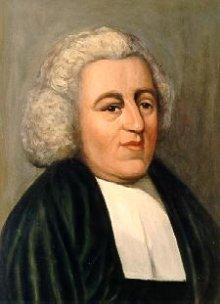
Portrait of John Newton

John Newton

1725 – 1807

“I am not what I ought to be, I am not what I want to be, I am not what I hope to be in another world; but still I am not what I once used to be, and by the grace of God I am what I am.”

From his letters
Ephesians 2:8 (KJV)“For by grace are ye saved through faith; and that not of yourselves: it is the gift of God:”

A blaspheming sailor and slave-ship captain, Newton was brought to Christ in a storm at sea in 1748, and never got over the grace that saved a wretch like him. As pastor at Olney and in London he wrote “Amazing Grace” and the Olney Hymns, counseled William Wilberforce, and testified against the slave trade he had once served.

Portrait: JohnNewtonColour.jpg — Contemporary portrait
License: Public domain · via Wikimedia Commons

William Wilberforce

1759 – 1833

“God Almighty has set before me two great objects, the suppression of the slave trade and the reformation of manners.”

His journal entry of October 28, 1787, published in his sons’ Life of William Wilberforce
Amos 5:24 (KJV)“But let judgment run down as waters, and righteousness as a mighty stream.”

A small, charming, wealthy young MP — elected at twenty-one, Pitt’s intimate friend — converted in the ‘great change’ of 1784–85 and talked out of leaving politics by John Newton himself. For forty-six years he fought the slave trade as a calling from God: the trade abolished in 1807, and slavery itself abolished days before his death in 1833.
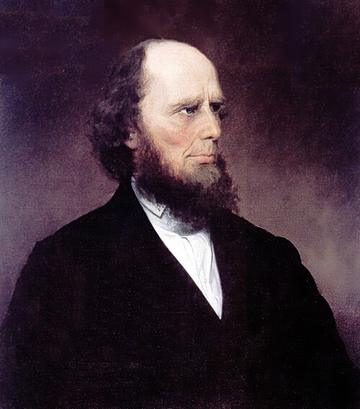
Portrait of Charles Grandison Finney

Charles Grandison Finney

1792 – 1875

“A revival is nothing else than a new beginning of obedience to God.”

Lectures on Revivals of Religion (1835)
2 Chronicles 7:14 (KJV)“If my people, which are called by my name, shall humble themselves, and pray, and seek my face, and turn from their wicked ways; then will I hear from heaven, and will forgive their sin, and will heal their land.”

A frontier lawyer converted in 1821 who burned his law books’ hold on him and took up preaching, Finney’s plain, urgent appeals swept western New York — the “burned-over district” — and Rochester saw a revival that emptied taverns and filled churches. He later taught at Oberlin and preached to thousands in England.

Portrait: Charles_g_finney.jpg — Unknown authorUnknown author
License: Public domain · via Wikimedia Commons
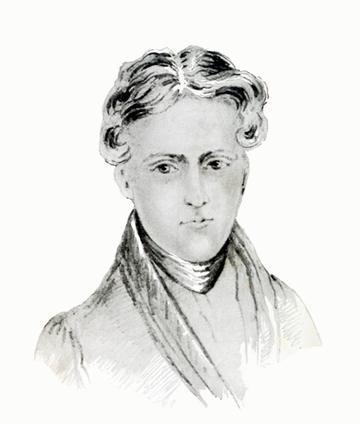
Portrait of Robert Murray M’Cheyne

Robert Murray M’Cheyne

1813 – 1843

“It is not great talents God blesses so much as likeness to Jesus. A holy minister is an awful weapon in the hand of God.”

Recorded in Bonar’s Memoir and Remains
1 Peter 1:16 (KJV)“Because it is written, Be ye holy; for I am holy.”

Dead at twenty-nine, M’Cheyne burned with a holiness that still convicts: pastor of St Peter’s, Dundee, he rose early to pray, visited his people relentlessly, and journeyed to the Holy Land on the Church of Scotland’s mission of inquiry to the Jews. The revival that broke out under his assistant’s preaching while he was away found a people prepared by his prayers.

Portrait: M'Cheyne_self_portrait.png — Robert Murray M'Cheyne
License: Public domain · via Wikimedia Commons

Fanny Crosby

1820 – 1915

“Blessed assurance, Jesus is mine! O what a foretaste of glory divine!”

Her hymn Blessed Assurance (1873), written to Phoebe Knapp’s tune
Psalm 104:33 (KJV)“I will sing unto the LORD as long as I live: I will sing praise to my God while I have my being.”

Blinded at six weeks old by a quack’s treatment, she refused all her life to call it anything but a gift — in heaven, the first face to gladden her sight would be her Saviour’s. Beginning at forty-four, she wrote the words of the gospel songs: more than eight thousand hymns and songs, many under pen names, Blessed Assurance among them.

Catherine Booth

1829 – 1890

“There is no improving the future without disturbing the present.”

Attributed — the saying preserved in Salvation Army tradition as hers; recorded here as attributed
Isaiah 61:1 (KJV)“The Spirit of the Lord GOD is upon me; because the LORD hath anointed me to preach good tidings unto the meek; he hath sent me to bind up the brokenhearted, to proclaim liberty to the captives, and the opening of the prison to them that are bound;”

The Salvation Army’s Mother: she had read the Bible through eight times by the age of twelve, defended women’s preaching in print in 1859, and from 1878 built the Army beside William — co-architect of its holiness teaching, designer of its work among women, preaching to duchesses and costermongers alike.
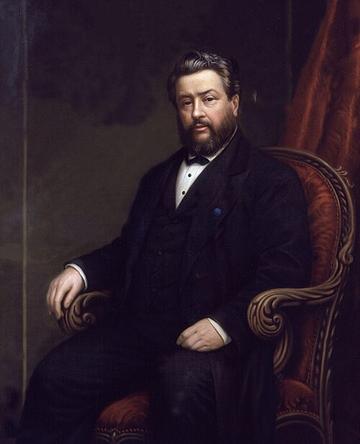
Portrait of Charles Haddon Spurgeon

Charles Haddon Spurgeon

1834 – 1892

“By perseverance the snail reached the ark.”

His proverb, from his sermons and writings
Galatians 6:9 (KJV)“And let us not be weary in well doing: for in due season we shall reap, if we faint not.”

Converted at fifteen in a snowstorm, hearing “Look unto me, and be ye saved,” Spurgeon was preaching to thousands in London by nineteen. For thirty-eight years at the Metropolitan Tabernacle his sermons were printed weekly and read around the world; he founded a pastors’ college and an orphanage, and his Treasury of David still opens the Psalms to preachers everywhere.

Portrait: Charles_Haddon_Spurgeon_by_Alexander_Melville.jpg — Alexander Melville
License: Public domain · via Wikimedia Commons
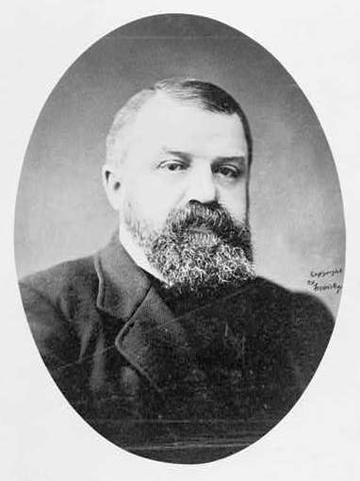
Portrait of Dwight L. Moody

Dwight L. Moody

1837 – 1899

“Someday you will read or hear that D. L. Moody of East Northfield is dead. Don’t believe a word of it. At that moment I shall be more alive than I am now; I shall have gone up higher.”

His own words, spoken in his last years
John 11:25 (KJV)“Jesus said unto her, I am the resurrection, and the life: he that believeth in me, though he were dead, yet shall he live:”

A Boston shoe clerk with little schooling, Moody built a Sunday school of Chicago street children into a ministry that shook two continents. With Ira Sankey’s singing he filled the largest halls in Britain and America; the Chicago fire drove him to preach for decisions on the spot, and his schools at Northfield and the Moody Bible Institute train workers to this day.

Portrait: Dwight_Lyman_Moody_c.1900.jpg — Copyright by Barron Fredricks, NYC.D11791 U.S. Copyright Office.
License: Public domain · via Wikimedia Commons
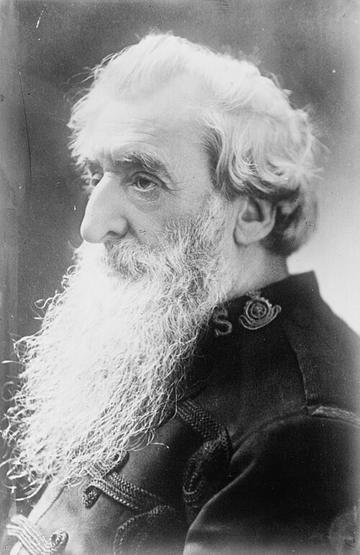
Portrait of William Booth

William Booth

1829 – 1912

“While women weep, as they do now, I’ll fight; while children go hungry, as they do now, I’ll fight… I’ll fight to the very end!”

His battle cry for the Salvation Army
2 Timothy 4:7 (KJV)“I have fought a good fight, I have finished my course, I have kept the faith:”

A Methodist preacher who took the gospel into the slums of London’s East End, Booth organized his converts like an army — uniforms, ranks, brass bands and all — declaring war on both sin and the misery that surrounded it. The Salvation Army he founded carried soup, soap, and salvation to the worst streets of the world.

Portrait: William_Booth.jpg — Bain News Service, publisher
License: Public domain · via Wikimedia Commons
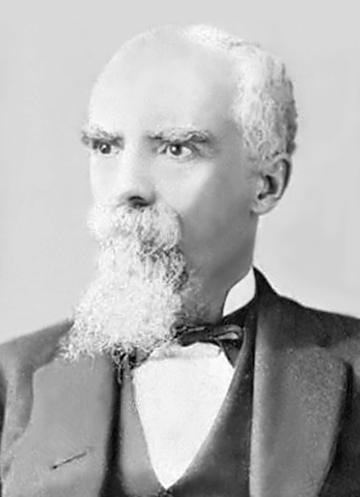
Portrait of Edward M. Bounds

Edward M. Bounds

1835 – 1913

“Talking to men for God is a great thing, but talking to God for men is greater still.”

Power Through Prayer (1912)
James 5:16 (KJV)“Confess your faults one to another, and pray one for another, that ye may be healed. The effectual fervent prayer of a righteous man availeth much.”

A Civil War chaplain who was captured and held prisoner, Bounds rose at 4 a.m. to give the first hours of every day to prayer, and his little books on prayer — written in obscurity, published after his death — have driven more preachers to their knees than almost any writings since the apostles.

Portrait: Embounds1864.jpg — Unknown field photographer of the Confederate Army
License: Public domain · via Wikimedia Commons
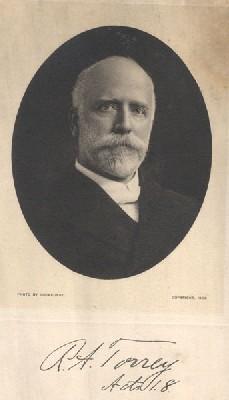
Portrait of Reuben A. Torrey

Reuben A. Torrey

1856 – 1928

“The chief purpose of prayer is that God may be glorified in the answer.”

How to Pray (1900)
John 14:13 (KJV)“And whatsoever ye shall ask in my name, that will I do, that the Father may be glorified in the Son.”

Yale-educated evangelist and dean of the Moody Bible Institute, Torrey preached around the world, superintended the Los Angeles Bible Institute, and edited The Fundamentals — the twelve volumes that defended the historic faith against modernism and gave “fundamentalist” its name.

Portrait: RATorrey.jpg — Contemporary photograph
License: Public domain · via Wikimedia Commons
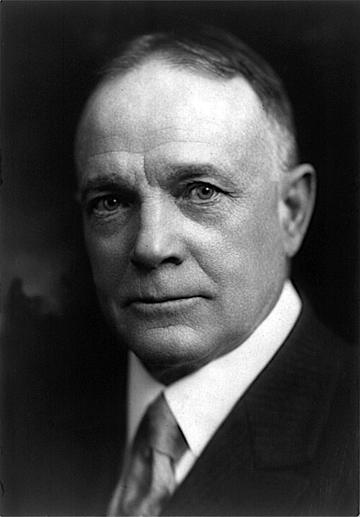
Portrait of Billy Sunday

Billy Sunday

1862 – 1935

“Going to church doesn’t make you a Christian any more than going to a garage makes you an automobile.”

From his tabernacle sermons
Acts 16:31 (KJV)“And they said, Believe on the Lord Jesus Christ, and thou shalt be saved, and thy house.”

A major-league baseball player converted at a Chicago rescue mission, Billy Sunday preached to more people face-to-face than anyone before him — over a hundred million — sliding across sawdust trails in a style all his own, hammering sin and pointing sinners to Christ in plain American speech.

Portrait: Billy_Sunday_1921.jpg — Unknown authorUnknown author
License: Public domain · via Wikimedia Commons
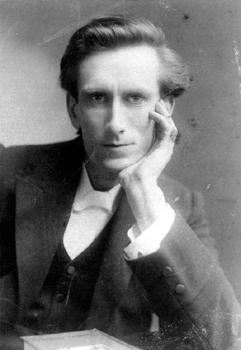
Portrait of Oswald Chambers

Oswald Chambers

1874 – 1917

“Faith never knows where it is being led, but it loves and knows the One who is leading.”

My Utmost for His Highest
Proverbs 3:5 (KJV)“Trust in the LORD with all thine heart; and lean not unto thine own understanding.”

A Scottish preacher who trained ministers at his Bible Training College in London, Chambers went to Egypt as a YMCA chaplain to the troops in 1915 and died there of appendicitis, worn out serving soldiers. His widow compiled his talks into My Utmost for His Highest, the devotional read daily by millions ever since.

Portrait: OswaldChambers.jpg — Contemporary photograph
License: Public domain · via Wikimedia Commons

Corrie ten Boom

1892 – 1983

“There is no pit so deep, that God's love is not deeper still.”

Her sister Betsie’s words in Ravensbrück, as Corrie recorded them in The Hiding Place (1971)
Psalm 91:1 (KJV)“He that dwelleth in the secret place of the most High shall abide under the shadow of the Almighty.”

A Haarlem watchmaker — the first woman licensed in the trade in the Netherlands — whose family home over the watch shop became a hiding place for Jews under the German occupation. The family was arrested; her father died in prison, her sister Betsie in Ravensbrück. Corrie survived, and carried Betsie’s message around the world.

A. W. Tozer

1897 – 1963

“What comes into our minds when we think about God is the most important thing about us.”

The Knowledge of the Holy (1961) — its first sentence
Psalm 27:4 (KJV)“One thing have I desired of the LORD, that will I seek after; that I may dwell in the house of the LORD all the days of my life, to behold the beauty of the LORD, and to enquire in his temple.”

A poor, self-educated farm boy converted at seventeen in an Akron attic after hearing a street preacher’s cry — who became one of the most widely read devotional writers of the twentieth century by reading everything and praying more than he read. The Pursuit of God and The Knowledge of the Holy still call the church back to the knowledge of the Holy.

Watchman Nee

1903 – 1972

“I want nothing for myself; I want everything for the Lord.”

Attributed — the summary of his consecration recorded in the standard accounts of his life, beginning with Angus Kinnear’s Against the Tide
Galatians 2:20 (KJV)“I am crucified with Christ: nevertheless I live; yet not I, but Christ liveth in me: and the life which I now live in the flesh I live by the faith of the Son of God, who loved me, and gave himself for me.”

Converted at seventeen in Foochow under the evangelist Dora Yu, Nee To-sheng gave up a brilliant future to become the most influential Chinese Christian teacher of his century, building the ‘Little Flock’ churches on the pattern of Scripture. Urged to flee in 1949, he stayed with his flock; arrested in 1952, he spent his last twenty years in prison and labor camp, dying in 1972.
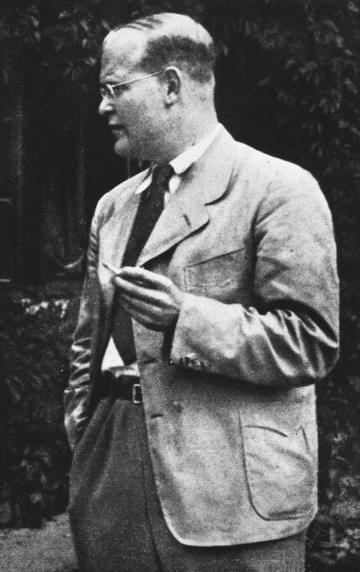
Portrait of Dietrich Bonhoeffer

Dietrich Bonhoeffer

1906 – 1945

“When Christ calls a man, he bids him come and die.”

The Cost of Discipleship (1937)
Matthew 16:24 (KJV)“Then said Jesus unto his disciples, If any man will come after me, let him deny himself, and take up his cross, and follow me.”

A German pastor and theologian who trained underground seminaries for the Confessing Church under Nazi rule, Bonhoeffer refused to flee to safety when he could have stayed in America, returned to Germany, and was hanged at Flossenbürg in April 1945 — weeks before liberation — for his part in the resistance. His Cost of Discipleship remains the classic warning against “cheap grace.”

Portrait: Bundesarchiv_Bild_146-1987-074-16,_Dietrich_Bonhoeffer.jpg — Unknown authorUnknown author
License: CC BY-SA 3.0 de · via Wikimedia Commons
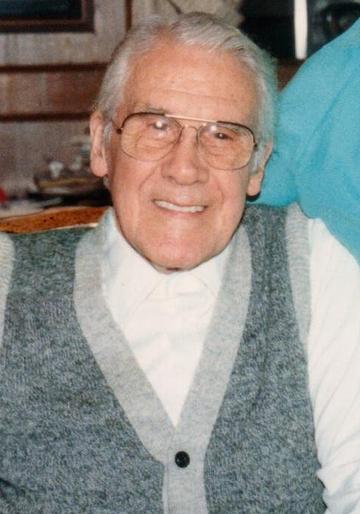
Portrait of Leonard Ravenhill

Leonard Ravenhill

1907 – 1994

“Entertainment is the devil’s substitute for joy. The more joy we have in the Lord, the less entertainment we need.”

Why Revival Tarries (1959)
Psalms 85:6 (KJV)“Wilt thou not revive us again: that thy people may rejoice in thee?”

An English evangelist who preached in the streets of Leeds and in tents across Britain before settling in Texas, Ravenhill spent his life crying for revival and mentoring younger preachers, including Keith Green. Why Revival Tarries is his burning question to a comfortable church — and it has never been answered away.

Portrait: LeonardRavenhill-12-1988.jpg — Roland Heddins
License: CC BY-SA 3.0 · via Wikimedia Commons

Richard Wurmbrand

1909 – 2001

“I have found truly jubilant Christians only in the Bible, in the Underground Church, and in prison.”

Tortured for Christ (1967)
Matthew 5:10 (KJV)“Blessed are they which are persecuted for righteousness’ sake: for theirs is the kingdom of heaven.”

A Romanian atheist of Jewish birth — a stockbroker and man about town — converted in 1938 through the prayers of an old German carpenter who had prayed for years for a Jew to lead to Christ. He preached through the Nazi years, defied the Communist Congress of Cults to its face in 1945, and spent fourteen years in Communist prisons, three in solitary — then, ransomed to the West, became the suffering church’s voice.
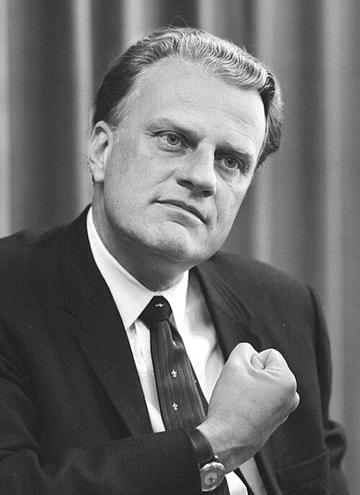
Portrait of Billy Graham

Billy Graham

1918 – 2018

“I’ve read the last page of the Bible. It’s all going to turn out all right.”

His word of comfort, spoken often in his later years
1 Corinthians 2:2 (KJV)“For I determined not to know any thing among you, save Jesus Christ, and him crucified.”

A North Carolina farm boy who preached to live audiences of some 215 million people in 185 countries, Graham filled stadiums from Los Angeles to New York to London with a simple message — you must be born again — and counseled presidents while pointing every hearer to the cross. His 1949 Los Angeles crusade launched a ministry that defined evangelical evangelism for a century.

Portrait: Billy_Graham_bw_photo,_April_11,_1966.jpg — Warren K. Leffler
License: Public domain · via Wikimedia Commons
The Missionaries

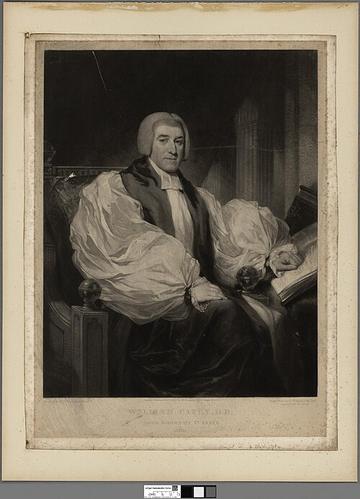
Portrait of William Carey

William Carey

1761 – 1834

“Expect great things from God; attempt great things for God.”

His sermon at Nottingham, 1792 — on Isaiah 54:2–3
Isaiah 54:2 (KJV)“Enlarge the place of thy tent, and let them stretch forth the curtains of thine habitations: spare not, lengthen thy cords, and strengthen thy stakes;”

An English shoemaker who read voyages by lamplight and kept a leather map of the world before him, Carey forced the door of modern missions open almost single-handedly. In India for forty-one years without a furlough, he translated the Bible or portions into dozens of languages, founded Serampore College, and fought the burning of widows until it was abolished.

Portrait: Portrait of William Carey, D.D (4672235).jpg — Samuel William Reynolds
License: Public domain · via Wikimedia Commons

Henry Martyn

1781 – 1812

“Now let me burn out for God.”

His journal after landing in India (1806), published in his Journals and Letters
Philippians 3:8 (KJV)“Yea doubtless, and I count all things but loss for the excellency of the knowledge of Christ Jesus my Lord: for whom I have suffered the loss of all things, and do count them but dung, that I may win Christ,”

Senior wrangler at Cambridge — the first mathematician of his year — who counted his honors dross beside winning souls. As an East India Company chaplain he preached, opened schools, and translated the Scriptures into Hindustani and Persian. His body broke under the pace: he died at Tokat in 1812, aged thirty-one, buried by Armenian Christians.
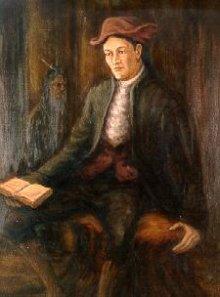
Portrait of David Brainerd

David Brainerd

1718 – 1747

“I care not where or how I live, or what hardships I go through, so that I can but gain souls to Christ.”

His diary, in Jonathan Edwards’ Memoir of Brainerd
Daniel 12:3 (KJV)“And they that be wise shall shine as the brightness of the firmament; and they that turn many to righteousness as the stars for ever and ever.”

Expelled from Yale, Brainerd gave his short, sickly life to the Native Americans of New Jersey and Pennsylvania, praying in the snows until his clothes froze, and saw a true awakening among them before consumption took him at twenty-nine in Edwards’ house. His diary has sent more missionaries to the field than any book but the Bible.

Portrait: DavidBrainerd.jpg — This file is lacking author information.
License: Public domain · via Wikimedia Commons
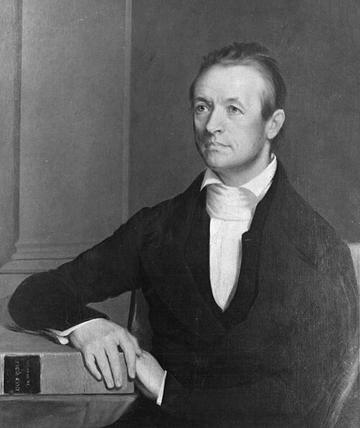
Portrait of Adoniram Judson

Adoniram Judson

1788 – 1850

“The future is as bright as the promises of God.”

His settled saying through war, prison, and loss in Burma
2 Corinthians 1:20 (KJV)“For all the promises of God in him are yea, and in him Amen, unto the glory of God by us.”

America’s first foreign missionary, Judson labored thirty-seven years in Burma: he translated the whole Bible into Burmese, compiled its dictionary, was imprisoned in irons during the war with Britain and nearly starved, buried two wives and several children — and lived to see churches planted that stand today.

Portrait: Adoniram_Judson_1846.jpg — George Peter Alexander Healy
License: Public domain · via Wikimedia Commons

Ann Judson

1789 – 1826

No saying of Ann Judson’s is quoted here: her voice survives in her letters and translations, and this study’s rule forbids dressing paraphrase in quotation marks. Her work is her words.

From her profile in The Fifty Greatest study, below
Matthew 10:39 (KJV)“He that findeth his life shall lose it: and he that loseth his life for my sake shall find it.”

America’s first woman missionary voice: she sailed with Adoniram a fortnight after their wedding in 1812, mastered Burmese and Siamese, translated Matthew, Daniel, and Jonah, and taught Burmese women. When war threw her husband into a death prison, Ann — nursing a newborn in the prison yard — pleaded, bribed, and carried food until his release.
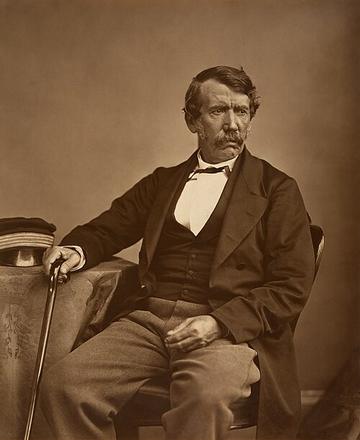
Portrait of David Livingstone

David Livingstone

1813 – 1873

“I am prepared to go anywhere, provided it be forward.”

From his journals and letters
Philippians 3:14 (KJV)“I press toward the mark for the prize of the high calling of God in Christ Jesus.”

A Scottish mill boy who taught himself Latin, Livingstone crossed Africa as missionary, doctor, and explorer, opening the interior to the gospel and exposing the Arab slave trade to the world. He died on his knees in prayer in a hut at Ilala in 1873; his heart was buried under an African tree, and his body carried to Westminster Abbey.

Portrait: David_Livingstone_by_Thomas_Annan.jpg — Thomas Annan / Adam Cuerden
License: Public domain · via Wikimedia Commons
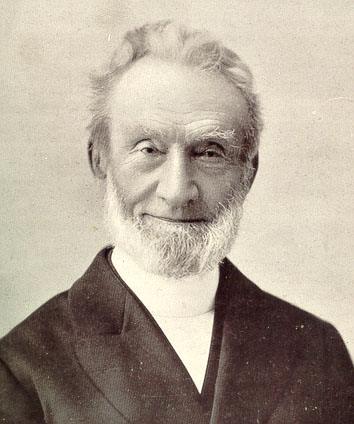
Portrait of George Müller

George Müller

1805 – 1898

“The beginning of anxiety is the end of faith, and the beginning of true faith is the end of anxiety.”

From his Narratives of the Lord’s dealings with him
Philippians 4:6 (KJV)“Be careful for nothing; but in every thing by prayer and supplication with thanksgiving let your requests be made known unto God.”

A converted Prussian thief who built orphan houses at Bristol that cared for more than ten thousand children — never asking any man for a penny, but asking God in prayer, and recording some fifty thousand answers. Over £1.5 million passed through his hands for orphans, missions, and Scripture distribution, all by prayer and faith.

Portrait: George_Muller.jpg
License: Public domain · via Wikimedia Commons

John Paton

1824 – 1907

“If I can but live and die serving and honouring the Lord Jesus, it will make no difference to me whether I am eaten by cannibals or by worms.”

His Autobiography (1889) — his answer to the minister who warned him of the cannibals
Isaiah 41:10 (KJV)“Fear thou not; for I am with thee: be not dismayed; for I am thy God: I will strengthen thee; yea, I will help thee; yea, I will uphold thee with the right hand of my righteousness.”

A Glasgow city missionary who sailed in 1858 to Tanna in the New Hebrides, where two missionaries before him had been killed and eaten within minutes of landing. He lived to preach across the islands, fight the labor trade that kidnapped islanders, and write an Autobiography that remains one of the great missionary classics.
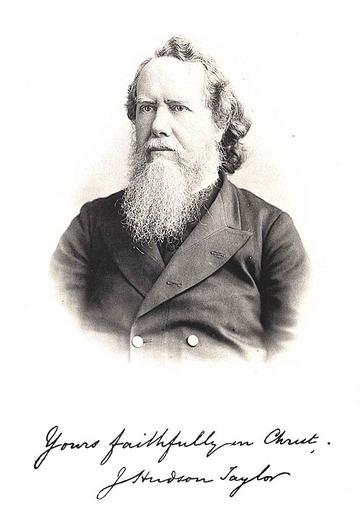
Portrait of James Hudson Taylor

James Hudson Taylor

1832 – 1905

“God’s work done in God’s way will never lack God’s supply.”

His lifelong maxim, at the heart of the China Inland Mission
Philippians 4:19 (KJV)“But my God shall supply all your need according to his riches in glory by Christ Jesus.”

Founder of the China Inland Mission, Taylor took the gospel into China’s inland provinces where no missionary had gone, dressed as the Chinese dressed, and trusted God for workers and money without appeals. Beginning with 21 workers in 1866, the mission he founded sent out more than 800 missionaries and planted the church deep in China’s interior.

Portrait: HudsonTaylorin1893.jpg — London: Morgan & Scott
License: Public domain · via Wikimedia Commons

Lottie Moon

1840 – 1912

No saying of Lottie Moon’s is set in quotation marks here: her appeals survive in her letters, and this study will not polish her prose into a slogan. Her letters are her monument.

From her profile in The Fifty Greatest study, below
Matthew 9:38 (KJV)“Pray ye therefore the Lord of the harvest, that he will send forth labourers into his harvest.”

A brilliant, rebellious Virginia belle — one of the first Southern women to earn a master’s degree — converted in 1858, who gave China forty years, leaving the schoolroom to itinerate the villages of Shantung. In 1887 she proposed the Christmas offering that bears her name; in the famine of 1912 she gave away her own food until it cost her life.

Mary Slessor

1848 – 1915

“Prayer is the greatest power God has put into our hands for service.”

Attributed — widely attributed to Slessor in the mission literature; recorded here as attributed
2 Corinthians 12:15 (KJV)“And I will very gladly spend and be spent for you; though the more abundantly I love you, the less I be loved.”

A red-haired Dundee mill girl, working the jute looms from age eleven, who resolved at Livingstone’s death to take his place in Africa. Sent to Calabar in 1876 — ‘the white man’s grave’ — she worked nearly forty years, rescuing twin babies condemned to die, settling disputes as mother and magistrate to Okoyong, and opening the Cross River country.

Lilias Trotter

1853 – 1928

“It is a safe thing to trust Him to fulfil the desire which He creates.”

Her Parables of the Cross (1890)
John 12:24 (KJV)“Verily, verily, I say unto you, Except a corn of wheat fall into the ground and die, it abideth alone: but if it die, it bringeth forth much fruit.”

One of Victorian England’s most gifted amateur artists — Ruskin took her as a protégée and promised her the century’s artistic crown — who laid it down for the unreached Muslims of Algeria, a field no mission board would sponsor her for. For forty years she carried Christ into the Sahara with illustrated story-parables of exquisite beauty.

Pandita Ramabai

1858 – 1922

No saying is set in quotation marks here: her Testimony is her own long witness, and this study will not trim it into a slogan.

From her profile in The Fifty Greatest study, below
Isaiah 58:6 (KJV)“Is not this the fast that I have chosen? to loose the bands of wickedness, to undo the heavy burdens, and to let the oppressed go free, and that ye break every yoke?”

Born into a scholarly Brahmin family, honored by Calcutta’s pandits with the titles Pandita and Sarasvati — almost unheard of for a woman — she read in the Sanskrit texts themselves Hinduism’s verdict on widows, and turned to Christ. She built the Sharada Sadan and the great Mukti Mission, sheltering thousands of widows and famine orphans, and translated the Bible for India’s women.
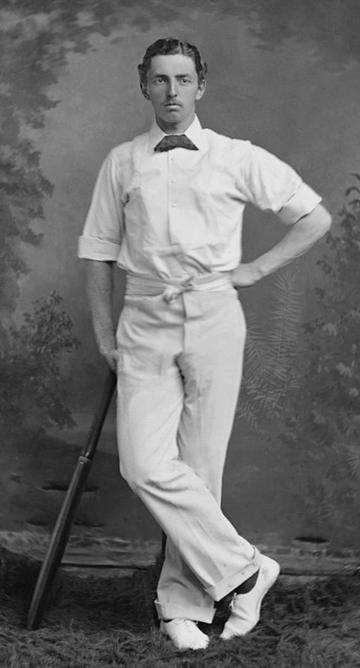
Portrait of C. T. Studd

C. T. Studd

1860 – 1931

“Only one life, ’twill soon be past; only what’s done for Christ will last.”

His poem, “Only One Life”
James 4:14 (KJV)“Whereas ye know not what shall be on the morrow. For what is your life? It is even a vapour, that appeareth for a little time, and then vanisheth away.”

One of England’s most famous cricketers, Studd gave away a fortune to missions and went himself — to China with the Cambridge Seven, to India, and finally to the heart of Africa, where he founded the mission that became WEC International. He died at his post at Ibambi in 1931, still preaching to the people he had crossed the world to reach.

Portrait: Charles_Studd_c1882.jpg — Unknown authorUnknown author
License: Public domain · via Wikimedia Commons

Amy Carmichael

1867 – 1951

“If I covet any place on earth but the dust at the foot of the Cross, then I know nothing of Calvary love.”

Her If: What Do I Know of Calvary Love?
Galatians 6:14 (KJV)“But God forbid that I should glory, save in the cross of our Lord Jesus Christ, by whom the world is crucified unto me, and I unto the world.”

An Irish mill owner’s eldest daughter who reached India in 1895 under the Zenana Mission — and never left, never took a furlough, for fifty-five years. At Dohnavur she rescued children dedicated to the temples, sheltering over a thousand in her lifetime, and wrote thirty-five books; a fall confined her to one room for her last twenty years, from which she still wrote and directed the work.

Gladys Aylward

1902 – 1970

“My heart is full of praise that one so insignificant, uneducated, and ordinary in every way could be used to His glory for the blessing of His people in poor persecuted China.”

As recorded in Alan Burgess’s The Small Woman (1957), from her own account
Zechariah 4:6 (KJV)“Then he answered and spake unto me, saying, This is the word of the LORD unto Zerubbabel, saying, Not by might, nor by power, but by my spirit, saith the LORD of hosts.”

A London parlour maid the China Inland Mission rejected — failed examinations, judged too old to learn Chinese — who saved her fare from a maid’s wages and in 1932 bought a one-way ticket across Siberia to Yangcheng. When Japan invaded and a price was set on her head, she led one hundred orphan children over the mountains and across the Yellow River to safety.

Eric Liddell

1902 – 1945

“We are all missionaries. Wherever we go, we either bring people nearer to Christ, or we repel them from Christ.”

Attributed — from his years of teaching and preaching in China; recorded here as attributed. (The famous ‘When I run, I feel His pleasure’ is a line written for the 1981 film Chariots of Fire, not a documented Liddell quotation.)
1 Corinthians 9:24 (KJV)“Know ye not that they which run in a race run all, but one receiveth the prize? So run, that ye may obtain.”

Born in China to Scottish missionary parents, Britain’s great hope for the 100 metres at Paris 1924 — who would not run his heat on a Sunday, and took the 400 metres instead. At the height of his fame he returned to China as a missionary teacher, serving the villages by bicycle as war closed in, and died in the Japanese internment camp at Weihsien in 1945.

Elisabeth Elliot

1926 – 2015

“The fact that I am a woman does not make me a different kind of Christian, but the fact that I am a Christian does make me a different kind of woman.”

Let Me Be a Woman (1976)
Psalm 31:15 (KJV)“My times are in thy hand: deliver me from the hand of mine enemies, and from them that persecute me.”

A Wheaton graduate and missionary linguist widowed at twenty-nine, when her husband Jim and four companions were speared by the Waodani men they had come to evangelize. She carried the gospel back to those same people, living among them with her little daughter — and became a teacher of unyielding clarity on suffering, womanhood, and devotion.

Jim Elliot

1927 – 1956

“He is no fool who gives what he cannot keep to gain that which he cannot lose.”

His journal, October 28, 1949 — published in Shadow of the Almighty (1958)
Matthew 16:25 (KJV)“For whosoever will save his life shall lose it: and whosoever will lose his life for my sake shall find it.”

A Wheaton wrestler and honor student who turned down safer futures, having settled the arithmetic of eternity in his journal in 1949. In Operation Auca he and four companions made friendly contact with the Waodani from a sandbar they named Palm Beach — and on Sunday, January 8, 1956, all five were speared on the Curaray River. The last of the fifty, and the youngest to die.

The Fifty Greatest — The Full Study

Everything in the study is on this page: the introduction, all fifty full life profiles, and the closing word. Open any name to read the whole of it in place. Their words are honored as history, with every famous saying tied to its source or honestly marked as attributed; the Bible alone is our rule of faith.

Introduction — How Greatness Is Measured Here

The Bible ends its roll of the faithful in Hebrews 11 with men and women "of whom the world was not worthy" — and then the story does not stop. The book of Acts closes with the gospel still marching, and for nineteen centuries since, in every generation, God has raised up men and women who believed Him, obeyed Him, and bore fruit that remains after their names were forgotten by the world. This study gathers fifty of them: martyrs and mothers, translators and hymn writers, cobblers and parliamentarians, mill girls and scholars — the greatest men and women of God since the first century.

The word "greatest" needs its measure stated plainly, because the world's measure and heaven's are not the same. Greatness here is not fame — some in this list were famous in their day, and some died unknown outside one valley in China or one tribe in Africa. Greatness here is not office — there are bishops in this list and there are parlour maids, and the parlour maid does not stand below the bishop. Greatness here is not learning, though some of these were among the most learned people of their centuries. The measure used throughout is the Bible's own: faithfulness to Christ, and fruit that remains. Did they believe God when believing cost them something? Did they obey when obedience was dangerous, humiliating, or slow? And when they were gone, did souls stand converted, churches planted, Bibles translated, hymns still sung, orphans still fed — fruit that did not die with them?

One more rule governs every profile that follows, and it is the rule of this whole section of Grace Team University: these men and women are honored as history; the Bible alone is our rule of faith. Every one of the fifty was a sinner saved by grace, and every one of them was wrong about something. Augustine's greatness is real, and so are the errors that later centuries built on his name; Calvin's industry is honored here without importing his system; stories that rest on tradition rather than record are labeled tradition, openly. Where a famous saying cannot be verified from the person's own writings or a trustworthy record, it is either omitted or marked attributed — no words are polished into quotation marks that history cannot support. The sayings that do appear are tied to their sources in the notes that accompany this study.

Read these lives the way Hebrews tells us to read them: "Remember them which have the rule over you, who have spoken unto you the word of God: whose faith follow, considering the end of their conversation" — and then the anchor of the whole cloud: "Jesus Christ the same yesterday, and to day, and for ever." The fifty are not the point. The Christ who made them what they were is the point. Their greatness is borrowed light; His is the sun.

"(Of whom the world was not worthy:) they wandered in deserts, and in mountains, and in dens and caves of the earth."

— Hebrews 11:38 (KJV)


Part One — The Age of the Martyrs and the Fathers

1. Polycarp of Smyrna

c. 69–155 · Smyrna, in Roman Asia Minor

Polycarp was a disciple of the apostle John — a living bridge between the apostolic age and the church that followed it — and for decades he served as bishop of Smyrna, the city to which the risen Christ had written, "be thou faithful unto death, and I will give thee a crown of life." In his old age the Roman persecution reached Smyrna, and the cry went up in the arena for Polycarp to be hunted down. He was found at a farm outside the city. He fed his captors a meal, asked an hour to pray, and prayed so long and so fervently for all men and all the churches that even his guards were moved.

Brought into the stadium, he was pressed to save himself by reviling Christ and swearing by the emperor. His answer, preserved in the earliest martyrdom account outside the New Testament, is one of the most famous sentences in church history: "Eighty and six years have I served him, and he never did me any injury: how then can I blaspheme my King and my Saviour?" Threatened with wild beasts and then with fire, he answered that the fire which burns for an hour is nothing beside the fire of the judgment to come. The pyre was built; tradition in the account holds that the flames arched around him without consuming him, and he died by the sword. The church at Smyrna sent the story to the other churches in a letter — the Martyrdom of Polycarp — so that his stand belongs to the whole church, exactly as he would have wished.

His influence began before his death and ran through it. His one surviving letter — to the church at Philippi — urges the Philippians to obey the bishop and deacons and warns them, already in the second century, against false teachers with the same pastoral warmth as his Master's letters. When persecution also threatened Rome, the aged Polycarp traveled there to confer with Bishop Anicetus about the date of Easter: the two disagreed about the day, kept communion anyway, and parted in peace — a pattern of fraternal charity Irenaeus preserved on purpose, because the church would need the example forever. It was Irenaeus, who had sat under Polycarp as a boy, who carried his memory west and testified that Polycarp had been "instructed by apostles" and had conversed with many who had seen Christ. The bridge, in other words, had a far bank: the faith Polycarp died for in Smyrna was taught by his pupil's generation in Gaul, and the line from the upper room to the churches of the Rhone runs, in the record, through this one old man.

Why he stands among the greatest. Polycarp joins the apostles to the ages after them: what John taught, Polycarp lived and died holding. His greatness is not complicated — it is the greatness of a man who served Christ for eighty-six years and found, at the end, that he could not deny a King who had never done him anything but good.

His words. "Eighty and six years have I served him, and he never did me any injury: how then can I blaspheme my King and my Saviour?" — spoken before the proconsul, recorded in the Martyrdom of Polycarp, the church of Smyrna's own letter, written within living memory of the event.

The Scripture.

"Fear none of those things which thou shalt suffer: behold, the devil shall cast some of you into prison, that ye may be tried; and ye shall have tribulation ten days: be thou faithful unto death, and I will give thee a crown of life."

— Revelation 2:10 (KJV)

2. Perpetua of Carthage

c. 182–203 · Carthage, Roman North Africa

Vibia Perpetua was twenty-two years old, well-born, well educated, newly married, and nursing an infant son when she was arrested in Carthage under the emperor Septimius Severus for confessing Christ. What makes her stand out among all the martyrs of the early church is that we have her own voice: in prison she kept a diary — the earliest surviving writing by a Christian woman — and it has come down to us inside the account called the Passion of Perpetua and Felicity.

The diary is unflinching. Her father, a pagan, came to the prison again and again, begging her to recant for the family's sake and for her baby's; she records that she grieved for his unhappy old age, but answered him, "I am a Christian." She describes her baptism in prison, her anxiety for her infant, and the dreams God gave her — including a vision of a ladder to heaven with a dragon beneath it, which she understood to mean she would suffer not merely death but a contest with the devil himself, and would conquer. Her servant girl Felicitas, pregnant when arrested, was martyred beside her. The two women were killed by wild beasts and the sword in the arena at Carthage in 203, and the eyewitness who finished the account says they went out "joyful and with calm faces."

Her fellow martyr deserves his sentence here too: Saturus, her teacher in the faith, surrendered himself voluntarily so as not to be separated from his pupils, and the Passion gives him a vision of the martyrs carried by angels into a garden of light — the document is a small anthology of the early church's hope, not one diary only. What sets Perpetua's portion apart is its authenticity of detail: she writes of the prison's heat and darkness turned to a palace because Christ was there, of her brother's childhood death and her prayers for him, of the gladiator's trembling hand that needed her own to guide the sword to her throat at the end — a detail the eyewitness, not she, records. Early editors questioned whether a woman could have written so well; the church that treasured the document from the beginning never doubted it, and neither has serious scholarship since: the diary is hers, and it is the oldest Christian text we possess from a woman's pen.

Why she stands among the greatest. Perpetua proves that the faith of the early church was not carried by bishops alone. A young mother with everything to lose weighed her father's tears, her baby's future, and her own life against Christ — and chose Christ, and wrote it down so that the church would know a woman's hand held the pen of martyrdom too.

Her words. "I am a Christian." — her answer to her father's pleading, from her own prison diary in the Passion of Perpetua and Felicity.

The Scripture.

"For to me to live is Christ, and to die is gain."

— Philippians 1:21 (KJV)

3. Athanasius of Alexandria

c. 296–373 · Alexandria, Egypt

Athanasius was a young deacon's assistant at the Council of Nicaea in 325, when the church confessed against Arius that Christ is of one substance with the Father — truly God, not a made being. Three years later he became bishop of Alexandria, and for the remaining forty-five years of his life the empire tried to make him give that confession back. Arian emperors exiled him five times — to Germany, to Rome, to the Egyptian desert among the monks. Charges were manufactured; councils were stacked; at times nearly the whole visible church, East and West, seemed to bend toward Arianism, and the saying arose that it was Athanasius contra mundum — Athanasius against the world.

He would not bend. From exile and hiding he wrote the works that fixed the church's grammar about Christ: On the Incarnation, arguing that only God Himself in human flesh could heal human corruption — "He was made man, that we might be made partakers of the divine nature" is the drift of his famous sentence, grounded by him in 2 Peter 1:4. He wrote the Life of Antony, which carried the desert monk's fame across the empire and stirred generations toward radical devotion. And in his festal letter of 367 he gave the earliest surviving list of exactly the twenty-seven books of our New Testament — the canon received, defended, and handed on. He died in 373, back in his own city, having outlasted every emperor who exiled him.

Twice his exile served the church in ways Alexandria could not. Banished to Trier in Germany, he carried Egyptian Christianity's news to the West and learned the Latin church's mind; hidden among the desert monks during his third exile, he wrote the Life of Antony and the apologetic works that made the desert fathers famous and the Arian cause indefensible to ordinary readers. His festal letters — the annual Easter announcements of an exiled bishop who sometimes could not sign his own city — regulated the church's calendar across Egypt, and it is the thirty-ninth of them (367) that lists the New Testament's twenty-seven books exactly as we hold them, calling them "the springs of salvation." He also bequeathed the church its theological shorthand: homoousios, "of one substance," the Nicaean word he defended for fifty years until it became, through his stubbornness, the common confession of Christendom.

Why he stands among the greatest. Athanasius teaches the church that one man who will not move can be worth an empire that will not stop moving. The deity of Christ — the load-bearing wall of the whole faith — stood in his century largely because one short Egyptian bishop decided that exile was cheaper than heresy.

His words. "He was made man, that we men might be made God" — that is, partakers of the divine nature (2 Peter 1:4), as he argues it in On the Incarnation §54; the sentence is his, and his meaning is defined by his own Scripture anchor.

The Scripture.

"For in him dwelleth all the fulness of the Godhead bodily."

— Colossians 2:9 (KJV)

4. Monica of Thagaste

c. 331–387 · Thagaste and Milan, North Africa and Italy

Monica had no pulpit, wrote no book, and led no movement. She had a brilliant, wayward son named Augustine, and she prayed him into the kingdom over seventeen years. Married to a pagan husband of violent temper — whom her meekness and patience won to Christ before his death — she raised her children in a half-Christian home in North Africa and watched her most gifted son descend into immorality, theft, and the Manichaean heresy, living with a mistress and fathering a child outside marriage.

She followed him. When Augustine slipped away to Italy by night, deceiving her at the dock, she crossed the sea after him to Milan. There she came under the preaching of Ambrose, whom she honored "as an angel of God," and she prayed on — with tears famous enough that a bishop comforted her with words Augustine himself recorded: it could not be that the son of so many tears should perish. In 387 Augustine was baptized. Weeks later, at Ostia, mother and son shared a conversation about heaven that Augustine remembered all his life, and Monica, her work done, told him she had nothing left to live for: "My hope in this world is already fulfilled." She died days later, aged fifty-six, asking only to be remembered at the Lord's table.

Her husband Patricius deserves his own line in her story, for she won him the way she won her son — not by argument but by the meekness Peter commands: Augustine records that she served her hot-tempered husband as her lord, endured what would have broken most women without complaint before men, and had the joy of baptizing him before his death in 371. She then turned the whole artillery of her prayer on Augustine, following him first in her petitions and then in person across the Mediterranean. The dreams God gave her — standing on a wooden rule of faith, promised that where she stood her son would stand — Augustine records as God's own encouragements to her perseverance. When she died at Ostia in 387, newly reconciled and freshly baptized son at her side, he closed her eyes and, breaking with every instinct to weep, called her death what it was: the end of her labor, not of his love. The church has kept her feast ever since — not for any office she held, but for the tears.

Why she stands among the greatest. Monica is the patron of every praying parent who reads this study with a prodigal's name on their lips. Her greatness is perseverance in the one weapon God gave her: she could not argue Augustine out of his sins, could not follow him into them, and could not control him — so she out-prayed them all, and God gave her the son and, through the son, one of the towering teachers of the church.

Her words. "Lay this body anywhere; let not the care of it trouble you at all. Only this I ask of you, that you remember me at the altar of the Lord, wherever you are." — her dying request, recorded by Augustine in his Confessions, Book IX.

The Scripture.

"And he spake a parable unto them to this end, that men ought always to pray, and not to faint;"

— Luke 18:1 (KJV)

5. Jerome

c. 347–420 · Born in Stridon (Dalmatia); died at Bethlehem

Jerome must be handled honestly, and this study will: he was brilliant, industrious, and sharp-tongued to a fault — a scholar whose temper made him enemies across the Mediterranean world, whose extreme asceticism sometimes pressed beyond Scripture, and whose later reverence for perpetual virginity and monastic withdrawal we present as his teaching, not this university's doctrine. With that said plainly, his labor stands: Jerome gave the Latin-speaking church its Bible.

Trained in Rome, converted and baptized as a young man, he spent years in the Syrian desert learning Hebrew from Jewish teachers — an almost unheard-of labor for a Latin churchman — because he was convinced the church must drink from the Hebrew truth, not from translations of translations. Commissioned by the bishop of Rome, he spent over twenty years revising and translating the whole Bible into Latin: the Vulgate, finished around 405, which became the Bible of Western Christendom for a thousand years. From Bethlehem, where he settled in a cave near the traditional site of the Nativity, he poured out commentaries on nearly every book of Scripture, letters of spiritual counsel, and defenses of the orthodox faith against the heresies of his day. He quarreled with Augustine (who patiently outlived the quarrel), attacked his former friends in print, and never learned to be gentle — and the church has read his Bible ever since.

Bethlehem gave him what Rome never could: a cave cell, a monastery he directed, a convent of Roman widows under Paula's patronage next door, and thirty years of nearly continuous writing. From there came the Lives of the desert fathers, the translation of Origen and Didymus (and a ruinous quarrel with Rufinus over Origen that cost him a dear friend), the dialogues against the Pelagians, and the commentaries — on the prophets, on Matthew, on Paul's shorter letters — that stocked medieval libraries. His secretary work for Damasus and his correspondence with Augustine (who bore his insults with legendary patience and answered him as a brother) show the two sides of the man at once. It should also be recorded, in the honesty this section practices, that Jerome was the Vulgate's maker almost against the church's conservatism: congregations resisted his corrections of their familiar Latin texts, and he defended every change from the Hebrew and Greek with a scholar's fury. The version named Vulgate — "the common one" — was not common until centuries after him.

Why he stands among the greatest. Jerome's greatness is the greatness of the workman: twenty years at a desk in Bethlehem so that ordinary believers could read God's word clearly. He is the standing rebuke to everyone who loves the idea of the Bible more than the labor of it — and a standing warning that a man can translate all of Scripture and still need grace for his tongue.

His words. "Ignorance of the Scriptures is ignorance of Christ." — from the prologue to his Commentary on Isaiah, one of the most quoted sentences he ever wrote.

The Scripture.

"Thy word is a lamp unto my feet, and a light unto my path."

— Psalm 119:105 (KJV)

6. Augustine of Hippo

354–430 · Thagaste and Hippo, Roman North Africa

Augustine's Confessions is the most famous conversion story ever written outside the Bible, and it is famous because the sinner was so recognizable: a gifted young professor of rhetoric, ambitious, sensual, intellectually proud, who stole pears as a boy for the love of the theft, kept a mistress for fifteen years, and sampled every philosophy his century offered — Manichaeism, skepticism, Neoplatonism — before his mother's prayers and Ambrose's preaching cornered him in a Milan garden in 386. There, hearing a child chant "take up and read," he opened Paul at Romans 13:13–14 and was converted on the spot.

Baptized by Ambrose, he returned to Africa, was pressed into the priesthood against his plans, and became bishop of Hippo in 395 — a post he held for thirty-five years, preaching, judging disputes, and writing the books that would shape Western Christianity permanently: Confessions, The City of God (his answer to the sack of Rome in 410 — the city of man falls; the city of God endures), and vast works against the Manichees, the Donatists, and finally Pelagius, in which he hammered out the doctrines of grace against the idea that man can save himself. GTU states its agreement and its boundary plainly, here as throughout: Augustine's defense of salvation by God's grace against Pelagian self-salvation was a genuine service to the church, and the church's debt to his conversion story and his City of God is real. Where later systems — including the Reformed system that claims him — built doctrines of election and grace beyond what Scripture teaches (this university holds that God wills all to be saved and that Christ died for all), those are later constructions, not the man's whole legacy, and they are not imported here. He died in 430 with the Vandals besieging Hippo, the penitential psalms pinned on his wall where he could read them from his bed.

His bishopric was a working pastorate, and its wars were pastoral before they were literary. The Donatists — African rigorists who held that sacraments from compromised clergy were void — split the African church for a century, and Augustine spent decades in conference, pamphlet, and council against them, developing along the way a theology of the church as a mixed body of wheat and tares that the Reformers would lean on. Against Pelagius, the British monk who taught that man can take the first steps to God unaided, Augustine's last works pressed the priority of grace so hard that the church has argued about the pressing ever since; this university reads those controversies as the record of a great man defending a real truth — no man climbs to God — with a systematic temperament that sometimes carried the defense further than the texts warrant. His City of God, begun as Rome reeled from the Visigoths' sack in 410, is nothing less than a philosophy of history: two cities, built by two loves, running side by side until the judgment untangles them. No Christian writer between Paul and Luther is quoted more, or argued with more, and the arguing itself is a form of the honor.

Why he stands among the greatest. Augustine put the interior life of the sinner and the grace of God onto the page more powerfully than anyone for a thousand years; half the church's vocabulary for conversion is his. And his own story — prayed for by Monica, hunted down by grace in a garden — is the template of a million testimonies since.

His words. "Thou hast made us for thyself, O Lord, and our heart is restless until it rests in thee." — the opening sentence of the Confessions (Book I), among the most famous first lines in Christian literature.

The Scripture.

"As the hart panteth after the water brooks, so panteth my soul after thee, O God."

— Psalm 42:1 (KJV)

7. Patrick of Ireland

c. 385–461 (dates traditional) · Born in Roman Britain; apostle to Ireland

Patrick's story must be told with its two layers separated, as he would have wanted. The legends — driving snakes out of Ireland, teaching the Trinity with a shamrock, dueling druids with miracles — are tradition, accumulated over centuries, and this study labels them so. The record is Patrick's own Confession, and it is dramatic enough without decoration.

He was born in Roman Britain, son of a deacon and grandson of a priest, and at sixteen was kidnapped by Irish raiders and sold as a slave in Ireland, where he herded sheep for six years in cold and isolation. There, the faith of his family became his own: he writes that he prayed a hundred times a day and a hundred times at night, in the woods and on the mountain, in snow and frost and rain. He escaped by ship after a voice in a dream told him it was ready, reached home — and then heard, in another dream, the "voice of the Irish" begging him to come and walk among them again. Against the judgment of his seniors, he returned as a missionary bishop to the people who had enslaved him, and spent the rest of his life evangelizing an island beyond the Roman world: baptizing thousands, ordaining clergy, founding churches, confronting slave-traders in a blistering open letter (his Letter to Coroticus denounced British soldiers who had murdered and enslaved new Irish converts), and refusing gifts that would have compromised the gospel. The dates of his death and the details of his later years rest on later tradition; the mission itself is beyond dispute — Ireland became Christian, and became a sending base of missionaries to Scotland and Europe in the centuries after him.

The Confession is short — a few thousand words — and worth more than the centuries of legend precisely because Patrick writes it as an old man defending his mission against critics at home who thought an uneducated former slave had no business being a bishop in Ireland. "I am a sinner," he keeps saying, "and unlearned" — and then points to the evidence no critic could answer: thousands baptized, churches planted, clergy ordained from among the sons and daughters of the Irish themselves, and a people who had never heard Christ now confessing him. He records that he daily expected murder, fraud, or captivity, and counted it a fair price. The Ireland he left was not merely converted but kindled: within a century Irish monks were the missionaries of Scotland and half of Europe, carrying learning and the gospel back into lands that had given Patrick chains. His two surviving writings — the Confession and the Letter to Coroticus — are the whole of his certain literary remains, and they have outlasted empires.

Why he stands among the greatest. Patrick is the first great missionary of the post-Roman world, and his pattern is the missionary pattern at its purest: forgiven captors, a compulsion laid on him by God, and a whole nation as the fruit. He went back. That is the whole story, and it is enough.

His words. "I am Patrick, a sinner, most unlearned of men" — his own opening description of himself in his Confession, the humility of the man in his own hand.

The Scripture.

"Go ye therefore, and teach all nations, baptizing them in the name of the Father, and of the Son, and of the Holy Ghost:"

— Matthew 28:19 (KJV)


Part Two — The Morning Stars and the Reformers

8. John Wycliffe

c. 1328–1384 · Oxford and Lutterworth, England

John Wycliffe was an Oxford scholar and priest who concluded, a century and a half before Luther, that the church of his day had departed from Scripture and that the remedy was to give the people the Bible itself. He attacked the wealth and political power of the clergy, denied that the bread of the mass becomes Christ's literal body, and taught that dominion depends on grace, not office. Pope and bishops moved against him repeatedly; powerful patrons — above all John of Gaunt — shielded him from the stake, though not from expulsion from Oxford.

His immortal work was the translation that bears his name: under his inspiration and direction, the whole Bible was rendered into English from the Latin — the first complete English Bible — copied out by hand, copy after copy, and read in groups by his "poor priests" and the lay movement that became known as the Lollards. The hierarchy understood the threat exactly: to put the Bible in English was to put the ploughman in a position to judge the priest. Wycliffe died of a stroke at Lutterworth in 1384, in his own pulpit's parish, uncondemned in life. The church's revenge came late and impotently: in 1428, by order of the Council of Constance, his bones were dug up, burned, and thrown into the River Swift — which carried his ashes to the Avon, to the Severn, and to the sea, a picture, as the old writer Fuller said, of his doctrine spreading through the whole world. For that doctrine's dawn-light before the Reformation sunrise, John Foxe and the centuries after him named him the Morning Star of the Reformation.

The translation itself deserves its own paragraph, because it was a publishing phenomenon in a hand-copy world. Wycliffe's followers produced the Bible in two great versions — an earlier, more literal rendering (c. 1382) and the smoother Later Version (c. 1395) associated with his secretary John Purvey — and some two hundred and fifty manuscripts of it survive, more than of any other Middle English work: an astonishing survival for a book the authorities banned. Possession of it became evidence of heresy under Archbishop Arundel's Constitutions (1409), and Lollards were burned with their books around their necks. Wycliffe's own doctrinal writings ranged wider than translation — against transubstantiation, against the mendicant friars' abuses, against the temporal power of the papacy — and his Oxford lectures seeded Hus's Bohemia through students who carried the books east. He was, in the modern phrase, a system: a theologian who concluded that the ultimate court of appeal in the church is not the pope, nor the council, nor custom, but the text of Scripture read by the whole people of God.

Why he stands among the greatest. Wycliffe saw the whole Reformation in seed — Scripture above tradition, the Bible for the people, Christ's church judged by Christ's book — and he saw it alone, with no movement behind him and no printing press to multiply his voice. The English Bible begins with him.

His words. Attributed: "The Bible is for the government of the people, by the people, and for the people" — a sentence long attributed to Wycliffe from the General Prologue to his Bible; historians judge the attribution uncertain, and this study records it as attributed, not proven.

The Scripture.

"Sanctify them through thy truth: thy word is truth."

— John 17:17 (KJV)

9. Jan Hus

c. 1372–1415 · Prague, Bohemia

Jan Hus was a Czech priest and university master who preached in the Bethlehem Chapel in Prague — to crowds of thousands, in the Czech language — against the corruption of the clergy and for the authority of Christ and Scripture over every human office. Reading Wycliffe (whose works Bohemian students carried home from Oxford), Hus found his own convictions confirmed; reading his Bible, he found more. When he refused to stop preaching and rejected the sale of indulgences being hawked to fund a pope's war, he was excommunicated and finally summoned to the Council of Constance in 1414 under a written safe-conduct from the emperor Sigismund.

The safe-conduct was broken. Hus was imprisoned in chains, tried for holding doctrines drawn from his books — some his, some twisted — and commanded to recant positions wholesale. He asked to be shown from Scripture where he was wrong, and offered to recant anything proven false by the Bible; he would not recant what he did not believe, nor confess to errors he had never taught, because that would be lying against God to save his life. Degraded from the priesthood in a staged ceremony, he was burned at the stake outside Constance on July 6, 1415, praying aloud — the eyewitness account of Peter of Mladenovice records him singing psalms in the flames and committing his soul to Christ. The famous prophecy tradition hands down — that the council roasted a goose (Hus means "goose" in Czech) but in a hundred years would hear a swan sing that they could not roast — is tradition, treasured by later generations and fitting Luther's arrival almost exactly a century later, but it is recorded here as tradition, not document. Bohemia rose in fury at his murder, and the Hussite movement carried his cause for generations.

His prison letters, written from the dungeon at Constance in the weeks before his death, are among the most tender documents of the pre-Reformation church — full of Scripture, of care for his Prague flock, and of a settled peace that puzzled his jailers. He signed one with the words that he awaited death as a guest awaits a feast. Bohemia received his death as murder, and the chalice — the cup given to the laity, Hus's great practical cause — became the banner of the Hussite movement, which fought off crusade after crusade for a generation and preserved a reformed national church centuries before Luther. Hus's demand at his trial is the hinge of everything that followed in this study: convince me from the Scriptures. He was not asking for tolerance of error; he was asserting a court higher than the council, and the council, unable to answer it, answered with fire. The Reformation is what happened when that demand found protectors with armies.

Why he stands among the greatest. Hus is the conscience of the Reformation before the Reformation: he established the pattern — show me from Scripture, and I will recant; ask me to lie, and I will burn. Every reformer after him walked a road his ashes marked.

His words. "Lord Jesus Christ, Son of the living God, have mercy on me, a sinner" — his prayer at the stake, recorded by the eyewitness Peter of Mladenovice in his account of Hus's passion.

The Scripture.

"And fear not them which kill the body, but are not able to kill the soul: but rather fear him which is able to destroy both soul and body in hell."

— Matthew 10:28 (KJV)

10. William Tyndale

c. 1494–1536 · Gloucestershire, England; died at Vilvoorde, near Brussels

William Tyndale was a scholar of Oxford and Cambridge who mastered Greek and Hebrew and then committed the crime his century could not forgive: he determined that Englishmen should read the New Testament in their own tongue, translated not from the Latin but from the Greek itself. At a dinner in Gloucestershire, arguing with a learned cleric who said the church were better without God's laws than without the pope's, Tyndale answered with the sentence Foxe preserved: "I defy the Pope and all his laws; and if God spare my life, ere many years I will cause a boy that driveth the plough shall know more of the Scripture than thou dost."

England gave him no room: he fled to Germany in 1524 and never came home. His New Testament was printed at Worms in 1526 and smuggled into England in bales of cloth; bishops bought up copies and burned them publicly — which financed, as Tyndale cheerfully noted, the printing of more. From hiding he poured out the Pentateuch, Jonah, and a shelf of works defending the Reformation, and he corrected and improved his Testament through edition after edition, living poor and hunted. Betrayed by an English agent posing as a friend, he was imprisoned for sixteen months in the castle of Vilvoorde, tried for heresy, and on October 6, 1536, strangled and burned. His last words, Foxe records, were a prayer: "Lord, open the King of England's eyes." Within four years, Henry VIII had ordered Tyndale's own translation — thinly renamed — chained in every parish church in England. Roughly four-fifths of the King James New Testament is Tyndale's English, carried over nearly word for word: the ploughman reads Tyndale to this day, and so does everyone who reads the KJV.

His translation method deserves record, because it explains the KJV's music. Tyndale translated for the ear of the ploughman: short Saxon words over Latinate ones, sentences ordered as English speech orders them, the Greek's plain meaning preferred to the church's accumulated glosses. Where the Latin church's vocabulary protected its system — penance for repentance, church for congregation, priest for elder, charity for love — Tyndale chose the words that opened the text and closed the system, and said why in his prologues. His enemy Thomas More attacked him in hundreds of pages; Tyndale answered in hundreds more, and between the two of them English prose grew up. The 1534 Antwerp revision of his New Testament is his mature masterpiece. When the King James translators sat down in 1604, their rules required them to follow the Bishops' Bible where possible — but Tyndale's version, running underneath the intervening translations like a river under a road, supplied the phrasing of the vast majority of their New Testament. He is the most influential English writer nobody quotes by name.

Why he stands among the greatest. Tyndale is the father of the English Bible and, in large measure, of the English language's noblest register. He gave his whole life — safety, home, and finally breath — to one conviction: that the Scriptures belong to the people in the tongue they understand.

His words. "Lord, open the King of England's eyes." — his dying prayer at Vilvoorde, recorded in Foxe's Acts and Monuments.

The Scripture.

"So then faith cometh by hearing, and hearing by the word of God."

— Romans 10:17 (KJV)

11. Martin Luther

1483–1546 · Saxony, Germany

Martin Luther entered an Augustinian monastery in 1505 after a thunderstorm vow, and spent years trying to make peace with a holy God by confession, fasting, and penance — confessing for hours, and returning with sins forgotten — until, studying Romans as professor of Bible at Wittenberg, the meaning of "the just shall live by faith" broke on him: righteousness is God's gift received by faith, not man's wage earned by merit. On October 31, 1517, he posted ninety-five theses against the sale of indulgences on the church door at Wittenberg, and the spark found a continent of dry timber.

What followed is the hinge of the modern world: debates at Leipzig, the papal bull threatening excommunication (Luther burned it publicly), and in April 1521 the Diet of Worms, where the twenty-six-year-old emperor Charles V and the assembled power of church and empire demanded he recant his books. The words tradition hands down for his refusal — "Here I stand, I can do no other; God help me" — appear in the earliest printed reports in varying forms, and this study records them as the tradition of his stand rather than a stenographer's transcript; what is certain is the refusal itself, which every account preserves. Declared an outlaw, he was hidden in the Wartburg, where in eleven weeks he translated the New Testament into German from Erasmus's Greek — Tyndale's counterpart for the German people — and spent the rest of his life preaching, teaching, writing hymns ("A Mighty Fortress Is Our God"), marrying Katharina von Bora, and filling his table with students. His temper was volcanic, his later writings against the Jews a disgrace this study does not hide, and his theology the engine of the Reformation. He died in 1546 in Eisleben, the town of his birth, his last written words a confession that "we are beggars — this is true."

His output staggers any honest summary: some four hundred works in the Weimar edition's hundred-plus volumes — commentaries and sermons covering most of the Bible, the two catechisms of 1529 that taught Germany its faith at the hearth, hymns for the congregation he put back into the singing ("A Mighty Fortress" chief among them), and a translation committee's discipline of weekly sessions with Melanchthon, Bugenhagen, and the Hebrew scholars, testing renderings aloud on market women and children, as he said, to let the mother in the house and the common man speak. The September Testament of 1522 sold out its first printing of several thousand in weeks — in an age when books were furniture of the rich — and Luther's German effectively unified a language of dialects into the tongue Goethe and the Grimms inherited. His table talk, recorded by students at his crowded board in the Black Cloister, shows the domestic Luther: married to Katharina von Bora, an escaped nun he wed in 1525, raising six children, brewing, gardening, and carrying the whole movement's correspondence. The Reformation was a media event and a household before it was a settlement of princes, and both were Luther's doing.

Why he stands among the greatest. Whatever his flaws — and they were large — Luther recovered for the church the doctrine on which the church stands or falls: justification by faith alone. His stand at Worms is the defining portrait of conscience captive to the Word of God, and his German Bible, like Tyndale's English one, put Scripture into the hands and the language of a whole people.

His words. "We are beggars; this is true." — the last sentence he wrote, found on a slip of paper after his death (February 1546), a verified ending to the life that taught the church that salvation is all gift.

The Scripture.

"For therein is the righteousness of God revealed from faith to faith: as it is written, The just shall live by faith."

— Romans 1:17 (KJV)

12. John Calvin

1509–1564 · Born at Noyon, France; died at Geneva, Switzerland

John Calvin is presented in this study as history — the record of what the man was and did — and that record is of industry almost unmatched in church history. Converted from Roman Catholicism as a young law student and scholar in France, he fled persecution to Basel, where in 1536, aged twenty-six, he published the first edition of the Institutes of the Christian Religion, the most systematic presentation of Protestant theology ever written, which he revised and expanded through his life. Passing through Geneva, he was famously conscripted by William Farel — who called down God's curse on his quiet studies if he refused — and stayed, with one exile to Strasbourg, to make Geneva a disciplined Protestant city: preaching thousands of sermons (often daily), lecturing through book after book of the Bible, writing commentaries on nearly the whole Scripture, founding the Genevan Academy that trained pastors for France and beyond, and answering an enormous correspondence that made him the pastor of a scattered, persecuted movement. French evangelicals sent from Geneva knew they might be going to the stake, and went.

GTU is Baptist, not Reformed, and states its difference without heat, because the man himself is honored here as a historical figure: this university does not teach unconditional election, limited atonement, or irresistible grace, which Calvin systematized from Augustine; it teaches that election is according to God's foreknowledge, that Christ died for all, and that God's grace can be resisted. The tragedy of Michael Servetus — executed at Geneva in 1553 for denying the Trinity, with Calvin's assent to the sentence though he urged a less cruel method — stands in the record and is not excused; it is the standing monument to what happens when the church wields the sword, the very error this university's street preachers exist without. What is honored in Calvin is the workman: the mind wholly given to Scripture, the disciplined city ordered around the preached Word, the motto on his seal — a heart held out in a hand: "My heart I offer to thee, O Lord, promptly and sincerely."

Geneva under Calvin became the Protestant century's school and sanctuary at once: thousands of French refugees flooded in, were housed, taught, and either settled or trained and sent back — many of them to martyrdom, which the Genevan church recorded and honored in Crespin's martyrology. His preaching was continuous exposition — he preached through whole books verse by verse, some two hundred sermons on Deuteronomy alone in his last years — and his lecture-room commentaries were taken down by refugee scribes and published for the whole movement, so that a pastor in Poland and a prisoner in France read the same Calvin on the Psalms. His 1559 Institutes, grown from the slim book of 1536 to eighty chapters, organized Protestant doctrine for four centuries of students. His correspondence — over four thousand letters — counseled princes, prisoners, and pastors' widows with the same pen. It is possible to reject his doctrine of predestination, as this university does, and still stand in awe of the labor: Geneva's motto for him might be the words on every Reformed tongue since — the Word, the whole Word, taught always.

Why he stands among the greatest. Calvin's greatness is industry in the service of an ordered, taught church: the Institutes, the commentaries, the academy, the letters — an output that would shame ten lifetimes. Even those who reject his system read his commentaries with profit, and the Reformation's second generation marched largely in his formation.

His words. "My heart I offer to thee, O Lord, promptly and sincerely." — his personal motto, borne on his seal with the emblem of a heart offered in an open hand.

The Scripture.

"Whether therefore ye eat, or drink, or whatsoever ye do, do all to the glory of God."

— 1 Corinthians 10:31 (KJV)

13. John Knox

c. 1514–1572 · Scotland

John Knox began as a notary and tutor, became a bodyguard carrying a two-handed sword before the preacher George Wishart, and after Wishart's martyrdom was swept into the castle of St Andrews with the men who avenged him. Captured by the French, he spent nineteen months as a galley slave, chained to an oar — the making of the iron in him. Released, he preached in England under Edward VI (refusing a bishopric rather than accept the prayer book's compromises), fled Mary Tudor's fires to the continent, pastored refugee churches at Frankfurt and Geneva — which he called "the most perfect school of Christ that ever was in the earth since the days of the apostles" — and in 1559 returned to a Scotland ripe for revolt against French Catholic rule.

His preaching was artillery: sermons that moved congregations to covenant, a nation that in 1560 abolished the mass and adopted a Protestant confession, and a First Book of Discipline that envisioned a church and a school in every parish — the root of Scotland's famed parish education, and of Presbyterian order. He faced down Mary, Queen of Scots, in interviews that remain famous — she weeping, raging, and finally confessing she feared his prayers more than an army — because Knox prayed as other men breathe; the saying tradition hands down for him, "Give me Scotland, or I die," comes to us as reported prayer rather than document, and this study records it as attributed. He was no diplomat: his First Blast of the Trumpet Against the Monstrous Regiment of Women was aimed at Catholic queens and embarrassed his cause when a Protestant queen, Elizabeth, took England's throne. He died in 1572, asking his wife to read him John 17; at his grave the Earl of Morton spoke his epitaph: "Here lies a man who in his life never feared the face of man."

His effectiveness rested on a base modern readers miss: Knox was a preacher before he was a controversialist. His sermons — often two or three hours of close exposition — built the congregations that built the kirk, and his history of the Scottish Reformation, written through the struggle, remains a primary source of the first rank. The Book of Discipline he co-authored proposed what Europe thought impossible: a school in every parish and provision for the poor funded from the old church's wealth — of which the nobles kept most, to Knox's recorded disgust ("I see two parts given to the devil, and the third part divided between God and the devil," he complained of the settlement). His interviews with Mary Queen of Scots are literature as well as history: the queen deploying charm and tears, the preacher immovable on the one point — that princes who persecute God's truth forfeit the obedience of God's people. He died with the Regent Morton's respect and a nation's kirk standing. The Presbyterian form of church order that carried Scottish Christianity to Ireland, America, and the mission fields of Africa and Asia is substantially his architecture.

Why he stands among the greatest. Knox carried a whole nation's reformation on preaching and prayer. Scotland's Bible Christianity — and through Scotland, a river of missionaries in later centuries — flows from the galley slave who would neither soften the Word nor fear the crown.

His words. Attributed: "Give me Scotland, or I die." — reported of his prayers for his native land; treasured by Scotland, and recorded here as attributed rather than from his own pen.

The Scripture.

"Preach the word; be instant in season, out of season; reprove, rebuke, exhort with all longsuffering and doctrine."

— 2 Timothy 4:2 (KJV)


Part Three — The Puritan and Pilgrim Witnesses

14. John Bunyan

1628–1688 · Bedford, England

John Bunyan was a tinker's son with almost no schooling who fought in the Parliamentary army as a teenager, came home to a profane life he later described with horror, and was converted slowly and agonizingly in Bedford — hearing poor women talking of the new birth, convicted by Scripture, terrified for years that he had sold Christ as Esau sold his birthright, until the words "Thy righteousness is in heaven" and the blood of Christ settled his soul. He joined the Bedford congregation of John Gifford and, to his own astonishment, was soon preaching — a lay mechanic drawing crowds of a thousand, to the alarm of the restored Restoration establishment.

In 1660 he was arrested for preaching without a license and, refusing to promise silence, spent twelve years in Bedford jail — separated from his blind daughter Mary and his second family, supporting them by making bootlaces, and preaching still to fellow prisoners. Released briefly and jailed again for six months, he used the second imprisonment to give the world his masterpiece: The Pilgrim's Progress (1678), the allegory of Christian fleeing the City of Destruction for the Celestial City, which became the most widely read book in the world after the Bible, translated into more languages than any book but Scripture itself. His Grace Abounding to the Chief of Sinners remains the Puritan conversion account against which all others are measured. He died in 1688, caught in a rainstorm riding to London to reconcile a father and son — a peacemaker's death for the pilgrim of Bedford.

It is worth naming what else the jail produced, because Bedford jail was Bunyan's study for more than the Progress: there and around his imprisonments he wrote or ripened Grace Abounding, The Holy War (his second allegory, of Mansoul besieged), The Life and Death of Mr. Badman, and dozens of treatises — sixty books in all from a man the state imprisoned as a silenced nobody. The Progress itself was published in 1678 and never since out of print; John Bunyan saw it through eleven editions in his lifetime, watching it travel into households that would never have heard him preach. Its secret is simple and should be stated in a preachers' university: Bunyan knew Scripture so thoroughly that the allegory is practically woven of Bible sentences, and he knew the Christian life from the inside — the Slough of Despond, the Hill Difficulty, Vanity Fair are a converted man's own map. Charles Spurgeon read it a hundred times, he said, and wished he could write with Bunyan's blood-dipped simplicity.

Why he stands among the greatest. Bunyan proves that God's greatest authors are not always found in universities. Twelve years in jail for preaching could not silence him; they gave him a desk. The Pilgrim's Progress has guided more travelers to Christ than any allegory ever written, and it was written by a man with a second-grade education and a whole Bible in his heart.

His words. "I am going to my Father's; and though with great difficulty I am got hither, yet now I do not repent me of all the trouble I have been at to arrive where I am." — the words of Mr. Standfast in The Pilgrim's Progress, Part II, Bunyan's own testimony set in his pilgrim's mouth.

The Scripture.

"Wherefore seeing we also are compassed about with so great a cloud of witnesses, let us lay aside every weight, and the sin which doth so easily beset us, and let us run with patience the race that is set before us,"

— Hebrews 12:1 (KJV)

15. Roger Williams

c. 1603–1683 · London; banished to the American wilderness; founder of Providence, Rhode Island

Roger Williams was a brilliant young Puritan minister — protégé of Sir Edward Coke, chaplain to a great house — who concluded in New England that the Massachusetts Bay Colony had built its Zion on two errors: taking land from the Native peoples without purchase, and compelling men's consciences by civil law. He taught that the civil magistrate's sword reaches bodies and goods, never souls; that forced worship is a spiritual abomination to God; and that the church must be separated from the state by a hedge or wall, for the garden of the church is ruined when the wilderness of the world breaks in. The Bay Colony answered in the winter of 1636 by banishing him. He fled through snow to the Narragansett people — whose language he had learned and whose land he would not steal — and founded Providence on ground obtained by covenant and purchase from the sachems Canonicus and Miantonomi, as a refuge for the distressed of conscience.

There, in his Bloudy Tenent of Persecution for Cause of Conscience (1644) — written in dialogue form aboard ship and in reply to John Cotton — he made the era's most searching case for soul liberty: that it is the will of God that every man, Christian, Jew, Turk, or pagan, be permitted to worship as his conscience dictates, and that persecution for conscience is a bloody tenet abhorred by Christ. He founded what became the first Baptist church in America (its exact Baptist character he himself soon questioned, restlessly seeking a restored apostolic church to the end), served as president of the colony, learned and honored his Native neighbors, and died poor. His colony's charter of 1663 guaranteed liberty of conscience more fully than any government instrument of its century.

Williams's learning on the ground deserves emphasis, because his liberty was not libertinism and his respect for the Narragansett was professional as well as Christian: in 1643, on the ship home to plead his colony's case, he wrote A Key into the Language of America, the first study of an Algonquian language by an Englishman — a phrase-book that is also, remarkably, a running moral commentary contrasting Native honesty with English greed. His colony's experiment did what no theorist could: it demonstrated that a civil state could stand without an established altar, and Rhode Island's survival embarrassed every argument that religious uniformity is politically necessary. The line of his influence runs through the Baptists' colonial struggles, the First Amendment's free-exercise settlement, and the Baptist confession that soul freedom is a gospel doctrine, not a political fashion. He died in 1683, nearly propertyless, having given away land as he acquired it — the founder of the freest colony in the English world, poor by his own distribution.

Why he stands among the greatest. Williams is the prophet of religious liberty in the English-speaking world, and he arrived there not from indifference but from taking Christ's lordship over conscience more seriously than his judges. Every Baptist who has ever insisted that faith cannot be compelled walks in his snow tracks out of Salem.

His words. "God requireth not an uniformity of religion to be enacted and enforced in any civil state." — from The Bloudy Tenent of Persecution (1644), his great argument for liberty of conscience.

The Scripture.

"Now the Lord is that Spirit: and where the Spirit of the Lord is, there is liberty."

— 2 Corinthians 3:17 (KJV)

16. Susanna Wesley

1669–1742 · Epworth, Lincolnshire, England

Susanna Wesley was the twenty-fifth child of a Puritan minister, a scholar in petticoats who at thirteen had reasoned her way out of her father's Nonconformity into the Church of England on the evidence — the first recorded act of a mind that never stopped examining what it believed. She married Samuel Wesley, the rector of Epworth, bore nineteen children (ten survived infancy, among them John and Charles), and ran a household that was poor, frequently in debt, twice burned — the rectory fire of 1709 nearly killed six-year-old John, plucked from a window at the last moment, "a brand plucked out of the burning" — and utterly organized around God.

Her greatness is the greatness of methodical discipleship at the kitchen-table scale. She set apart two hours daily for her own prayer and Scripture; she gave each child a scheduled private hour weekly to talk of the things of God; she taught them their alphabet on their fifth birthdays and reading from Genesis; when her husband was away and a lay reader's sermons proved thin, she began reading sermons and praying with family and neighbors in the rectory kitchen on Sunday evenings — drawing two hundred hearers, more than the church, to her absent husband's formal displeasure, which she answered in a letter of respectful, reasoned steel. Her definition of sin, written to John in 1725, is a masterpiece of pastoral theology: "Whatever weakens your reason, impairs the tenderness of your conscience, obscures your sense of God, takes off your relish for spiritual things; in short, whatever increases the strength and authority of your body over your mind — that thing is sin to you, however harmless it may seem in itself." Methodism's method was not invented at Oxford. It was learned at Epworth, from a mother.

Her own writings, published by John after her death as her Meditations and letters, reveal the disciplined mind behind the household: she examined her own soul in writing, composed meditations on Scripture with a schoolman's rigor, and at the age of reason had defied her own beloved father on a point of churchmanship because the evidence persuaded her — the same quality she later aimed at Samuel's objections to her kitchen services, which she dismantled point by point in a letter that is a small masterpiece of respectful controversy. Wesley scholars are blunt about the line of descent: the disciplined class-meeting, the scheduled self-examination, the very word Methodist for an ordered spiritual life — all of it was practiced at Epworth under Susanna before it was systematized at Oxford under John. She died in 1742 in John's house at the Foundery in London, and at her request her sons sang a psalm of praise around her coffin rather than mourning — the last order given by the most orderly saint of her century.

Why she stands among the greatest. Susanna Wesley discipled the disciplers. John and Charles Wesley carried her order, her theology, and her steel into a movement that reshaped the English-speaking world — and her twenty-five years of faithful, obscure, domestic labor are the standing proof that the most consequential pulpit in a child's life is the home.

Her words. "Whatever weakens your reason, impairs the tenderness of your conscience, obscures your sense of God, takes off your relish for spiritual things… that thing is sin to you, however harmless it may seem in itself." — from her letter to her son John, February 6, 1725, preserved among her letters.

The Scripture.

"Train up a child in the way he should go: and when he is old, he will not depart from it."

— Proverbs 22:6 (KJV)


Part Four — The Awakening Century

17. Jonathan Edwards

1703–1758 · Northampton, Massachusetts; died at Princeton

Jonathan Edwards was colonial America's most formidable mind: reading Locke at thirteen, keeping notebooks on spiders and rainbows and the soul, and writing as a young man seventy Resolutions that read like orders for a life of total war against wasted time — "Resolved, to live with all my might, while I do live." Converted in 1721 while reading 1 Timothy 1:17, when the glory of God ceased to be a notion and became a sweetness, he became pastor at Northampton in 1727, succeeding his grandfather Solomon Stoddard.

There in 1734–35 a revival broke under his preaching on justification by faith, and again, larger, in 1740–42, when the Great Awakening swept New England and Edwards became its theologian: his Faithful Narrative carried the revival's account to Britain; his Religious Affections (1746) remains the most searching analysis ever written of true versus false conversion — grace known not by its noise but by its fruit in holiness and love. His sermon "Sinners in the Hands of an Angry God" (Enfield, 1741), read quietly from manuscript while hearers cried out, is the most famous sermon in American history; it was aimed by a man whose deeper theme was always the loveliness of God. He defended the awakening's reality while rebuking its excesses, and for his integrity was dismissed by his own congregation in 1750 in a dispute over communion — he had concluded that his grandfather's open door to the table for the unconverted was unbiblical, and the town that revival had filled voted him out. He went to the frontier mission at Stockbridge, preached to Native Americans through an interpreter, wrote Freedom of the Will and The Nature of True Virtue in a mud-floored parsonage, and in 1758 accepted the presidency of Princeton — where, submitting to a smallpox inoculation to encourage the students, he died of the treatment within weeks, aged fifty-four.

Two further records belong to an honest account. First, Edwards owned enslaved people in his Northampton household, purchasing a young woman named Venus in 1731 — a documented fact that stands in this study unexcused, the more painful because the theologian of God's absolute glory lived inside his century's great sin as well as above many of its small ones; the church honors his theology by reading it critically, not by canonizing the man. Second, his dismissal was not his end but his library door: the Stockbridge years produced A Careful and Strict Enquiry into the Modern Prevailing Notions of Freedom of Will (1754) — America's most formidable work of philosophical theology, arguing (in a determinism this Baptist university does not follow, while honoring the mind that built it) — and the posthumous History of the Work of Redemption and The Nature of True Virtue, which located all excellence in consent to Being in general, that is, to God. The Awakening's flame and the American mind's first masterpiece are the same man's twin legacies.

Why he stands among the greatest. Edwards joined the deepest intellect America has produced to a heart that burned for God's glory, and he did his greatest work not in a university but in pulpits and a mission hut. His Religious Affections still separates wheat from chaff in every revival — including the ones in our own day.

His words. "Resolved, to live with all my might, while I do live." — Resolution 6 of the Resolutions he wrote as a young man (1722–23) and re-read weekly all his life.

The Scripture.

"Whom have I in heaven but thee? and there is none upon earth that I desire beside thee."

— Psalm 73:25 (KJV)

18. John Wesley

1703–1791 · Born at Epworth; the world his parish

John Wesley had his mother's training, Oxford's education, a mission to Georgia that failed, and a Moravian's question ringing in his ears — "Do you know Jesus Christ?" — before, on May 24, 1738, in a meeting in Aldersgate Street, London, listening to Luther's preface to Romans, he felt his heart "strangely warmed" and knew he trusted in Christ alone for salvation. He was thirty-four, an ordained clergyman — and converted. What followed is one of the most laborious lives ever lived for the gospel.

Excluded from pulpits for preaching justification by faith and the new birth, he followed Whitefield's scandalous example into the open air — his mother's son submitting, as he wrote, to be "more vile" — and found the colliers of Bristol weeping in the fields at five in the morning. For fifty years he rode, mostly on horseback, some 250,000 miles by the common estimate, preaching more than 40,000 sermons, often three or four a day from 5 a.m.; he organized converts into societies, classes, and bands with a Methodist's genius for order — the "method" his mother's kitchen had taught him — and trained lay preachers who carried the work everywhere. He wrote and published incessantly: sermons, a Primitive Physick for the poor, abridgments for colliers' shelves, a commentary on the New Testament; he earned large sums and gave nearly all away, living on what he had lived on as a fellow. In 1784 he ordained preachers for America, loosing the work that became the Methodist Episcopal Church. His last letter, days before his death in 1791, was to William Wilberforce, urging him to fight slavery to the end. He died repeating, "The best of all is, God is with us."

His sermon The Use of Money distills the Wesleyan economy that funded it all: "Gain all you can, save all you can, give all you can" — and he practiced the third clause so literally that when the tax authorities questioned his silver, he replied that he had four spoons in London and the same in Bristol, "and I will not buy any more while so many round me want bread." His publishing empire — the Arminian Magazine, hundreds of tracts and abridgments sold at cost — may be the 18th century's most effective popular-education scheme, and his ordinations of 1784, forced on him by America's need, effectively founded the church he insisted he was not founding. His one domestic sorrow — a marriage to Mary Vazeille that became a famous misery — he bore in near-silence and worked through. What the record shows overall is stamina sanctified: he out-preached, out-rode, out-published, and out-gave his century.

Why he stands among the greatest. Wesley's greatness is organized perseverance: one converted clergyman, riding for half a century, who built the machinery — societies, classes, lay preachers, cheap books — that discipled a nation the parish system had written off. The open-air revival tradition this university celebrates runs straight through his saddle.

His words. "I look upon all the world as my parish." — from his letter of March 20, 1739 (recorded in his Journal), his answer to those who would confine his preaching to one place.

The Scripture.

"Not slothful in business; fervent in spirit; serving the Lord;"

— Romans 12:11 (KJV)

19. Charles Wesley

1707–1788 · Born at Epworth; the sweet singer of Methodism

Charles Wesley was converted three days before his brother — at Pentecost 1738, rising from a sickbed to sing, as he wrote in his journal, that he had found peace with God. John got the machinery; Charles got the music. Over his lifetime he wrote some six thousand hymns (estimates run higher), and they are not decoration on the revival — they are its theology set to singable meter, the means by which colliers and cooks memorized justification, the new birth, perfect love, and the atonement without knowing the word doctrine.

"Hark! The Herald Angels Sing," "And Can It Be That I Should Gain," "O for a Thousand Tongues to Sing," "Love Divine, All Loves Excelling," "Christ the Lord Is Risen Today," "Soldiers of Christ, Arise" — the church has never stopped singing Charles. "And Can It Be," written within days of his conversion, carries his whole testimony in one line: "My chains fell off, my heart was free; I rose, went forth, and followed thee." He preached in the fields beside his brother for years, traveled the same brutal circuits, faced the same mobs; later he settled in Bristol and London, uneasy at Methodism's drift toward separation from the Church of England and at lay preachers administering the sacraments — he held the movement's conscience on its orders as John held its reins. His sons were musical prodigies; his household was Susanna's pattern repeated. He died in 1788, dictating a final hymn from his deathbed.

The scale of the Wesley hymnody is hard to overstate: hymnals in the English world still carry more of Charles than of any other single author, and the Methodist conferences treated his collections as doctrinal standards second only to John's sermons. He wrote for occasions as a journalist writes — a national fast, an earthquake (London's shocks of 1750 produced his earthquake hymns within days), a conversion, a funeral, a child. His verse journal of the early itinerant years records mobs, falls from horses, and texts preached on, in couplets hammered out in the saddle. His later unease about the movement's direction — he opposed the ordinations of 1784 and feared a schism he did not live to see — was the loyal opposition of a founder, and John, for all their quarrels, buried him with the epitaph of a poet and a brother. His hymns escaped the movement entirely: "Love Divine" sings at royal weddings and miners' funerals alike, and "Hark! The Herald" is so universal that most who sing it at Christmas have never heard Charles Wesley's name — the most complete success a hymn writer can have.

Why he stands among the greatest. Charles Wesley taught the evangelical world to sing its faith, and song outlasts sermons: more Christians have learned their theology from his hymns than from any systematic theology ever written. Wherever this university's students sing "And Can It Be," they are in his debt.

His words. "O for a thousand tongues to sing my great Redeemer's praise, the glories of my God and King, the triumphs of his grace!" — the opening of his hymn written in 1739 for the first anniversary of his conversion, from his published Hymns and Sacred Poems.

The Scripture.

"Speaking to yourselves in psalms and hymns and spiritual songs, singing and making melody in your heart to the Lord;"

— Ephesians 5:19 (KJV)

20. George Whitefield

1714–1770 · Born at Gloucester, England; died at Newburyport, Massachusetts

George Whitefield was a servitor at Oxford — a poor student who waited tables to pay his way — when the Wesleys' Holy Club and his own conviction of sin brought him to the new birth in 1735 after a Lent fast that nearly killed him. Ordained, he discovered the gift that made him the most famous preacher of the English-speaking world: a voice of extraordinary carrying power and pathos (Benjamin Franklin, measuring how far it reached in a Philadelphia street, calculated he could be heard by thirty thousand), theatrical without falseness — Franklin, no friend to conversion, emptied his pockets into the collection despite resolving to give nothing. Shut out of pulpits, Whitefield took to the fields in 1739 — to the Kingswood colliers, whose tears cut white channels down their coal-black faces — and preached to crowds that grew into the tens of thousands.

He crossed the Atlantic thirteen times, seven voyages, and preached from Georgia to New England until the colonies knew his voice better than any governor's; his 1740 tour ignited the Great Awakening's southern and middle colonies, and his friendship with the Wesleys — strained to breaking over predestination, for Whitefield held Calvin's doctrine of election where the Wesleys held Arminius's — survived in mutual honor, and John preached his memorial sermon. GTU states its own position plainly as it does throughout: this university teaches that Christ died for all and election is according to foreknowledge; Whitefield is honored here for his gospel, his voice, and his fruit, not for his Calvinism. He founded the Bethesda orphanage in Georgia (whose entanglement with slavery in its later funding is a stain in his record that this study does not hide), burned out his body preaching two and three times daily, and died at Newburyport in 1770, the morning after preaching on 2 Corinthians 13:5 until he said the candle of his life was nearly out. His bones rest under the pulpit of Old South Presbyterian Church, and his tomb became a place of pilgrimage for generations of preachers.

His American tours effectively invented the celebrity evangelist and the mechanics every successor copied: advance publicity through newspaper sermon reports, massed choirs and congregational singing, the sermon timed to the hour, the after-meeting of personal inquiry. Franklin's account of him in his Autobiography — measuring the voice's range with scientific delight, then parting with every coin despite himself — is the era's most charming conversion-adjacent document. His Calvinism and the Wesleys' Arminianism split the revival's leadership in 1741 and again in the 1770s controversy after his death (the Countess of Huntingdon's Trevecca college and the Gospel Magazine wars), yet Whitefield's dying request was that John Wesley preach his funeral sermon, and John did — praising, with whatever qualifications, the brother with whom he had differed for thirty years. Whitefield's remains at Newburyport became, for a century, an unlikely shrine: generations of preachers visited the tomb to be reminded what a voice entirely surrendered can do.

Why he stands among the greatest. Whitefield invented the modern open-air campaign: the fields, the press, the transatlantic tour, the sermon as public event. Every street preacher in this university's Corner is his heir, and his life is the pattern — a voice spent entirely, and spent early, on the gospel.

His words. Attributed: "We are immortal until our work on earth is done." — the saying universally attached to Whitefield's fearlessness in travel and preaching; recorded here as attributed, in wide circulation from his era's reports of his conversation.

The Scripture.

"For though I preach the gospel, I have nothing to glory of: for necessity is laid upon me; yea, woe is unto me, if I preach not the gospel!"

— 1 Corinthians 9:16 (KJV)

21. David Brainerd

1718–1747 · Connecticut and the Delaware Valley missions

David Brainerd died at twenty-nine, having been a missionary for barely four years, expelled from Yale for a careless remark about a tutor's grace (or lack of it), chronically ill with the tuberculosis that killed him, and by any worldly accounting a failure: his first mission year among the Housatonic and at Kaunaumeek produced a handful of converts and a school. Under the care of the great Jonathan Edwards — in whose house he died, nursed by Edwards's daughter Jerusha, who followed him to the grave within months — he was sent in 1743 to the Delaware Indians, and at Crossweeksung, New Jersey, in 1745, the Spirit fell: hardened men and women weeping under preaching delivered through a drunken interpreter, a revival among Native Americans that produced a praying, hymn-singing congregation Brainerd gathered and shepherded while his lungs filled and his strength ebbed.

What Brainerd did with his weakness is the story: he kept a diary — of prayer, fasting, wrestling, despondency honestly confessed, and longing for holiness — and after his death Edwards published it as The Life of David Brainerd (1749). The diary has never been out of print since. It read John Wesley, Henry Martyn, William Carey, Robert Murray M'Cheyne, and Jim Elliot like a summons; Elliot wrote that Brainerd's life was the single greatest influence on his own beyond the Bible. Brainerd's own summary of his ambition was simple: "I cared not where or how I lived, or what hardships I went through, so that I could but gain souls for Christ."

The diary itself deserves its bibliography: Edwards edited it from Brainerd's papers with reluctance about its melancholy, and it became — in John Wesley's abridgment, in German and Dutch translation, in the saddlebags of Carey (who read it on the way to India) and in Henry Martyn's tent and Jim Elliot's — perhaps the most consequential unpublished-in-his-lifetime journal in Christian history. Its power is its transparency: Brainerd records his fastings, his terrors of uselessness, his longing "to be dissolved and be with Christ" alongside his intercessions for the Indians he could barely speak to, in a grammar of devotion that made thousands of readers feel their own coldness rebuked. Modern reassessment adds the context Brainerd could not see — colonial land hunger pressing on his converts, his own depression likely worsened by disease — without reducing the phenomenon: the diary still does to readers what it did in 1749. It makes comfort look like waste.

Why he stands among the greatest. Brainerd's greatness is fruit multiplied through a book he never meant to publish: four years of obscure, suffering faithfulness have sent and steadied more missionaries than many lifetimes of success. He is the patron of everyone who serves God in weakness and sees almost nothing — and whose almost nothing God uses forever.

His words. "Oh, that I could spend every moment of my life to God's glory!" — from his private diary, published by Jonathan Edwards in the Memoirs of the Rev. David Brainerd (1749).

The Scripture.

"Also I heard the voice of the Lord, saying, Whom shall I send, and who will go for us? Then said I, Here am I; send me."

— Isaiah 6:8 (KJV)

22. John Newton

1725–1807 · London; from the slave ships to St Mary Woolnoth

John Newton's life is the text of his own hymn. Raised by a godly mother who taught him Scripture and catechism before she died when he was seven, he went to sea at eleven, fell into contempt for all religion, was flogged, deserted, and on the West African coast became the servant of a slave trader's wife who treated him worse than his own slaves — "the slave of slaves," starving in a plantation loft. Rescued to a slave ship in 1748, he was reading Thomas à Kempis when a storm off Ireland nearly took the vessel; on March 21, 1748 — a date he kept as a spiritual birthday all his life — he began to fear, to pray, and slowly to believe. Newton was honest that his conversion was gradual and his disentanglement from the trade slower than it should have been: he captained slave ships for years afterward while growing in grace — a fact he came to confess with horror, eventually testifying before Parliament against the trade and publishing his Thoughts upon the African Slave Trade (1788) as an act of public repentance.

Ordained at last (after repeated refusals on account of his past and his evangelical leanings), he served sixteen years at Olney, where with the tortured poet William Cowper he produced the Olney Hymns (1779) — including "Amazing Grace" (written for a New Year sermon on 1 Chronicles 17:16–17), "Glorious Things of Thee Are Spoken," and "How Sweet the Name of Jesus Sounds" — then twenty-seven years at St Mary Woolnoth in London, counseling all comers, a father in God to the Clapham circle and a letter-writer of genius. His Cardiphonia letters still disciple readers. Blind and fading at the end, he refused to retire from the pulpit: "I cannot stop preaching," the old African blasphemer said, while he could still speak. His most-quoted sentence is his own epitaph of the whole Christian life: "I am not what I ought to be, I am not what I want to be, I am not what I hope to be in another world; but still I am not what I once used to be, and by the grace of God I am what I am."

The epitaph he composed for himself, still read on his monument at St Mary Woolnoth, is the man's own verdict and belongs in this study as he wrote it: "John Newton, Clerk, once an infidel and libertine, a servant of slaves in Africa, was, by the rich mercy of our Lord and Saviour Jesus Christ, preserved, restored, pardoned, and appointed to preach the faith he had long laboured to destroy." Note the accuracy: appointed to preach the faith he laboured to destroy. His parliamentary testimony in 1788 — the former captain describing the trade's mechanics from inside, in support of Wilberforce — carried a weight no abolitionist pamphlet could match, and his Thoughts upon the African Slave Trade, published the same year, was offered explicitly as public confession: he wrote that a confession of his share in the trade, though late, was due to the public and to God. He corresponded for years as spiritual father to William Cowper through the poet's madnesses, and his hymns with Cowper in the Olney Hymns were evangelical England's songbook before Sankey.

Why he stands among the greatest. Newton is the church's standing proof that no past is beyond grace — and, harder, that grace produces repentance with restitution, the penitent slaver using his insider's knowledge to help end the trade. "Amazing Grace" is sung wherever English is spoken; the life behind it is the sermon.

His words. "I am not what I ought to be, I am not what I want to be, I am not what I hope to be in another world; but still I am not what I once used to be, and by the grace of God I am what I am." — from his published letters (the Cardiphonia correspondence), the most famous sentence he ever wrote about himself.

The Scripture.

"This is a faithful saying, and worthy of all acceptation, that Christ Jesus came into the world to save sinners; of whom I am chief."

— 1 Timothy 1:15 (KJV)

23. William Wilberforce

1759–1833 · Hull and London, England

William Wilberforce was a small, charming, wealthy young MP — elected to Parliament at twenty-one, intimate friend of Prime Minister Pitt — when in 1784–85, traveling and reading Philip Doddridge with his friend Isaac Milner, he underwent what he called "the great change": evangelical conversion, which at first he thought required leaving politics. John Newton, of all people, talked him out of resigning: God had raised him up, Newton judged, for the good of church and nation. Wilberforce recorded the resulting commission in his journal on October 28, 1787: "God Almighty has set before me two great objects, the suppression of the slave trade and the reformation of manners."

He fought the first of those objects for forty-six years. The trade's abolition (1807) took twenty years of motions defeated, evidence gathered, witnesses heard — the horrors of the middle passage documented until Parliament could no longer plead ignorance — with the little Clapham community of evangelical families laboring beside him and the converted slaver Newton testifying like a ghost at the bar of history. Then, when lesser men would have retired, he took up the abolition of slavery itself in the British Empire, leading it until 1833, when, dying, he heard that the bill had passed its final reading with £20 million voted for emancipation: "Thank God," he said, "that I have lived to witness a day in which England is willing to give twenty millions for the abolishment of slavery." He died three days later. His Practical View of Christianity (1797) had meanwhile been challenging nominal Christianity in drawing rooms across the nation — the parliamentarian doubling as evangelist to his own class.

The Clapham Sect around him — that company of evangelical bankers, MPs, and their families worshiping at Holy Trinity, Clapham, under John Venn — supplied the staff work of his campaigns: Henry Thornton's money and drafting, Zachary Macaulay's research, James Stephen's legal strategy from the West Indies, Granville Sharp's precedents. Wilberforce was its voice and its patience: he learned to lose divisions for twenty years without losing the cause, timing each reintroduction to fresh evidence, until the trade's defenders ran out of arguments that could survive daylight. His Practical View (1797) — full title A Practical View of the Prevailing Religious System of Professed Christians in the Higher and Middle Classes in This Country Contrasted with Real Christianity — sold thousands in weeks and did for the drawing room what Whitefield had done for the colliery. Beneath both his great objects lay a private life of family devotion and lavish, unrecorded charity: he died having given away much of a considerable fortune, and his sons' five-volume biography, for all its filial piety, documents the claim.

Why he stands among the greatest. Wilberforce proves that a Christian in public office, sustained by a praying community and unmoved by forty years of defeats, can bend the law of an empire toward righteousness. His two great objects — the trade, and manners — were one object: a nation discipled.

His words. "God Almighty has set before me two great objects, the suppression of the slave trade and the reformation of manners." — his journal entry of October 28, 1787, preserved in his diary and published in his sons' Life of William Wilberforce.

The Scripture.

"But let judgment run down as waters, and righteousness as a mighty stream."

— Amos 5:24 (KJV)


Part Five — The Missionary Century

24. William Carey

1761–1834 · Northamptonshire, England; Serampore, India

William Carey was a shoemaker with a leather globe on his cobbler's bench and a burden no one around him shared: if the Great Commission bound the apostles, why not the church now? A Baptist pastor of a small church, self-taught in Latin, Greek, Hebrew, and botany while he mended shoes, he published in 1792 his Enquiry into the Obligations of Christians to Use Means for the Conversion of the Heathens — the pamphlet that founded modern missions — and preached at Nottingham from Isaiah 54 the sermon whose two heads his nephew preserved: "Expect great things from God; attempt great things for God." When the new missionary society hesitated, it was Carey who said, holding the rope image that became missions' charter: he would go down into the mine of India if Andrew Fuller and the rest would hold the ropes at home.

He sailed in 1793 and never returned. India gave him sorrow in full measure — a mentally ill wife, a son dead of dysentery, years without a convert, the East India Company hostile — and Carey gave India the Bible: with Joshua Marshman and William Ward at Serampore (under Danish protection), he oversaw translation of the whole Bible into Bengali and portions into dozens of languages and dialects, founded Serampore College, fought successfully for the abolition of sati (widow-burning) in 1829, and pioneered printing, agriculture, and girls' education. His first convert, Krishna Pal, was baptized in 1800 — seven years in. He labored forty-one years without a furlough, and asked for a plain gravestone: "A wretched, poor, and helpless worm, on Thy kind arms I fall."

The Serampore machine is the wonder: three men — Carey, Joshua Marshman (schoolmaster and Sinologist), and William Ward (printer) — living in community of goods under a covenant of mutual submission, running schools, a college chartered by the Danish king, a printing office that produced Scripture in languages whose type had to be invented, and a botanical enterprise that made Carey professor of Bengali at Fort William College, the East India Company's own school for its civil servants — the cobbler examining the sons of the elite in the language he had taught himself in a boat. When fire destroyed the print shop in 1812, manuscripts and types with it, Britain replaced everything by subscription within months — the mission had become a public trust. Carey's translation output defies summary: the whole Bible in six languages, the New Testament in twenty-three more, portions in dozens besides, grammars and dictionaries as he went. He outlived two wives, buried colleagues, and preached to the end; the college he founded still stands at Serampore.

Why he stands among the greatest. Carey is the father of the modern missionary movement not because he was first to go, but because he made going the church's settled duty again — and then modeled it for four decades of unphotogenic perseverance. Every missionary society since stands on his Enquiry and his example.

His words. "Expect great things from God; attempt great things for God." — the two heads of his sermon on Isaiah 54:2–3 at Nottingham, May 30, 1792, as preserved by his nephew Eustace Carey.

The Scripture.

"Enlarge the place of thy tent, and let them stretch forth the curtains of thine habitations: spare not, lengthen thy cords, and strengthen thy stakes;"

— Isaiah 54:2 (KJV)

25. Henry Martyn

1781–1812 · Cambridge, England; India and Persia

Henry Martyn was senior wrangler at Cambridge — the university's first mathematician of his year — when the example of David Brainerd's diary and a sermon of Charles Simeon's turned him toward India. Ordained, he sailed in 1805 as an East India Company chaplain, telling his friends he counted his Cambridge honors as dross beside winning souls. In India he preached to soldiers and sepoys, opened schools, and — scholar that he was — drove himself at the languages: his Hindustani New Testament, and then in Shiraz, Persia, a Persian New Testament revised in disputation with the mullahs, and work toward an Arabic one.

His body broke under the pace. Fevers, consumption, and a temperament that scourged itself in his journal ("Even in my devotions I am slothful") consumed him; ordered to a cooler climate, he traveled overland toward Constantinople and died at Tokat, in modern Turkey, on October 16, 1812, aged thirty-one — alone, in a khan, attended by strangers, and buried by Armenian Christians. His journal's cry became the motto of a generation of student volunteers: "Now let me burn out for God." John Sargent's memoir of him, with the journal, did for the 19th century much of what Brainerd's diary did for the 18th: it sent scholars to the field.

Simeon's judgment on his pupil became the era's own: he told Martyn's friends that when they spoke of him they should remember he was a man who, if he had lived, would have been a second Brainerd — in fact he became the pattern of the "Cambridge seven" style of total consecration two generations before that famous band. His translation method deserves a line: at Shiraz he revised his Persian New Testament in open disputation with the learned Mirza Ibrahim, submitting his renderings to hostile scholarly scrutiny so the book could bear Persian eyes — an early model of translation under cross-examination. His journal, published by Sargent in 1819 with the letters, created the genre of the missionary intellectual's interior life; students at Cambridge formed the practice of reading it annually. The Church Missionary Society's early ranks were thick with men who dated their call to Martyn's memoir. His fevered pace is not commended by this study as a rule of health — it is recorded as the fact of a man who knew his lease was short and signed his work accordingly.

Why he stands among the greatest. Martyn is the scholar-martyr of the missionary century — proof that a first-class mind is not wasted but spent in translation tents and fever, and that a life of thirty-one years, burned at both ends for Christ, outweighs a century of careful self-preservation.

His words. "Now let me burn out for God." — from his journal after landing in India (1806), published in his Journals and Letters.

The Scripture.

"Yea doubtless, and I count all things but loss for the excellency of the knowledge of Christ Jesus my Lord: for whom I have suffered the loss of all things, and do count them but dung, that I may win Christ,"

— Philippians 3:8 (KJV)

26. Adoniram Judson

1788–1850 · Massachusetts; Burma (Myanmar)

Adoniram Judson sailed for India in 1812 as America's first foreign missionary of the modern era — a Congregationalist who, studying baptism on the voyage to prepare an answer to the Baptists, concluded the Baptists were right and was baptized by immersion in Calcutta, costing him his sending society and helping to birth the American Baptist mission movement. Refused residence by the East India Company, he settled in Rangoon under the Burmese king and began the work of a lifetime: mastering one of the world's most difficult languages, compiling its grammar and dictionary, and translating the whole Bible into Burmese — the Judson Bible, still Burma's standard version.

The cost ledger is almost unreadable: six years before the first convert; imprisonment during the First Anglo-Burmese War in the death prison at Ava, hung by his feet in fetters while his wife Ann negotiated, begged, and smuggled him food, and preserved his manuscript translation sewn inside a pillow; Ann's death soon after, and their infant daughter's; a second wife, the writer Sarah Boardman, dead of illness on the voyage home; depression so deep he dug his own grave in the jungle and sat beside it; decades of preaching, tract-writing, and church-planting among Burmans and Karens. When he died at sea in 1850 — on a voyage taken to save his life — Burma had thousands of baptized believers and churches that survive persecution to this day. His own judgment on his "success" was spoken in Christ's terms, and this study records it as his documented saying: "The prospects are as bright as the promises of God."

The Karen work deserves its line: Judson's preaching to the Karen people — a despised hill nation with a tradition of a lost book and a coming teacher — ignited through the converted Karen evangelist Ko Tha Byu, "the Karen apostle," whose rough zeal Judson channeled, until whole villages sought baptism and the Karen churches became the mission's multiplying engine, a pattern (the pioneer evangelized by his first convert's nation) repeated across Asia. Judson's later years were given to revising the Burmese Bible toward perfection — he was capable of spending months on a single verse's idiom — and to the great Burmese-English dictionary completed in his last years, still a scholarly foundation. His third wife Emily (the writer "Fanny Forester") survived him and carried his papers home. When he died at sea and was buried in the Bay of Bengal, American Baptists mourned a founder; Burma kept the church. His grave is the ocean, and his monument is a nation's Bible.

Why he stands among the greatest. Judson is the measure of staying: language, translation, prison, bereavement, darkness — and forty years later the Bible in Burmese and a church that no junta has since been able to kill. The fruit that remains, in his case, is an entire nation's Christianity.

His words. "The prospects are as bright as the promises of God." — from his correspondence, his oft-repeated answer when asked about the dismal prospects of the Burmese mission.

The Scripture.

"But none of these things move me, neither count I my life dear unto myself, so that I might finish my course with joy, and the ministry, which I have received of the Lord Jesus, to testify the gospel of the grace of God."

— Acts 20:24 (KJV)

27. Ann Judson

1789–1826 · Massachusetts; Burma (Myanmar)

Ann Hasseltine Judson — "Nancy" — married Adoniram in February 1812 and sailed with him a fortnight later, the first American woman to go out as a missionary wife, knowing she would likely never see home again. She proved to be a missionary in her own unmistakable right: she mastered Burmese and then Siamese, produced a Burmese catechism and translated the Gospel of Matthew and tracts, translated the book of Daniel and Jonah, taught Burmese women in the first girls' schoolwork of the mission, and wrote — her letters home, published and republished in American magazines, did more than any single voice to create the American missions movement's conscience, especially among women.

When war came in 1824 and Adoniram was dragged to the death prison as a suspected spy, Ann — pregnant, then nursing a newborn in the prison yard — became advocate, provisioner, and spy for the prisoners' survival: bribing officials, carrying food and medicine, moving her husband's hidden Burmese New Testament manuscript from hiding place to hiding place until she could bury it under his prison sleeping mat. She followed the prisoners to Oung-pen-la, walking with her baby, pleading before governors. The prisoners survived largely because she would not stop. The effort destroyed her health; she died at Amherst, Burma, in October 1826, aged thirty-six, six months after the release — her baby daughter Maria died soon after and lies in the same grave under the hopia tree. James Knowles's memoir of her (1829) was read to pieces by American women and sent scores of them to the field.

Her pen built the constituency that built the missions. Ann's letters, circulated in the American Baptist Magazine and gathered in James Knowles's Memoir (1829) — one of the century's best-selling American religious books — taught a generation of American churchwomen that missions were theirs to sustain, an influence usually traced as the headwater of the women's missionary society movement. She also left translations in two languages besides Burmese work: at Rangoon she translated a catechism and tracts into Siamese for the Siamese residents — the first Protestant translation work in that language — learning it from a Siamese teacher while her Burmese work went on. Her school for Burmese girls, kept through seasons when the mission could count its converts on one hand, is the seedbed from which Burmese Christian womanhood grew. When visitors to Burma today are taken to the hopia tree at Amherst, they are being shown the grave of an American girl from Bradford, Massachusetts, whom Burma remembers as a mother of its church.

Why she stands among the greatest. Ann Judson carried a mission on her back through a war — linguist, translator, teacher, and the lifeline of a death prison — and then carried a continent's conscience through her letters. She stands in this list not as a missionary's wife but as a missionary, full stop; the record has always said so.

Her words. No saying of Ann Judson's is quoted here: her voice survives in her letters and translations, and this study's rule forbids dressing paraphrase in quotation marks. Her work is her words.

The Scripture.

"He that findeth his life shall lose it: and he that loseth his life for my sake shall find it."

— Matthew 10:39 (KJV)

28. George Müller

1805–1898 · Born in Prussia; Bristol, England

George Müller was a thieving, lying Prussian divinity student — studying theology while stealing from his father and landing in jail for fraud — when a prayer meeting in a private house in 1825 showed him, as he put it, a God he had never known. Converted and eventually settled in Bristol, he and Henry Craik pastored together, renounced fixed salaries, and in 1836 Müller opened the first of the Ashley Down orphan houses — on a principle he held for sixty-two years without exception: he would ask no man for money. Needs were stated to God in prayer; donors were told nothing of specific wants unless they asked; no debt was ever contracted.

The result became the most famous experiment in prayer of the modern church: five great orphan houses rising on Ashley Down, more than ten thousand orphans cared for across the century, millions of pounds passing through his hands — every penny prayed in and accounted in published annual reports he issued precisely so that the church could verify the experiment: that a righteous God answers prayer for daily bread, literally, at institutional scale. He recorded some fifty thousand answers in his journals. Nor was it orphans only: his Scripture Knowledge Institution distributed Bibles and tracts worldwide and supported missionaries including Hudson Taylor. At seventy he began seventeen years of world preaching tours. He died in 1898, having prayed in his last morning as always; Bristol closed its shops for his funeral, and tens of thousands lined the streets. His own explanation never varied: "I live in the spirit of prayer. I pray as I walk about, when I lie down and when I rise up. And the answers are always coming."

The administrative record behind the miracle should not be missed, for Müller was no dreamy mystic but a relentless bookkeeper: the annual reports printed the accounts to the penny, the gifts were logged with dates and the prayers beside them, and across sixty-two years not one appeal letter was ever sent, not one collector employed, not one donor's name published in his lifetime. The total received, as his son-in-law and biographer Arthur Pierson tallied it, ran well past a million pounds — this in an age when a working family's wage was a pound a week — all of it, in Müller's phrase, "obtained by prayer and faith without anyone being asked." His four great preaching tours between 1875 and 1892 took the testimony to America, India, Australia, and China, where Hudson Taylor's workers heard from his own lips the principle their mission was built on. He read the Bible through, by his journal's testimony, some two hundred times across his life — the secret, he would say, of everything else.

Why he stands among the greatest. Müller set out deliberately to build a visible proof — for an age of rising unbelief — that God hears prayer in the nineteenth century as in the first, and he ran the proof for six decades under public audit. The orphan houses were the sermon; the ledgers were the evidence.

His words. "I live in the spirit of prayer. I pray as I walk about, when I lie down and when I rise up. And the answers are always coming." — from his published journal, A Narrative of Some of the Lord's Dealings with George Müller.

The Scripture.

"I am the LORD thy God, which brought thee out of the land of Egypt: open thy mouth wide, and I will fill it."

— Psalm 81:10 (KJV)

29. David Livingstone

1813–1873 · Blantyre, Scotland; the interior of Africa

David Livingstone was a ten-year-old piecer in a Blantyre cotton mill, working fourteen-hour days with a Latin grammar propped on the spinning jenny, when the call of missions — stirred by his father's tales and Karl Gützlaff's appeals for China — took hold. He trained as a doctor and minister, sailed in 1840 under the London Missionary Society (intending China, diverted to Africa by war and by Robert Moffat, whose daughter Mary he married), and pushed steadily north from Kuruman into territory no European had entered: crossing the Kalahari, reaching the Zambezi, and in 1855 standing as the first European to see the great falls he named Victoria. Lion-maimed in one arm from 1844, burying Mary at Shupanga in 1862, he made himself the era's great opener of Africa — mapping the lakes and rivers, documenting the Arab-Swahili slave trade's devastations in dispatches that roused Britain, and carrying his famous formula: Christianity, commerce, and civilization as the cure for the slave trade's open sore of the world.

His last journeys, searching for the Nile's source under Royal Geographical Society and government backing, were ordeals of fever, desertion, and supplies stolen; for years Britain did not know if he lived, until the journalist H. M. Stanley found him at Ujiji in 1871 ("Dr. Livingstone, I presume?"). He would not leave: "I will go anywhere," he said, "provided it be forward." His attendants found him dead on his knees beside his bed at Chitambo's village on May 1, 1873 — praying to the end, as they testified. They buried his heart under the tree where he died and carried his body a thousand miles to the coast; he lies in Westminster Abbey, and Africa remembers him as its greatest friend among Europeans.

His funeral closed the account in parable: the body that reached London in April 1874, carried from the African interior by his faithful attendants Susi and Chuma — servants who had become, in effect, his executors — was identified by the lion scar on his arm and buried in Westminster Abbey before the Queen's representatives, while the heart stayed where he had left it. Stanley, who had found him, served as a pallbearer. The inscription on his Abbey tablet quotes his own last journal line about the slave trade: "You can have his words: 'May the Almighty help us to heal this open sore of the world.'" His Missionary Travels (1857) had been a bestseller that made exploration a branch of evangelism; his exposure of the Portuguese and Arab slave systems in the Zambezi and Congo basins measurably hastened their suppression. The London Missionary Society and its successors reaped a generation of recruits from his grave; when Africa's interior filled with missions in the 1880s and 90s, the map they used was substantially his.

Why he stands among the greatest. Livingstone fused the missionary and the explorer so completely that his maps became moral documents: he exposed the slave trade's heartland to the world's conscience and spent his body opening a continent to the gospel. The missionaries who poured into Africa for fifty years after him walked through doors his corpse had unlocked.

His words. "I will go anywhere, provided it be forward." — his recorded resolve, quoted in his published journals and correspondence of the Zambesi years.

The Scripture.

"Teaching them to observe all things whatsoever I have commanded you: and, lo, I am with you alway, even unto the end of the world. Amen."

— Matthew 28:20 (KJV)

30. John Paton

1824–1907 · Dumfries, Scotland; the New Hebrides (Vanuatu)

John G. Paton was a stocking-weaver's apprentice turned Glasgow city missionary who in 1858 sailed with his young wife Mary to Tanna in the New Hebrides — islands where two earlier missionaries had been killed and eaten within minutes of landing, and where the London Missionary Society's work was a roll-call of martyrs. A senior minister's warning followed him to the dock: "You will be eaten by cannibals!" Paton's reply, preserved in his autobiography, deserves its place in this study in his own words: he answered that the old man would soon be in his grave, his body eaten by worms, and that "if I can but live and die serving and honouring the Lord Jesus, it will make no difference to me whether I am eaten by cannibals or by worms." Within months Mary and their infant son were dead of fever and buried together in a grave he dug in a strange land; he slept on it to guard it from wild dogs. On Tanna he was hunted, shot at, robbed, and driven out at last by war — and went to the neighboring island of Aniwa, dug the well the islanders were sure would kill him (and which, producing fresh water, broke the power of the priests), translated the New Testament into Aniwan, and lived to see the whole island profess Christ — communion services where former cannibals wept at the table.

He spent his later years touring Britain, America, and Australia, raising the funds and the missionaries that evangelized the whole group of islands, and fighting the labor trade that was kidnapping islanders to Queensland plantations. His Autobiography (1889) remains one of the great missionary classics — dramatic because the life was.

His second marriage, to Margaret Whitecross, and his years of touring gave the work its second wind: Paton's platform storytelling raised the money that put missionaries and the mission ship Dayspring across the whole New Hebrides group, and his campaign against the "kanaka" labor trade — the kidnapping and coercion of islanders for Queensland and Fiji plantations — made him a hated name in colonial lobbies and a beloved one in the islands, where his testimony in London helped tighten the laws. On Aniwa the transformation completed itself in institutions: a church, schools, a printing press turning out Aniwan Scripture and hymns, and a generation of Aniwan teachers evangelizing neighboring islands — the convert nation becoming, as on the Karen hills, the missionary nation. He died in Melbourne in January 1907, and his autobiography's sales funded, for years after, the work it describes: the book went on recruiting for the islands its author had left.

Why he stands among the greatest. Paton is courage with a theology: he had so settled the question of his own death with God that no threat could negotiate with him. A cannibal island at the Lord's table is his monument.

His words. "If I can but live and die serving and honouring the Lord Jesus, it will make no difference to me whether I am eaten by cannibals or by worms." — from his Autobiography (1889), his answer to the minister who warned him of the cannibals.

The Scripture.

"Fear thou not; for I am with thee: be not dismayed; for I am thy God: I will strengthen thee; yea, I will help thee; yea, I will uphold thee with the right hand of my righteousness."

— Isaiah 41:10 (KJV)

31. James Hudson Taylor

1832–1906 · Barnsley, England; China

Hudson Taylor went to China in 1853 with the Chinese Evangelization Society, a twenty-one-year-old with medical training and a conviction that the missionaries' European dress and compound life walled them off from the Chinese. He adopted Chinese dress and the queue, traveled the canals preaching in dialect, and learned the principle by which his whole life ran: the work must be carried to the interior, and it must be carried on God's supply alone — no appeals, no debt, no guaranteed salaries. In 1860, health broken, he came home; in 1865, convalescing, he walked the Brighton beach on a Sunday morning unable to bear the thought of a million a month dying without Christ in China, and there opened a bank account with ten pounds "on behalf of the China Inland Mission" — the mission he had prayed God to raise up, asking for twenty-four workers and receiving, over the years, hundreds.

The CIM became the largest mission in China and the model of the "faith mission": interdenominational, indigenous in dress and housing, deployed to every province, sustained through famine, riot, and the Boxer catastrophe of 1900, in which the mission lost fifty-eight adults and twenty-one children and Taylor forbade the claiming of indemnity, so that the Chinese watched Christians refuse revenge. He buried his beloved wife Maria (the partner of his early years) and a second wife's years of labor beside him; his son and daughter-in-law, Dr. and Mrs. Howard Taylor, wrote the biography that carried his principle to the world: "God's work done in God's way will never lack God's supply" — the saying attached to his name in that biography and drawn from his lifelong teaching. When he died at Changsha in 1905, China had become his parish in fact; the mission he founded (today OMF International) still works across East Asia.

The Cambridge Seven episode shows the mission's drawing power at its height: in 1885 seven graduates of Cambridge and the Royal Military Academy — athletes, an aristocrat's son, a Guards officer among them — renounced careers to sail under Taylor, touring British and American campuses on their way and igniting the Student Volunteer Movement's watchword ("the evangelization of the world in this generation"). Taylor himself spent his last years in the work's administration and in repeated returns to China, refusing retirement; his final journey in 1905 was taken against medical counsel because he wished to die, as he said, with the work in sight. At his death the CIM had over eight hundred missionaries in China. Mission historians credit him with three structural inventions the whole movement now takes for granted: the interdenominational faith mission, the deployment of single women in their hundreds to inland stations (a scandal in 1866, a norm by 1900), and the missionary in the dress and housing of the people — the conviction that the gospel should arrive in China wearing Chinese clothes.

Why he stands among the greatest. Taylor re-aimed Western missions at the unreached interior of the world's largest nation and funded the aiming by prayer — a Müller-scale experiment conducted across a continent, under persecution, without a single public appeal. The modern faith mission is his invention.

His words. "God's work done in God's way will never lack God's supply." — the principle of his life, as recorded in Dr. and Mrs. Howard Taylor's biography, Hudson Taylor and the China Inland Mission.

The Scripture.

"But seek ye first the kingdom of God, and his righteousness; and all these things shall be added unto you."

— Matthew 6:33 (KJV)

32. Lottie Moon

1840–1912 · Virginia; Shantung (Shandong), China

Charlotte Digges "Lottie" Moon was a brilliant, rebellious Virginia belle — one of the first Southern women to earn a master's degree, a famous wit who mocked the pieties of her school — converted during revival meetings in 1858, to her family's astonishment. In 1873 she followed her sister Edmonia to Tengchow, Shantung, as a Southern Baptist missionary teacher, and in time broke the pattern of the schoolroom for the pattern of the Master: she itinerated through the villages, learning to love the Chinese women who first called her "devil" through keyholes and came at last to call her teacher and friend, baking cookies that drew the children, adopting Chinese dress, and pleading in letters home with an eloquence that would not let American Baptists rest.

In 1887 she proposed the plan that bears her name forever: a special Christmas offering, taken in the churches by the women's societies, for foreign missions — the 1888 offering raised $3,315, and the Lottie Moon Christmas Offering has since raised billions. She stayed through plague, famine, and the Boxer years; in the famine of 1912, aged seventy-two and ill, she gave away her food and money to the starving Chinese around her until she was dying of starvation herself — her fellow missionaries, discovering it too late, put her on a ship for America, and she died on Christmas Eve 1912 in the harbor of Kobe, Japan. The Chinese Christians who loved her erected her memorial; the American church she galvanized still gives in her name every December.

Her name became a financial instrument of the kingdom, and the record of the offering that bears it is itself part of her profile: begun with her 1888 proposal to the women's societies — that they give, beyond their regular giving, a Christmas offering for the work — and reaching, across the twentieth century and into the twenty-first, a cumulative total in the billions of dollars, it remains the largest single missions funding stream of any denomination on earth, raised in tens of thousands of local churches every December by members most of whom could not find Shantung on a map but know Lottie's story. Her letters are the reason: she wrote propaganda for missions before the word had a bad smell — vivid, funny, unanswerable letters about Chinese grandmothers bound-footed and Christless, and Southern grandmothers comfortable and called. Southern Baptists eventually named not only the offering but a whole season of prayer for her. The starvation that killed her was not metaphor: the mission's own records show her giving her personal supplies away during the famine until her body failed, a fact her fellow missionaries discovered from the Chinese Christians who reported it.

Why she stands among the greatest. Moon turned one woman's letters into a denomination's conscience and its treasury. Her greatness is advocacy unto death: she spent her voice on America and her life on China, and in the end could not be separated from the hungry people she refused to out-eat.

Her words. No saying of Lottie Moon's is set in quotation marks here: her appeals survive in her letters — "Why should we not… do something special" is their burden — and this study will not polish her prose into a slogan. Her letters are her monument.

The Scripture.

"Pray ye therefore the Lord of the harvest, that he will send forth labourers into his harvest."

— Matthew 9:38 (KJV)

33. Mary Slessor

1848–1915 · Aberdeen and Dundee, Scotland; Calabar (Nigeria)

Mary Slessor was a red-haired mill girl in Dundee, working the jute looms from age eleven, supporting her widowed mother and siblings, teaching herself in the factory's shadow — when David Livingstone's death fired her with the resolve to take his place in Africa. In 1876 the United Presbyterian Church sent the twenty-seven-year-old to Calabar, in what is now southeastern Nigeria — a station the church called the white man's grave, where twin babies were routinely killed as an abomination, wives were slaughtered at a chief's funeral, and witchcraft ordeals settled guilt. Slessor learned Efik, lived increasingly in the bush villages rather than the mission station, adopted discarded twins and raised them in her household (the first, Janie, became her lifelong companion), and grew into something no mission planner had imagined: "Ma" Slessor, the white mother-magistrate whose word settled disputes, whose intervention stopped funeral killings and twin murder across Okoyong, and whom the British government eventually made a vice-consul — the first woman magistrate in the empire's service in that region — because her authority among the people exceeded any official's.

She worked nearly forty years, mostly alone, chronically fevered, cycling scores of miles between stations, opening new territory up the Cross River into Ikot Ekpene. When she died at Calabar in January 1915, the people she had mothered carried her coffin, and the whole territory knew the era had turned.

Her authority had a technology to it worth naming: presence. Where other missionaries summoned the people to the station, Slessor was simply there — sitting in the palaver house through the night-long disputes, learning the proverbs that carried a case, eating what was offered, holding the condemned twins in her own bed. The palm-oil traders and the government up-river came to consult her because the chiefs did. She cycled alone on jungle paths at hours no official would travel, presided at native courts in Okoyong under appointment, and presided by acclamation everywhere else. Her eccentricities were real — she kept a retinue of rescued children and monkeys, worked in a pith helmet over cropped hair, and wrote home in a Scots so vivid the Dundee church that supported her (the Wishart Church, born of her own mission work among Dundee's mill families) felt the Calabar heat in the reading. The women's missionary magazines carried her doings for decades; thousands of Scottish and Irish girls dated their own calls to her example.

Why she stands among the greatest. Slessor's greatness is incarnation in the plainest sense: she did not visit the people's world from a station — she moved into it, learned its tongue, raised its condemned babies in her own arms, and let Christ's love in her become a people's law. Few missionaries in any century have been so completely given.

Her words. Attributed: "Prayer is the greatest power God has put into our hands for service." — widely attributed to Slessor in the mission literature, recorded here as attributed; her documented life is the louder sermon.

The Scripture.

"And I will very gladly spend and be spent for you; though the more abundantly I love you, the less I be loved."

— 2 Corinthians 12:15 (KJV)

34. Lilias Trotter

1853–1928 · London, England; Algeria

Lilias Trotter was one of Victorian England's most gifted amateur artists — John Ruskin, the age's supreme art critic, took her as a protégée and told her that if she would give herself wholly to art she could be the greatest painter of the century. She believed God was calling her instead to the unreached Muslims of Algeria, a field no mission board would sponsor her for (her health was frail and she had no training), and in 1888 she went at her own charges with two friends, arriving in Algiers on St. Patrick's Day knowing not a word of Arabic. "Three fatal disadvantages," she wrote later, "and yet God's call."

For forty years she worked from Algiers into the Sahara — itinerating to desert towns where the gospel had never been named, writing and illustrating Arabic tracts and story-parables of exquisite beauty for a people who loved pictures and stories, learning to think in the Sufi mystical idiom of her hearers to carry Christ into it, founding the Algiers Mission Band, and gathering a fellowship of workers who stayed when she could not. Her health never ceased to be a broken reed; her output never ceased either. Her little devotional books Parables of the Cross (1890) and Parables of the Christ-life, with their watercolor studies of desert plants pressed into gospel pictures, are still in print, and her meditations on the dandelion clock and the desert's wild flowers taught a generation of missionaries to read God's ways in His works. She died at Algiers in 1928, and her workers carried the work into the desert she had taught them to love.

Her weapons were pictures and parables because her hearers were poets and illiterates: a Sufi mystic would not read a tract, but he would keep a story, and Trotter's genius was to build the gospel into forms Arabic memory was built to carry — the story-parables (Sand Lilies, Vineyard Blossoms, and the beloved Master of the Impossible accounts) printed in colloquial Arabic with her own watercolors, so that the literature looked like the country it was for. She also broke ground the boards had thought unworkable: sustained work among the Sufi brotherhoods, whose mysticism she treated neither as an enemy to be scorned nor a bridge to be walked uncritically, but as a people's own vocabulary of longing for God — a vocabulary she filled with Christ. Her Algiers Mission Band's stations reached from Algiers to the desert oases of Tolga and Biskra; her converts were few by the statisticians' count and real by heaven's. Algerian believers today still trace lines of descent to her little band.

Why she stands among the greatest. Trotter is the artist-missionary as offering: the greatest painting career England could offer, laid on the altar for illiterate villagers and desert mystics, and transmuted into forty years of beauty spent on people the world never saw. She is the standing proof that no gift is too fine to be spent on the least.

Her words. "It is a safe thing to trust Him to fulfil the desire which He creates." — from her Parables of the Cross (1890).

The Scripture.

"Verily, verily, I say unto you, Except a corn of wheat fall into the ground and die, it abideth alone: but if it die, it bringeth forth much fruit."

— John 12:24 (KJV)

35. Pandita Ramabai

1858–1922 · India

Pandita Ramabai was born into a scholarly Brahmin family that broke caste convention by teaching its women Sanskrit; orphaned in the great famine of 1876–77, she traveled India with her brother lecturing on the Hindu scriptures, and Calcutta's pandits conferred on her the titles Pandita (scholar) and Sarasvati (goddess of learning) — honors almost unheard of for a woman. But the Sanskrit texts themselves showed her Hinduism's verdict on widows and women, and when her own husband — a marriage across caste — died of cholera after nineteen months, she stood inside the sentence her learning had read. In England in 1883, studying and teaching, she found in Christ what her scriptures had never given a widow: she was baptized, and her faith deepened into an evangelical, Bible-believing Christianity that she carried home as India's gift, not England's.

She founded the Sharada Sadan in Bombay (1889) — a home and school for high-caste child widows, many of them widowed before puberty and condemned to lifetimes of servitude and shame — and then the great Mukti Mission at Kedgaon (1898), which through famine years sheltered thousands: widows, famine orphans, rescued girls, the blind and the cast-off of every caste. There the revival of 1905–06 broke among her own girls — prayer meetings of confession and weeping that drew observers from around the world — and there, dissatisfied with existing Marathi Bibles, she set her Sanskrit learning to translating the whole Bible from the Hebrew and Greek into simple Marathi for her women, printing it on Mukti's own press. Her The High-Caste Hindu Woman (1887), written in America, had awakened the West; her testament, A Testimony of Our Inexhaustible Treasure, tells how she found Christ sufficient.

The Mukti revival of 1905–06 deserves its paragraph because Ramabai, to her scholarly credit, chronicled it herself with a reporter's discipline: beginning in the girls' prayer meetings, it spread through the whole community — days of confession, restitution, and weeping prayer, the girls' dormitories emptied at 3 a.m. for intercession — and Ramabai, far from exploiting it, subjected it to Scripture and reported both its fruit and its excesses. Mukti's "prayer tower" tradition — companies of her women keeping watches of prayer through the night for the world — continued for decades and became a pattern copied by Indian missions. Her Marathi Bible, printed on Mukti's own press and completed in the year of her death, was a widow's life-argument in type: the high-caste woman scholar, widowed at twenty-three, putting God's whole book into the hands of women India had declared unfit to hear it read. The mission she founded continues its work among widows and children at Kedgaon today.

Why she stands among the greatest. Ramabai joins the scholar and the rescuer in one life: India honored her learning, and she spent it translating God's book for the lowest women of her land and building them a city of refuge. She is proof that the gospel does not merely comfort the oppressed — it educates, houses, and publishes for them.

Her words. No saying is set in quotation marks here: her Testimony is her own long witness, and this study will not trim it into a slogan.

The Scripture.

"Is not this the fast that I have chosen? to loose the bands of wickedness, to undo the heavy burdens, and to let the oppressed go free, and that ye break every yoke?"

— Isaiah 58:6 (KJV)

36. Amy Carmichael

1867–1951 · Millisle, Northern Ireland; Dohnavur, India

Amy Carmichael, eldest of seven children of a devout Irish mill owner, was summoned at seventeen — hearing the call in a Belfast mission hall text, "Turn ye, turn ye" answered by years of work among the shawl-wearing mill girls of Belfast, for whom she raised a hall called the Welcome. After a brief, health-broken attempt on Japan, she reached India in 1895 under the Church of England's Zenana Mission — and never left, never took a furlough, for fifty-three years. In 1901 a weeping child-bride was brought to her: a little girl dedicated to a temple, who had run away and been led by a dream and a stranger to "the mother who loves children." Carmichael learned what the temple system did to dedicated children, and the Dohnavur Fellowship was born — a growing family of rescued girls (and later boys), Indian co-workers, and Amma ("Mother") herself at its head, dressed in a sari, barefoot in Indian houses, her brown eyes unflinching.

Dohnavur sheltered over a thousand children across her lifetime. She wrote thirty-five books — Things as They Are (1903) told England the unvarnished truth about temple dedication and shocked the mission establishment; Gold Cord, Lotus Buds, If (her little classic on Calvary love) formed the devotional diet of generations. A fall in 1931 broke her body and confined her largely to one room for her last twenty years, from which she ruled her family by prayer, letter, and poem until her death in 1951. She asked for no gravestone but a bird bath, inscribed simply with her children's name for her: Amma.

Dohnavur's internal life explains its longevity: Carmichael organized it as a family, not an institution — the children were "the family," the Indian co-workers (the Sittis, "aunties," a devoted order of women who gave their lives to the work) its sinews, and prayer its constitution; she distrusted constitutions of any other kind, refusing the structures of the sending society in her later years and taking the Fellowship independent, sustained by gifts sent in answer to prayer without appeals. Her books kept the accounts public the Müller way: Gold Cord (the story of the Fellowship) names needs, answers, and costs with ledger honesty. The work also included the boys of the later years, a hospital, and — hardest and least sung — the rescue of temple-dedicated children whose rescue the law did not protect until Indian legislation slowly caught up with her exposés. She never stopped writing: the poems of her last bedridden decades, gathered in volumes like Mountain Breezes, are the interior record of a general conducting a campaign from a sickroom.

Why she stands among the greatest. Carmichael is the rescuer as poet and the intercessor as general: she saw a hidden evil the polite world refused to see, and answered it not with a campaign but with a family — fifty years of breakfast tables, sickbeds, and prayers over rescued children. And her little book If has searched more consciences about Calvary love than many libraries.

Her words. "If I covet any place on earth but the dust at the foot of the Cross, then I know nothing of Calvary love." — from her If: What Do I Know of Calvary Love?, the most searching of her little books.

The Scripture.

"But God forbid that I should glory, save in the cross of our Lord Jesus Christ, by whom the world is crucified unto me, and I unto the world."

— Galatians 6:14 (KJV)


Part Six — The Preachers and Singers of the Same Century

37. Fanny Crosby

1820–1915 · New York

Frances Jane Crosby was blinded at six weeks old by a quack's treatment for an eye infection — and refused, all her life, to call it anything but a gift: she resolved at eight, in verse, to be happy in it, and later said that had she been able to make one petition at birth it would have been to be born blind, "because when I get to heaven, the first face that shall ever gladden my sight will be that of my Saviour." Educated at the New York Institution for the Blind, she became its celebrated teacher and poet — addressing Congress, befriending presidents from Tyler to Cleveland (she was received at the White House by several) — and married the blind musician Alexander Van Alstyne.

Her immortal work began at forty-four, when William Bradbury commissioned words for gospel songs. In partnership with composers like Phoebe Knapp, Ira Sankey, and William Doane, she became the most prolific hymn writer in history: more than eight thousand hymns and gospel songs, many under dozens of pen names so publishers' hymnals would not look overweighted with her work. "Blessed Assurance" (1873, to Knapp's tune, dictated after hearing it played once), "To God Be the Glory," "Rescue the Perishing," "Pass Me Not, O Gentle Saviour," "Safe in the Arms of Jesus," "Near the Cross," "Tell Me the Story of Jesus" — the evangelical church's songbook is half hers. She worked in New York's rescue missions in her old age, poor by choice, giving away royalties, and wrote and spoke past ninety. When she died in 1915 her gravestone carried her wish: "Aunt Fanny — she did what she could."

Numbers only gesture at her output, so consider the distribution: Sankey's Gospel Hymns, the songbook of the Moody campaigns and their imitators worldwide, is thick with Crosby; the rescue missions of New York — she lived much of her later life in two small rooms, supporting herself and giving the surplus away — heard her testify as "Aunt Fanny" to the Bowery men in her seventies and eighties. She had poetic range the gospel songs only sample: secular verse, patriotic addresses, the cantata The Flower Queen (written at school, among the earliest American cantatas by a woman). Her blindness testimony remained her signature sermon to the end: she testified that the first face she would ever see would be her Saviour's, and lived ninety-five years in the dark without a recorded word of self-pity. When the hymnals of the English-speaking church are finally counted, her name stands with Watts and Wesley — and she is the only one of the three who never saw a sunrise she sang about.

Why she stands among the greatest. Crosby turned a stolen sense into eight thousand songs of sight. No hymn writer has taught more Christians their faith at the level of the heart, and her blindness-to-blessing testimony is preached somewhere every Sunday of the year.

Her words. "Blessed assurance, Jesus is mine! O what a foretaste of glory divine!" — the opening of her most beloved hymn (1873), written to Phoebe Knapp's tune the day she heard it.

The Scripture.

"I will sing unto the LORD as long as I live: I will sing praise to my God while I have my being."

— Psalm 104:33 (KJV)

38. Catherine Booth

1829–1890 · England; co-founder of the Salvation Army

Catherine Mumford Booth was a frail, book-devouring girl who had read the Bible through eight times by age twelve, and who as a teenager in Brighton argued temperance and theology with a mind her century told her to keep ornamental. She married William Booth in 1855; when illness ended his regular pastorate, she began — at first defending women's preaching in print, in her 1859 pamphlet Female Ministry; or, Woman's Right to Preach the Gospel, written when a woman preaching was scandal — and then practicing it, rising in a Gateshead chapel in 1860 to give her "few words" and discovering one of the great preaching voices of the age: crowds in the West End theaters and halls hung on her expositions, and converts dated their awakening to her sermons.

When the Booths' Christian Mission in London's East End became The Salvation Army (1878), Catherine became what its soldiers named her — the Army's Mother: co-architect of its theology of holiness and its doctrine (the eleven doctrines bear her stamp), designer (with her daughters) of the Army bonnet, architect of its work among women, and the movement's defender before hostile press and Parliament. She preached to duchesses and costermongers with the same searching plainness, raised eight children who nearly all became Army leaders, and worked through the cancers that killed her. Her charge to the future, as the Army's literature preserves it, runs: "There is no improving the future without disturbing the present" — recorded here as her attributed saying. She died in October 1890; 36,000 people filed past her coffin.

Her theology of women's preaching, written at twenty-nine against a denomination's settled practice, is worth a preacher's attention for its method: Female Ministry argues almost entirely from Scripture — Joel's prophecy and Pentecost's fulfillment, the women at the tomb commissioned to preach the resurrection, Priscilla instructing Apollos, Phoebe's diaconate — and concludes that the burden of proof lies on those who would silence what the Spirit has evidently blessed. It is the argument this university would make, made in 1859. As the Army's theologian she also shaped its distinctive emphases: entire sanctification preached as a present possibility, the sacraments set aside (the Army's most debated distinctives, which she defended as field expediency become conviction), and open-air aggression as normal Christianity. She raised eight children in public houses and mission halls; the Army's later generations of women leaders — her daughters Emma, Kate ("la Maréchale"), Lucy, and Evangeline, who became its fourth General — are her direct harvest.

Why she stands among the greatest. Catherine Booth joined the era's finest female mind for Scripture to its most radical compassion for the poor — and built, with her husband, an army that took the gospel into the slums in uniform. Her defense of women's preaching is argued from the Bible, and it has never been answered from it.

Her words. Attributed: "There is no improving the future without disturbing the present." — the saying preserved in Salvation Army tradition as hers; recorded here as attributed.

The Scripture.

"The Spirit of the Lord GOD is upon me; because the LORD hath anointed me to preach good tidings unto the meek; he hath sent me to bind up the brokenhearted, to proclaim liberty to the captives, and the opening of the prison to them that are bound;"

— Isaiah 61:1 (KJV)

39. Charles Haddon Spurgeon

1834–1892 · London, England

Sepia quote card of Charles Haddon Spurgeon with his words: Your body was a willing horse when it was in the service of the devil, let it not be a sluggish hack now that it draws the chariot of Christ.

Charles Spurgeon was converted at fifteen, in January 1850, when a snowstorm drove him into a Primitive Methodist chapel in Colchester and a lay preacher, thinning his text to a sentence, fixed on the boy in the gallery: "Look unto me, and be ye saved, all the ends of the earth" — "Young man, look to Jesus Christ!" Spurgeon looked, and within a year was preaching in villages; at nineteen he was called to London's New Park Street Chapel, and within a few years was preaching to the largest congregations in Christendom — five thousand at the Surrey Music Hall, then from 1861 at his own Metropolitan Tabernacle, where he preached for thirty-eight years to capacity crowds twice every Sunday.

The sermons were only the half of it. Printed weekly as The Metropolitan Tabernacle Pulpit, they sold by the tens of thousands and still run to sixty-three volumes — the largest set of published sermons by one preacher in English. He founded the Pastors' College (training nearly a thousand men, mostly poor, for the ministry), the Stockwell orphanage, colportage and tract societies, almshouses, and a literature flood of 135 books including The Treasury of David, still the preacher's companion on the Psalms. He fought the Downgrade Controversy of 1887–88 — leaving his denomination rather than watch it trade the faith for fashion — and paid for the stand with his health and many friendships. Gout and Bright's disease drove him to winter at Mentone in France, where he died in January 1892, aged fifty-seven, worn out. "By perseverance the snail reached the ark" was his own proverb for himself. His sermons have never stopped preaching; more people read Spurgeon this year than heard him in any year of his life.

The collateral ministries deserve their roll, for they show a systematic builder behind the pulpit voice: the Stockwell Orphanage (1867), which housed five hundred children and gave London's Baptists their favorite charity; the Pastors' College's conference and its steady output of working-class pastors into Britain's new suburbs; Mrs. Spurgeon's Book Fund, which put good libraries into a generation of poor ministers' studies out of the proceeds of her husband's John Ploughman's Talk; the colportage association that walked his sermons into rural villages hawker by hawker; almshouses for aged women; a huge tract and literature operation out of Passmore & Alabaster. Spurgeon was also, privately, a depressive who preached his church through his own dark seasons and told young ministers plainly that "the strong are not always vigorous, the wise not always ready, the brave not always courageous, and the joyous not always happy" — from his Lectures to My Students, and recorded here as his documented counsel, itself a kind of pastoral greatness the megaphone biographies miss.

Why he stands among the greatest. Spurgeon is called the Prince of Preachers because the title fits: no preacher since Paul has been read so widely, for so long, by so many ordinary Christians. This university's library, its Daily Sermon Audio, and its preachers' studies all drink from his well weekly.

His words. "Your body was a willing horse when it was in the service of the devil, let it not be a sluggish hack now that it draws the chariot of Christ." — from his sermon "Bought with a Price" (No. 1004), on 1 Corinthians 6:20, preached at the Metropolitan Tabernacle and printed in the Metropolitan Tabernacle Pulpit, Vol. 17 (1871). The sepia quote-card Matthew supplied to this section — Spurgeon's portrait with these very words — hangs on the Faith of Our Fathers page and at the head of this profile's image, exactly as it came to us.

The Scripture.

"So shall my word be that goeth forth out of my mouth: it shall not return unto me void, but it shall accomplish that which I please, and it shall prosper in the thing whereto I sent it."

— Isaiah 55:11 (KJV)

40. D. L. Moody

1837–1899 · Northfield, Massachusetts; Chicago; and two continents

Dwight Lyman Moody was a fatherless Massachusetts farm boy selling shoes in Boston when his Sunday-school teacher, Edward Kimball, came into the store in 1855, put a hand on his shoulder among the shoe boxes, and led him to Christ — later marveling that so little seemed to come of it at the time. Moody moved to Chicago, built a Sunday school of street children into the hundreds (President-elect Lincoln visited it), gave up a fortune in the making at the revival of 1857–58 to serve God full-time, served soldiers in the Civil War camps, and lost his Chicago work in the Great Fire of 1871 — the night he preached "What will you do with Jesus?" and let the congregation go home to think about it, a decision he vowed never to repeat when the city burned before morning.

With Ira Sankey singing, Moody then did something new: he organized evangelism like a campaign — advance committees, inquiry rooms, follow-up, advertising, ushers, and music as a weapon — and carried it through Britain (1873–75: London, Edinburgh, Dublin; millions heard him; Cambridge undergraduates and hardened Glasgow crowds alike) and then through America's great cities in 1875–76 and beyond. He founded the Northfield schools and Mount Hermon, the Chicago training school that became Moody Bible Institute, and a publishing work (Moody Press, the Colportage Library) that put Christian books in soldiers', prisoners', and pioneers' hands by the million. Unordained, barely educated, mocked for grammar, he may have personally addressed more people than anyone before the age of broadcasting. His picture of the work, as his biographers record his saying, was of the world as a wrecked vessel and himself handed a lifeboat: "Save all you can."

His last campaign closed the century's evangelism in parable: at Kansas City in November 1899, preaching to thousands while his heart failed, he was carried from a train in the night, dying, and his reported last words — recorded by his son — were "Earth recedes, heaven opens before me." Between the shoe store and that train stands a statistic no one disputes because it was too public to fake: the transatlantic campaigns of 1873–75 alone drew hearers in the millions (the London meetings at the Agricultural Hall and the Crystal Palace assemblies ran for months), and the 1875 New York meetings at the Hippodrome forced the city's churches into an inquiry-room cooperation that became the template for every Billy Graham crusade's follow-up machinery. Moody's genius was organizational humility: he built institutions designed to outlast his voice — schools, conferences, a publishing house, an institute — and staffed them with better-educated men and women than himself, on purpose. The man with no degrees founded the machinery that trained the degreed.

Why he stands among the greatest. Moody is the systematizer of soul-winning: he took revival out of the realm of accident and made it a prayed-over, organized, followed-up work — and his schools and books still train the workers. The modern evangelistic campaign begins with him.

His words. As recorded by his biographers: "I look upon this world as a wrecked vessel. God has given me a lifeboat and said to me, 'Moody, save all you can.'" — his picture of his calling, preserved in the standard biographies (including his son William R. Moody's Life of D. L. Moody, 1900).

The Scripture.

"Now then we are ambassadors for Christ, as though God did beseech you by us: we pray you in Christ’s stead, be ye reconciled to God."

— 2 Corinthians 5:20 (KJV)


Part Seven — The Modern Witnesses

41. Corrie ten Boom

1892–1983 · Haarlem, the Netherlands

Cornelia ten Boom was a watchmaker of Haarlem — the first woman licensed as a watchmaker in the Netherlands — who at fifty was a respected, unmarried church worker running clubs for girls and a ministry to the developmentally disabled, when the German occupation of 1940 turned the family home over the watch shop, the Beje, into a station of the Dutch underground. The ten Booms were Calvinist Christians of a simple and total kind: the Jewish people were God's people, and that settled it. They built a secret room behind a false wall in Corrie's bedroom, sheltered hundreds of Jews and resistance workers in transit, and fed the hunted on ration cards they stole and forged. On February 28, 1944, an informer betrayed them. The family was arrested; the six people in the secret room at that moment were never found, and came out alive two days later.

Her father Casper, eighty-four, died in prison after ten days, answering his interrogators with a patriarch's dignity. Corrie and her sister Betsie went through Vught to Ravensbrück concentration camp, where Betsie died in December 1944, having charged Corrie with the message she must carry out: that they must tell the world what they had learned — "there is no pit so deep that He is not deeper still." Corrie was released by what later appeared to be a clerical error (within days, the women of her age group in the camp were sent to the gas chambers), walked out in the last week of 1944, and spent thirty-three more years traveling to more than sixty countries preaching exactly that message — including the famous night in Munich in 1947 when she found herself face to face with a former Ravensbrück guard asking her forgiveness, and found she could take his hand only by praying for the power as she raised it. Her account, The Hiding Place (1971), written with John and Elizabeth Sherrill, made her a household name; she died in California on her ninety-first birthday, April 15, 1983.

Her postwar message had a hard edge that polite audiences did not always welcome: she preached that the same God who was in the secret room at Haarlem and the barracks at Ravensbrück was available to ordinary Christians in ordinary suburbs, and that boredom in church was a spiritual scandal beside her father's table. Tramp for the Lord (1974) records the road years — the rented halls, the leper colonies of Asia where she was most at home, the visits to prisoners worldwide that made her, in effect, the suffering church's ambassador to the comfortable one before Wurmbrand systematized the role. She also kept a craftsman's discipline: The Hiding Place's structure was hers, honed in thousands of tellings, and her testimony loses nothing by being literature. The Beje in Haarlem is a museum now; visitors stand in the hiding place behind the false wall in a room six feet wide, and docents tell them the ten Booms built it because the Bible told them the Jews were God's people — which is precisely Corrie's own account of the reason.

Why she stands among the greatest. Corrie ten Boom is the twentieth century's great witness that the gospel of forgiveness survives the worst room in the world. She did not merely endure Ravensbrück; she exported its lesson to her jailers' faces, at God's command, for three decades.

Her words. "There is no pit so deep, that God's love is not deeper still." — her sister Betsie's words in Ravensbrück, as Corrie recorded them and carried them around the world from The Hiding Place (1971).

The Scripture.

"He that dwelleth in the secret place of the most High shall abide under the shadow of the Almighty."

— Psalm 91:1 (KJV)

42. A. W. Tozer

1897–1963 · Born in Pennsylvania; Chicago and Toronto

Aiden Wilson Tozer was a poor, self-educated farm boy converted at seventeen in Akron, Ohio, after hearing a street preacher's cry, "If you don't know how to be saved, just call on the name of Jesus" — and going home to an attic to do exactly that. With barely a grade-school education, he became one of the most widely read devotional writers of the twentieth century by the simple method of reading everything, praying more than he read, and refusing to write a sentence he had not first believed on his knees. Ordained in the Christian and Missionary Alliance, he pastored in West Virginia, Indianapolis, and then for thirty-one years at Southside Alliance Church in Chicago, and edited The Alliance Weekly (later Alliance Life), where his editorials became small classics.

Two books carry his name around the world: The Pursuit of God (1948), written in one overnight train ride's aftermath of prayer — it opens with the diagnosis of the age: following hard after God has been treated as an optional extra for Christians — and The Knowledge of the Holy (1961), which begins with his most famous sentence: "What comes into our minds when we think about God is the most important thing about us." He preached against "religion" as a substitute for God, against cheap Christianity and church entertainment, with the urgency of a prophet and the cadence of a poet, and he did it as an insider who loved the church he rebuked. He died in Toronto in 1963, pastoring the Avenue Road Church; his gravestone in Akron bears the simplest possible summary: "A Man of God."

His method explains the durability: Tozer wrote nothing he had not first prayed into shape, kept a scholar's reading program (the Greek classics, the mystics, the hymn writers — he knew the hymnal the way musicians know scales), and treated his editorials as pastoral letters to a church he feared was trading the presence of God for programming. The results are still compounding: The Pursuit of God has never been out of print since 1948 and is quoted from pulpits weekly; his posthumous books — compiled from sermons and editorials into more than forty volumes — outsell his lifetime work. He was also a pastor's pastor in person: the Alliance's young preachers beat a path to his study, and his counsel, by their testimony, was mostly the same — get alone with God until God gets hold of you. His grave's plain summary, "A Man of God," is the evaluation his century's evangelical establishment reached independently of his own; this study sees no reason to improve on it.

Why he stands among the greatest. Tozer is the conscience of modern evangelicalism: a man with no degrees who out-read the doctors and out-prayed the professionals, and whose two little books have recalled more wandering Christians to the actual presence of God than any works of his century.

His words. "What comes into our minds when we think about God is the most important thing about us." — the first sentence of The Knowledge of the Holy (1961).

The Scripture.

"One thing have I desired of the LORD, that will I seek after; that I may dwell in the house of the LORD all the days of my life, to behold the beauty of the LORD, and to enquire in his temple."

— Psalm 27:4 (KJV)

43. Gladys Aylward

1902–1970 · London, England; Yangcheng, China; and Taiwan

Gladys Aylward was a London parlour maid with thirteen years of service and a stubborn call. The China Inland Mission rejected her — she failed their examinations and was judged unfit and too old to learn Chinese at twenty-eight. She worked, saved her fare out of a maid's wages, and in 1932 bought a one-way ticket on the Trans-Siberian Railway, crossing a Russia on the edge of war with China, and reached the veteran missionary Jeannie Lawson at Yangcheng in Shanxi province. There she learned the language her examiners said she couldn't, worked the mule caravansaries at the Inn of the Eighth Happiness (its Chinese name better rendered the Inn of the Sixth Happiness in the famous film), recounting Bible stories to the muleteers by night — and was appointed by the local mandarin as his official foot-unbinder, enforcing the new law against foot-binding, which gave her legal right of entry into homes across the county to preach Christ as she went.

When old Mrs. Lawson died in 1936, Aylward stayed on as her successor; when Japan invaded in 1938 and a price was put on her head, she led one hundred children — orphans she had gathered — over the mountains and across the Yellow River to safety at Sian, arriving ready to collapse: one of the great journeys of the missionary century. She returned to Britain in 1949, lionized and restless, and in 1958 went out again, to Taiwan, founding an orphanage and serving until her death in 1970. Alan Burgess's biography The Small Woman (1957) and the film The Inn of the Sixth Happiness (1958) made her famous; she herself, as Burgess records, marveled at her own résumé: "I wasn't God's first choice for what I've done for China… I don't know why God used me. I was a shopgirl." Her fuller words, recorded in the biography, stand in the profile note below.

The hundred-children journey deserves its scale stated plainly: in the spring of 1940, with Japanese forces behind her and a price on her head, Aylward — forty-eight years old, five feet tall, already ill — led the children on foot across mountain ranges for some hundred miles and many days, foraging, singing hymns to set the marching pace (a detail her own account insists on: singing kept the children's feet moving and their courage up), bribing and bluffing past checkpoints, and finally floating them down the Yellow River to the railhead at Fufeng, where she delivered them to the mission schools and collapsed with typhoid and exhaustion, her feet permanently damaged. She nearly died; the children all lived. Recovered, she spent the war years in relief work in Sian and Chengtu before Britain ordered her home. The medal the world gave her was a film she considered inaccurate in its romance and its scale — "I'm not an Ingrid Bergman," she remarked in substance — but she used its fame for her orphans in Taiwan to the end of her life.

Why she stands among the greatest. Aylward is God's answer to every selection committee: the rejected candidate crossed a continent at her own expense, out-served the system that refused her, and led a hundred children over a mountain range. The list would be poorer by its most cheerful proof that God chooses the foolish things.

Her words. "My heart is full of praise that one so insignificant, uneducated, and ordinary in every way could be used to His glory for the blessing of His people in poor persecuted China." — as recorded in Alan Burgess's authorized biography, The Small Woman (1957), from her own account.

The Scripture.

"Then he answered and spake unto me, saying, This is the word of the LORD unto Zerubbabel, saying, Not by might, nor by power, but by my spirit, saith the LORD of hosts."

— Zechariah 4:6 (KJV)

44. Eric Liddell

1902–1945 · Born in Tientsin, China; died in a Japanese internment camp at Weihsien

Eric Liddell was born in China to Scottish missionary parents, educated in London, and famous twice — first for refusing heaven's smaller prize, then for accepting its greater. A Cambridge sprinting phenomenon, he was Britain's great hope for the 100 metres at the Paris Olympics of 1924 — until he learned the heats fell on a Sunday. Liddell kept the Sabbath as he understood it, would not run, endured the British Olympic establishment's pressure and the press's bewilderment, switched to the 400 metres with a few months to prepare, and won it in a world-record 47.6 seconds, having already taken bronze in the 200. Before the final, the American masseur handed him a note quoting 1 Samuel 2:30 — "Him that honoureth me, I will honour" — and history has kept the pairing.

Then he did the thing that defines him: at the height of his fame, in 1925, he returned to China as a missionary teacher with the London Missionary Society at Tientsin, serving first at the Anglo-Chinese College, then — as war closed in — moving to the dangerous rural station at Siaochang, traveling by bicycle among villages, evacuating wounded, and preaching. Married in 1934 to Florence Mackenzie, he sent his family to Canada in 1941 for safety and stayed. Interned by the Japanese at Weihsien in 1943, he became the camp's organizer, teacher, games-leader, and uncle to its hundreds of children — "Uncle Eric" — carrying water, settling disputes, refusing a release arranged in a prisoner exchange (by report, he yielded his place to a pregnant woman; the exchange story rests on camp testimony and is recorded here as reported). He died of a brain tumor in the camp hospital on February 21, 1945, months before liberation, his last words, by the nurse attending him, being "It's complete surrender" — a reported last testimony this study records as camp testimony, consistent with all that is documented of his teaching in the camp.

The Weihsien record completes the man: in a camp of some 1,800 internees — diplomats, businessmen, missionaries, and the hundreds of children of the Chefoo schools — Liddell became the community's load-bearing member, teaching science to the children, organizing the sports that kept despair off, refereeing, umpiring, carrying coal and water for the elderly, and quietly surrendering his own food and privileges in ways the survivors catalogued after liberation. The children of Chefoo, interviewed as old men and women, remember "Uncle Eric" with a consistency that is itself evidence. His refusal of the exchange repatriation — reported by camp witnesses, who say he gave his place to a pregnant woman — fits everything else documented: he had written home, when the war closed the mission, that he believed God had him in China for that hour. The London Missionary Society's China work and the University of Edinburgh (his alma mater's sports hall bears his name) keep their tributes; the camp children kept the truest one: they remembered him as theirs.

Why he stands among the greatest. Liddell is the century's cleanest picture of priorities: an Olympic gold medal treated as a lesser thing than obedience, and a prison camp treated as a parish. The children of Weihsien remembered a champion who carried their water; heaven records why.

His words. Attributed: "We are all missionaries. Wherever we go, we either bring people nearer to Christ, or we repel them from Christ." — attributed to Liddell from his years of teaching and preaching in China; recorded here as attributed. (The famous film line "When I run, I feel His pleasure" was written for Chariots of Fire in 1981 and is not a documented Liddell quotation; this study does not present it as one.)

The Scripture.

"Know ye not that they which run in a race run all, but one receiveth the prize? So run, that ye may obtain."

— 1 Corinthians 9:24 (KJV)

45. Watchman Nee

1903–1972 · Foochow (Fuzhou), China

Nee To-sheng — who took the name Watchman after a hymn's image of the watchman on the wall — was converted at seventeen in Foochow under the evangelist Dora Yu, gave up a brilliant secular future, and became the most influential Chinese Christian teacher of his century. Trained deeply by the writings of the Brethren and by the Plymouth sister Margaret Barber, he built a movement — the "Little Flock" or local churches — that sought to order Chinese congregations by the New Testament pattern rather than Western denominations, and his conferences and books (The Normal Christian Life, drawn from his messages on Romans; Sit, Walk, Stand; The Spiritual Man) taught a generation of Chinese believers the crucified and risen life. His movement spread to thousands of local churches across China before the revolution.

When the Communists took power in 1949, Nee was urged from abroad to flee; he stayed with his flock. Arrested in 1952, he was tried in 1956 on fabricated charges and sentenced to fifteen years, extended without release. He died in a labor camp at Anhui on May 30, 1972, after twenty years of imprisonment. A note smuggled to his family, as the record of his life reports, carried his testimony in words that became famous among Chinese Christians: that he had maintained his faith. The guard who watched his cell and the believers who received his letters alike testify that he neither recanted nor was released. His books, published in the West after his imprisonment, have discipled millions who never heard a Chinese prisoner's name spoken aloud in church: the blood of the martyrs, and the ink of the imprisoned, are the seed of the church in China, which grew from under one million believers in 1949 to tens of millions under the very persecution meant to erase it.

The testimony of his last cell-years, long incommunicado, reached the church through the family in a form Chinese Christians have treasured: when relatives collected his few effects after his death in the labor camp, there was found among them a scrap of paper on which, as the standard biography records, he had written his confession — in substance, that Christ is the Son of God, who died for sinners and rose the third day; that this is the greatest truth in the universe; and that he died for his belief in Christ. Recorded here as the biography records it, it is the fitting colophon to The Normal Christian Life: the man who taught that the Christian life is "not I, but Christ" signed the lesson with his life when teaching was all he had left to give. His churches, suppressed in the 1950s and driven underground, did not die with him; the house-church millions of today's China read his books in secret printings that his imprisonment, in the strange arithmetic of persecution, only multiplied.

Why he stands among the greatest. Nee is China's teacher in chains: twenty years in a cell for refusing to hand Christ's church to an atheist state, and a body of teaching that discipled the largest revival in Christian history. Of the fifty in this study, none paid more for the platform from which his books now preach.

His words. Attributed: "I want nothing for myself; I want everything for the Lord." — the summary of his consecration recorded in the standard accounts of his life (beginning with Angus Kinnear's Against the Tide); recorded here as attributed, as the substance is everywhere in his published teaching.

The Scripture.

"I am crucified with Christ: nevertheless I live; yet not I, but Christ liveth in me: and the life which I now live in the flesh I live by the faith of the Son of God, who loved me, and gave himself for me."

— Galatians 2:20 (KJV)

46. Leonard Ravenhill

1907–1994 · Leeds, England; Lindale, Texas

Leonard Ravenhill was converted as a teenager in Yorkshire and formed in the holiness tradition — converted, sanctified, and sent — preaching first in open-air work and evangelistic campaigns across Britain, pastoring, and writing for the Revival Prayer Fellowship. His book Why Revival Tarries (1959) is his thunderclap in print: a series of short, burning chapters arguing that the church's poverty is a prayer poverty — that the apostles had no gold but had power, while the modern church has gold and no power, and that a praying man will stop sinning or a sinning man will stop praying. It has never been out of print and has set more consciences on fire about prayer than perhaps any book of its century; its author lived it, keeping nights of prayer that became his legend among the young men who gathered to him.

Emigrating to the United States in 1958, he traveled in evangelism, taught, and in his last decades settled at Lindale, Texas, near the Last Days Ministries of Keith Green, pouring himself into young evangelists — among them evangelists and pastors who carried his burden for revival and eternity into pulpits worldwide. His preaching was an anatomy lecture on eternity: hell real, judgment certain, the church's worldliness a scandal, prayer the only remedy. The words on this section's featured card are his and are the summary of his message: "There is only one way to heaven and a million ways to hell." He died in 1994; his books Sodom Had No Bible, Revival God's Way, and America Is Too Young to Die keep preaching the same sermon. The Ravenhill sermons live in this university's Audio Sermons, and his card stands at the head of this section — this study merely gives him his row in the full cloud.

His Texas years explain his second audience: settled at Lindale beside Keith Green's Last Days Ministries, the aging English evangelist became a father in God to young American radicals of the Jesus movement, and his tapes — circulated hand to hand, then by the internet he did not live to see — made him, posthumously, one of the most-listened-to preachers of the digital age; sermons like "Ten Shekels and a Shirt" and "The Judgment Seat of Christ" are shared by young pastors today with the urgency of contraband. His mentorship of evangelist David Wilkerson's generation and his influence on the modern prayer movement are documented in the testimonies of those men. Ravenhill asked for no organization and built none: his entire estate is sentences. This section's featured card carries him rightly — he is the modern witness whose whole ministry was to stand in the church's doorway like Jeremiah and refuse to let the comfortable pass unexamined.

Why he stands among the greatest. Ravenhill made a whole ministry out of one refusal: he would not lower the temperature. In an age of church growth technique he insisted the missing ingredient was prayer and holiness, and he said it in sentences no hearer has ever forgotten.

His words. "Are the things you are living for worth Christ dying for?" — the searching question at the heart of his preaching and of Why Revival Tarries (1959), the words on his gravestone at Lindale, Texas.

The Scripture.

"Then I said, I will not make mention of him, nor speak any more in his name. But his word was in mine heart as a burning fire shut up in my bones, and I was weary with forbearing, and I could not stay."

— Jeremiah 20:9 (KJV)

47. Richard Wurmbrand

1909–2001 · Bucharest, Romania

Richard Wurmbrand was a Romanian atheist of Jewish birth — a stockbroker and man about town — converted in 1938 through the prayers of an old German carpenter in a mountain village who had prayed for years that God would give him a Jew to lead to Christ, ".and if You bring him, I will give him my house's best room," as Wurmbrand tells it. Ordained first as an Anglican, then a Lutheran pastor, he preached in Bucharest through the Nazi years (he was imprisoned by the fascists too) and then, when the Communists seized Romania in 1945, he organized the underground church's work while serving openly as pastor of a registered congregation — spending the state's money, as he joked, on Bibles it had paid to print for show.

His public defiance came in 1945 itself, at the state's Congress of Cults, when pastor after pastor rose to praise the regime, and Wurmbrand's wife Sabina whispered, "Richard, stand up and wash away this shame from the face of Christ" — and he did, telling the assembly and the broadcast microphones that the church's duty was to God alone. Arrested in 1948 on his way to preach, he spent fourteen years in Communist prisons, three of them in solitary confinement in an underground cell, tortured in ways his book describes without flinching — the scars were shown, decades later, to a United States Senate subcommittee where he testified stripped to the waist. Ransomed to the West in 1964 by Norwegian Christians for $10,000, he founded Jesus to the Communist World — now Voice of the Martyrs — and his Tortured for Christ (1967) woke the free church to the suffering one. He said of it, in words documented in that book: "I have found truly jubilant Christians only in the Bible, in the Underground Church, and in prison."

His American decades built the institution that outlived him: Voice of the Martyrs (founded 1967 as Jesus to the Communist World) became the persecuted church's largest advocacy and relief network, and its magazine — carrying the faces and letters of prisoners' families into millions of Western homes — is Wurmbrand's letter-press extended by other hands. He testified before a Senate subcommittee in 1966, stripping to display the torture scars when words were doubted; he pastored, wrote (his books run to dozens of titles in dozens of languages, Tortured for Christ chief among them), and kept a pastor's habits — prison habits, too: to the end he rose at night to pray for the countries whose jails he had shared. Sabina, his partner in the underground and in prison (she served three years in the camps while he served fourteen), predeceased him; he followed in February 2001 in California, and the Romanian church that had survived its jailers received his ashes home.

Why he stands among the greatest. Wurmbrand is the bridge between the comfortable church and the suffering one: he carried the scars into the Senate and the seminaries and refused to let the West forget. Every student in this university who reads of persecuted Christians today reads through a door he opened.

His words. "I have found truly jubilant Christians only in the Bible, in the Underground Church, and in prison." — from Tortured for Christ (1967), his testimony of the Romanian underground church.

The Scripture.

"Blessed are they which are persecuted for righteousness’ sake: for theirs is the kingdom of heaven."

— Matthew 5:10 (KJV)

48. Billy Graham

1918–2018 · Charlotte, North Carolina; Montreat

William Franklin Graham Jr. was a lanky Presbyterian farm boy converted at sixteen under the evangelist Mordecai Ham in Charlotte, educated at Florida Bible Institute and Wheaton College (where his preaching in a little Illinois pulpit, and his vigil at the Templeton prayer meetings, fixed his course), ordained a Southern Baptist minister, and made a youth evangelist of startling energy. In 1949 the Los Angeles crusade — extended from three weeks to eight as conversions mounted, with newspaper magnate William Randolph Hearst's famous instruction to his papers to "puff Graham" — made him a national figure overnight; he took care the fame never became a scandal: the Modesto Manifesto's rules (financial transparency, never alone with a woman not his wife, no exaggerating attendance, no criticizing local churches) guarded seventy years of ministry without a moral or money scandal.

What followed is unmatched in Christian history: crusades in London (Harringay, twelve weeks, 1954), New York (Madison Square Garden, sixteen weeks, 1957), and eventually 417 crusades in 185 countries and territories; radio's Hour of Decision; the founding of Christianity Today and the Billy Graham Evangelistic Association; counsel and prayer with every U.S. president from Truman to Obama; preaching in person, by the BGEA's count, to more than 215 million people, and by broadcast to billions. His message never changed its shape — the Bible's authority (settled for him in 1949 at Forest Home: "Lord, this is Your book; I will preach it"), man's sin, Christ's cross, the call to decide — delivered in the Carolina voice that filled stadiums. He died at Montreat in February 2018, aged ninety-nine. His prepared epitaph of himself was characteristic, and documented from his own preaching over decades: "Someday you will read or hear that Billy Graham is dead. Don't you believe a word of it. I shall be more alive than I am now. I will have just changed my address."

One incident condenses his method: at Chattanooga in 1953, Graham ordered the ropes separating white and Black seating at his crusade removed before he would preach — personally pulling up the barrier when ushers hesitated, by the standard accounts — and integrated crusades became his non-negotiable policy in the segregated South years before the law required it; Martin Luther King Jr. prayed the invocation at his 1957 Madison Square Garden crusade. His weaknesses were of his era and are on the record — a too-trusting closeness to President Nixon chief among them, for which he publicly and repeatedly apologized after Watergate — and this study notes them in the same honesty it applies to Augustine and Whitefield. The verdict of scale stands: no preacher in the two thousand years since Pentecost addressed more hearers in person, and the converts' names fill church rolls on six continents. His funeral in 2018 was, in effect, a state occasion for a man who had held no office but evangelist for sixty-nine years.

Why he stands among the greatest. Graham is the evangelist of the broadcast age — the largest audience ever gathered by one preacher, held for seventy years without scandal, and used entirely to point at the cross. However one counts the fifty, the Carolina farm boy's stadiums are the modern measure of "fruit that remains": his converts fill the churches of every continent.

His words. "Someday you will read or hear that Billy Graham is dead. Don't you believe a word of it. I shall be more alive than I am now. I will have just changed my address. I will be in the presence of God." — his own often-repeated words in his later sermons and interviews, recorded in his autobiography Just As I Am (1997).

The Scripture.

"Jesus saith unto him, I am the way, the truth, and the life: no man cometh unto the Father, but by me."

— John 14:6 (KJV)

49. Elisabeth Elliot

1926–2015 · Born in Brussels to missionaries; Ecuador; Massachusetts

Elisabeth Howard Elliot was a Wheaton graduate and missionary linguist who went to Ecuador in 1952 — and in 1956 became a widow at twenty-nine when her husband Jim and four companions were speared to death by the Waodani (then called Auca) men they had come to evangelize. What she did next defines her: after two years among the Quichua, Elisabeth — with her three-year-old daughter Valerie, and later joined by Rachel Saint, sister of the slain pilot Nate Saint — accepted the Waodani's invitation and went to live with the tribe that had killed her husband, learning their language, reducing it to writing, teaching them, and watching the killers become Christians and elders — one of them, Mincaye, became a grandfather-figure to her children and walked with her family for decades. Through Gates of Splendor (1957), her account of the five men's mission and deaths, became one of the best-selling missionary books of the century.

She returned to America in 1963 and became something rarer than a missionary celebrity: a teacher of unyielding clarity — on suffering (Suffering Is Never for Nothing, from her lectures), on womanhood (Let Me Be a Woman, 1976, written for Valerie), on discipline and devotion (Passion and Purity) — and for thirteen years the voice of the radio program Gateway to Joy, opening every broadcast, "You are loved with an everlasting love… and underneath are the everlasting arms." Widowed a second time (Addison Leitch died of cancer), she married Lars Gren and kept writing into dementia's onset. Her own summary of her spirituality is the sentence her readers quote back most: "The fact that I am a woman does not make me a different kind of Christian, but the fact that I am a Christian does make me a different kind of woman."

Her second career as teacher deserves its own note for its sheer unfashionableness maintained with cheer: in an era when evangelical womanhood was being redefined in every direction, Elliot's lectures and books insisted on the creational goodness of distinct manhood and womanhood, on chastity as freedom rather than repression, on submission and headship as she read them in Scripture — and she delivered these positions with a literary grace and humor that won hearers who came to scoff. Passion and Purity taught a generation of young Christians to hand their love lives to God in terms learned in the jungle; Suffering Is Never for Nothing, posthumously published from her lectures, is her systematic answer to the question her life posed. Through dementia's slow taking of the great clear mind, her husband Lars read her her own books. The Waodani story she first told the world closes the loop of this whole list: the martyrs' seed, the church's harvest, and a woman's pen as the instrument that taught the century both halves of it.

Why she stands among the greatest. Elisabeth Elliot turned the century's most famous missionary martyrdom into its most famous act of forgiveness — she evangelized her husband's killers at their own invitation — and then spent fifty years teaching the church, with unfashionable firmness, that obedience and suffering are the normal Christian life.

Her words. "The fact that I am a woman does not make me a different kind of Christian, but the fact that I am a Christian does make me a different kind of woman." — from Let Me Be a Woman (1976), her letters on womanhood written for her daughter Valerie.

The Scripture.

"My times are in thy hand: deliver me from the hand of mine enemies, and from them that persecute me."

— Psalm 31:15 (KJV)

50. Jim Elliot

1927–1956 · Portland, Oregon; speared on the Curaray River, Ecuador

Philip James Elliot was a Wheaton College wrestler and honor student who turned down safer futures because, as he wrote in his journal in the autumn of 1949, he had settled the arithmetic of eternity: "He is no fool who gives what he cannot keep to gain that which he cannot lose." He is the last of the fifty and the youngest to die, and his journal — published by his widow as Shadow of the Almighty — is the Brainerd diary of the twentieth century: fierce, honest, funny, and wholly spent on one question, how a man may give everything to God and count it gain.

After language study and a year working among the Quichua at Shandia, Elliot joined Nate Saint, Ed McCully, Peter Fleming, and Roger Youderian in Operation Auca: months of gift-drops by air to the Waodani, a fierce and violent people who had killed every outsider they met, and then, on January 3, 1956, a landing on a sandbar they named Palm Beach. Friendly contacts followed for three days. On Sunday, January 8, expecting the Waodani men for a promised meeting, the five missionaries were speared to death in the Curaray River; their bodies were found days later, Elliot's identifiable by his watch and the diary page in his pocket. He was twenty-eight. Life magazine carried the story around the world under the headline question of what five young Americans had died for — and the answer, in the decades since, has been a generation of missionaries who dated their own surrender to that sandbar, and the Waodani church gathered in part by the widows' and sisters' return. Elliot himself had anticipated the accounting in his journal, in the line that has become his epitaph: he did not count his life dear, because he had read the exchange rate of heaven.

The aftermath belongs in his profile because he prayed for it in advance: within two years of the killings, through the widows' and Rachel Saint's return, Waodani men who had held the spears — Mincaye, Kimo, Dyuwi among them — were baptized believers, and the community that had killed every outsider it met began receiving them in peace; the church among the Waorani today, frail and real like every church, counts those men among its first elders. Mincaye in old age traveled to America and stood with Steve Saint, Nate's son (whose own story of friendship with his father's killer became the book and film End of the Spear), telling audiences that the "bad anger" had ended. Elliot's journals keep recruiting: Shadow of the Almighty remains the book most cited by twentieth-century missionary candidates as the instrument of their surrender. He closes this study as Brainerd — whose diary fired him — closes no list but opens many: proof that a short life, wholly given, outweighs a long one kept.

Why he stands among the greatest. Jim Elliot is the missionary century's last word and its purest: a man who wrote the doctrine of holy waste in his diary at twenty-two and signed it in his blood at twenty-eight. The five graves on the Curaray have preached to more students than most pulpits.

His words. "He is no fool who gives what he cannot keep to gain that which he cannot lose." — his journal entry of October 28, 1949, published in Shadow of the Almighty: The Life and Testament of Jim Elliot (1958).

The Scripture.

"For whosoever will save his life shall lose it: and whosoever will lose his life for my sake shall find it."

— Matthew 16:25 (KJV)


A Closing Word — The List Is a Door, Not a Fence

Fifty names cannot hold the cloud of witnesses. For every life in this study, a hundred others could stand beside it with equal right: the unknown slave girl whose prayers converted a household in the second century; the colporteurs beaten in a hundred villages; the grandmothers whose kitchens were seminaries. This list is one man's selection, reviewed and settled by the Chancellor of this university, and it is offered the way everything in this section is offered — as history to learn from, not as a canon to close. Names here can be swapped at Matthew's word, and a second fifty waits in the records whenever he calls for it.

What cannot be swapped is the pattern. Read straight through, the fifty preach one sermon in fifty voices: a young mother in an arena, a bishop against the world, a tinker in a jail, a maid the mission board refused, a watchmaker in a concentration camp — none of them great by the world's arithmetic, all of them great by the only arithmetic heaven uses. They believed God, they obeyed Him at cost, and their fruit remains. "Wherefore seeing we also are compassed about with so great a cloud of witnesses, let us lay aside every weight, and the sin which doth so easily beset us, and let us run with patience the race that is set before us, looking unto Jesus the author and finisher of our faith."